

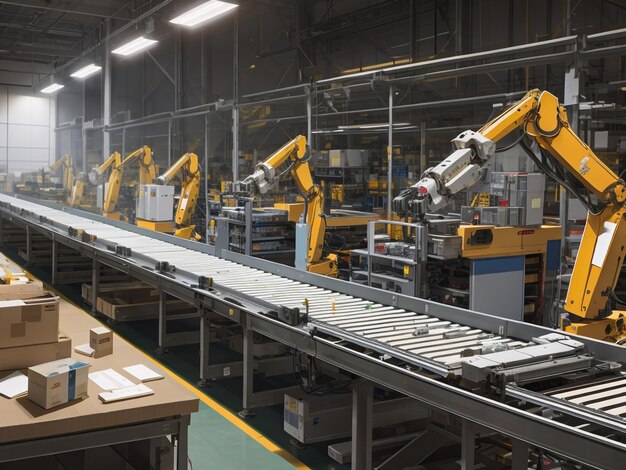
Walmart just spent a few hundred million dollars on something very unsexy: a distribution center in Louisiana.
No flashy same-day drone headlines. No moonshot language. Just robotics, automation, and systems upgrades buried inside a regional DC most people couldn’t find on a map.
That’s exactly why this matters.
According to RetailDive, Walmart is automating and modernizing its Opelousas, Louisiana distribution center as part of a broader push to bake robotics deeper into everyday operations. This isn’t Walmart testing automation. This is Walmart assuming automation is table stakes.
And once the biggest retailer in the world treats something as baseline ops, everyone else eventually has to follow — or get priced out.
- Walmart is no longer “piloting” warehouse automation. It’s rolling it out as default infrastructure.
- This locks in long-term cost and speed advantages most competitors can’t match.
- Sellers and 3PLs will feel this through tighter SLAs and rising delivery expectations.
- If your fulfillment model still depends on cheap labor and manual workflows, the clock is ticking.
This Isn’t About One Warehouse
On paper, this is a $330M+ investment in a single Louisiana distribution center. In reality, it’s a continuation of a pattern Walmart has been quietly executing for years.
The company has already automated dozens of facilities across its network, especially in grocery and regional fulfillment. What’s different now is where the money is going.
This isn’t a flagship metro DC. It’s a regional node.
That tells you everything.
Walmart isn’t optimizing for press. It’s optimizing for unit economics at scale — shaving seconds, dollars, and labor dependency across the middle of the network where volume is boring but relentless.
That’s how advantages compound.

From the publisher
Everything we know about running Amazon, in one course.
The commercial strategy, taught by operators who run our own brands.
Automation Is No Longer a Competitive Edge — It’s Cost Defense
For a long time, warehouse automation was framed as innovation. Something you invested in to get ahead.
That era is over.
For Walmart, automation is now cost defense. A hedge against:
- Labor shortages that never fully resolved
- Wage inflation that doesn’t roll back
- Peak demand volatility that breaks manual ops
- Rising consumer expectations on delivery speed and accuracy
When Walmart automates a DC, it’s not just about speed. It’s about predictability. Robots don’t call in sick during peak. They don’t churn. They don’t need retraining every holiday season.
That stability lets Walmart do something most retailers can’t: promise aggressive delivery timelines without blowing up margins.
Why Ecommerce Operators Should Actually Care
If you sell on Walmart Marketplace or use Walmart Fulfillment Services, this matters more than you think.
As Walmart’s internal network gets faster and cheaper, two things happen downstream:
- SLA pressure increases – Walmart can tighten delivery promises because it controls more of the fulfillment stack. That pressure eventually flows to sellers and partners.
- Performance standards rise quietly – What used to be “great” fulfillment becomes “average.” Late shipments stand out more when the baseline improves.
Even if you’re not selling on Walmart, this still affects you. Every time Walmart raises the operational bar, Amazon, Target, and major 3PLs recalibrate. Consumers don’t care why delivery got faster — they just expect it everywhere.
The Uncomfortable Part for Mid-Market Brands
Here’s the part no one likes to say out loud: most mid-market ecommerce brands cannot afford this level of automation.
And they won’t need to — until they do.
Walmart can justify nine-figure investments because it amortizes them across massive, stable volume. Mid-sized brands rely on:
- Labor-heavy 3PLs
- Seasonal staffing
- Manual exception handling
- Thin margins that don’t tolerate capex mistakes
That gap is widening.
Over time, brands that don’t align with highly automated networks will face worse shipping costs, slower delivery, or both. Not because they’re mismanaged — but because the infrastructure race has moved past them.
What Smart Operators Should Do Next
This isn’t a call to go buy robots.
It is a call to reassess assumptions.
Operators should be asking:
- How automated is our fulfillment partner really?
- What happens to our shipping costs if labor tightens again?
- Are we benchmarking delivery performance against Walmart and Amazon — or against our own history?
If you rely on manual-heavy fulfillment, build contingency plans now. If you’re choosing partners, ask uncomfortable questions about automation depth, not just throughput claims.
Because Walmart isn’t slowing down. And it’s not waiting for the rest of the industry to catch up.
The Bigger Signal
The most important takeaway isn’t the robots.
It’s the mindset.
Walmart is treating fulfillment infrastructure the way Amazon did a decade ago: not as a cost center, but as a strategic weapon that compounds over time. Once that flywheel spins up, it’s brutally hard to match without comparable scale.
This Louisiana DC isn’t a headline grabber. It’s a brick in a wall that’s getting harder to climb.
And if you’re an ecommerce operator, you’re already competing against it — whether you realize it or not.