

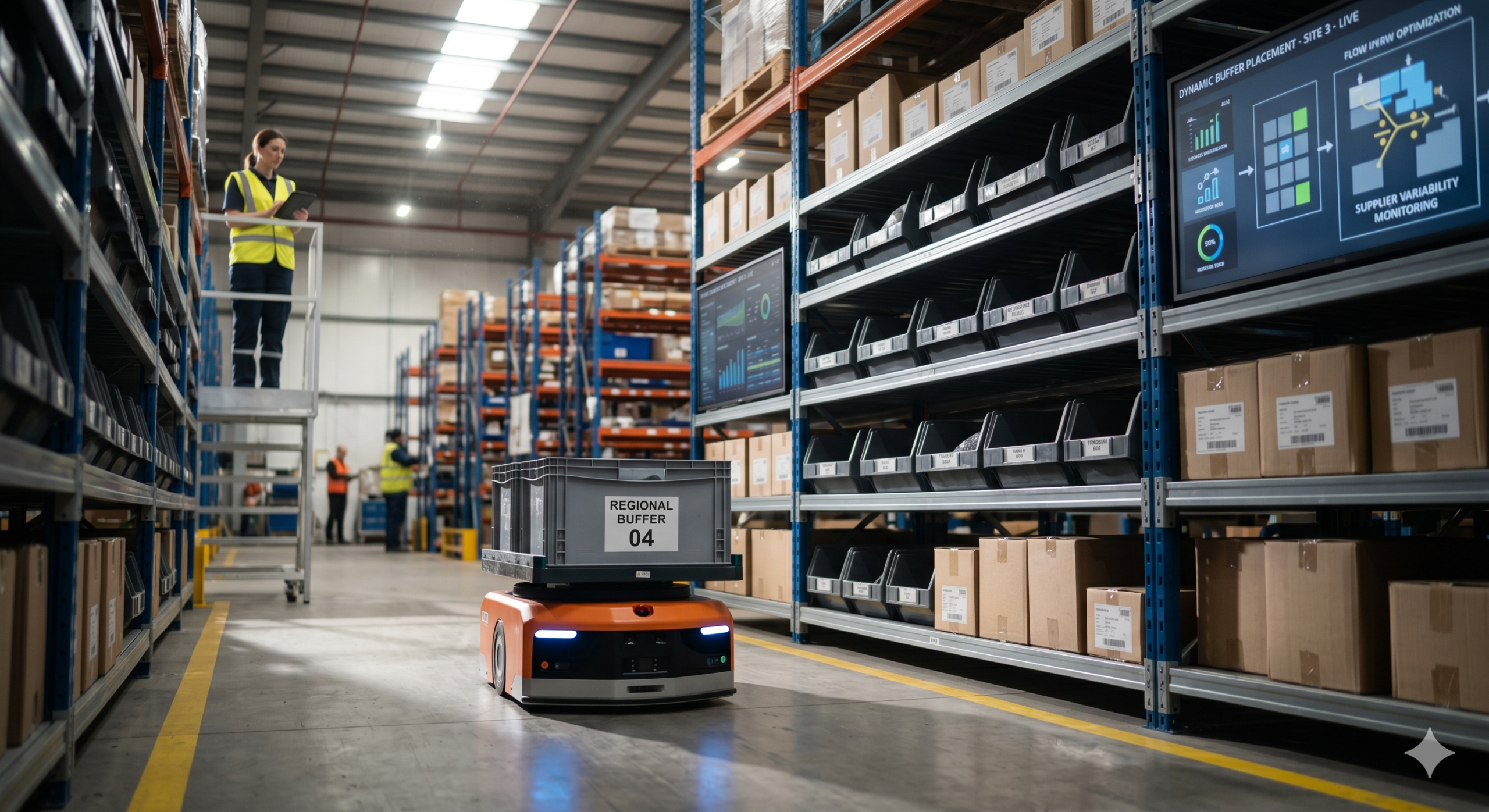
Inventory has always been a balancing act. Hold too much, and you tie up cash and increase risk. Hold too little, and you face stockouts, lost sales, and unhappy customers.
Today, as supply chains become more unpredictable, many brands—especially those using platforms like Shopify—are rethinking their approach. One emerging strategy is decoupling inventory, a smarter way to build resilience without sacrificing liquidity.
What Does “Decoupling Inventory” Mean?
Decoupling inventory means creating strategic buffers in the supply chain without simply increasing stock levels everywhere.
Instead of holding excess inventory across all locations, companies:
- Place inventory at key points in the supply chain
- Separate supply stages to reduce risk of disruption
- Use data to decide where buffers are truly needed
The goal is to protect operations while keeping capital efficient.
The Problem with Traditional Inventory Models
Traditional inventory strategies often rely on large safety stocks to avoid stockouts. While this can work, it comes with clear downsides:
- Cash is locked in unsold products
- Storage costs increase
- Risk of overstock and markdowns grows
In a fast-moving market, this approach is becoming less sustainable.
A Smarter Way to Build Resilience
Decoupling offers a more targeted approach. Instead of overstocking everywhere, brands:
- Identify critical points in the supply chain (e.g., suppliers, warehouses, last-mile hubs)
- Add buffers only where disruptions are most likely
- Use flexible inventory strategies to adapt to demand changes
This creates a system that is both resilient and efficient.
The Role of Data and Technology
This strategy depends heavily on data and visibility.
Brands need to understand:
- Demand patterns
- Supplier reliability
- Lead times and variability
- Inventory turnover rates
With the help of analytics and AI, companies can make better decisions about where to place inventory and how much to hold.
Benefits for eCommerce Brands
For Shopify and eCommerce brands, decoupling inventory can deliver several advantages:
- Improved cash flow: Less capital tied up in excess stock
- Reduced risk: Better protection against supply disruptions
- Greater flexibility: Ability to respond quickly to demand changes
- Higher efficiency: Optimized use of storage and logistics resources
This is especially important for growing brands that need to scale without overextending financially.
Challenges to Manage
While powerful, this approach is not without challenges:
- Requires accurate data and forecasting
- Needs coordination across supply chain partners
- May involve changes to existing operations
However, the long-term benefits often outweigh the complexity.
Final Thought
In today’s uncertain environment, holding more inventory is not always the answer. The smarter approach is to hold inventory in the right places, at the right time, for the right reasons.
Decoupling inventory represents a shift from volume-based thinking to strategy-driven supply chain management.
For modern eCommerce brands, the key question is no longer “How much inventory should we hold?” but:
“Where should we place it to maximize resilience and efficiency?”

From the publisher
Everything we know about running Amazon, in one course.
The commercial strategy, taught by operators who run our own brands.
 Erene Araojo