

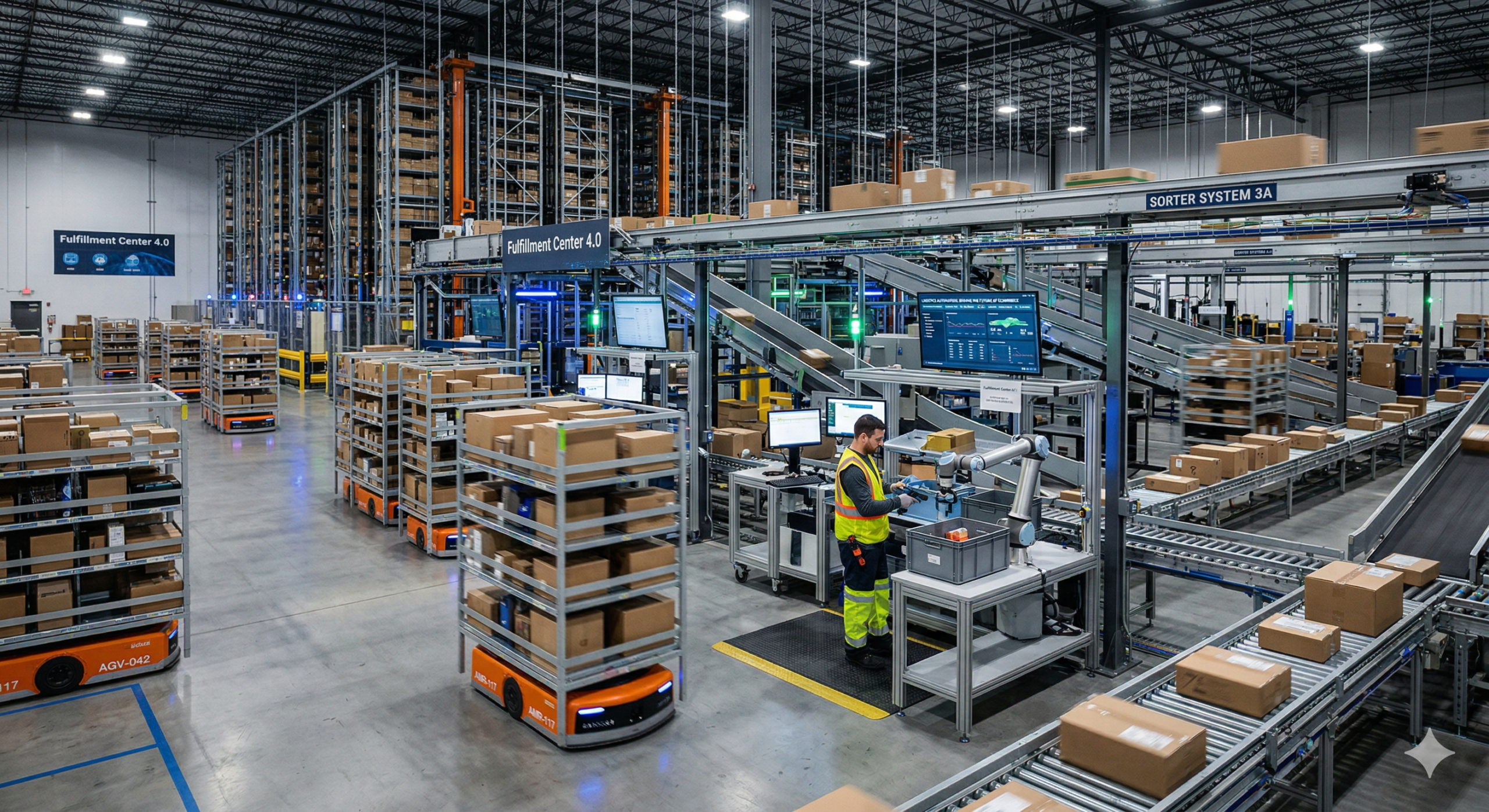
As eCommerce continues to grow, one challenge remains at the center of the industry: how to deliver faster, cheaper, and more efficiently. The answer increasingly lies in logistics automation.
With the logistics automation market projected to reach nearly $90 billion by 2026, it is clear that companies are investing heavily in technologies that can transform how goods are stored, picked, packed, and shipped.
Why Automation Is Becoming Essential
Traditional logistics operations rely heavily on manual labor, which can be slow, costly, and difficult to scale. As order volumes increase and customer expectations rise, this model is no longer sustainable.
Automation helps solve these challenges by:
- Increasing speed and accuracy
- Reducing operational costs
- Improving scalability during demand peaks
For many companies, automation is no longer optional—it is becoming a core requirement to stay competitive.
Key Technologies Behind the Shift
Several technologies are driving the growth of logistics automation:
- Robotics: Automated systems can pick, sort, and move products within warehouses
- AI and machine learning: Used to optimize workflows, predict demand, and improve decision-making
- Automated storage systems (AS/RS): Maximize space and improve efficiency
- Conveyor and sorting systems: Speed up order processing
Together, these technologies create faster and more reliable operations.
From Warehouses to Smart Fulfillment Centers
Warehouses are evolving into highly automated fulfillment centers. Instead of workers walking long distances to pick items, robots and automated systems bring products directly to them.
This reduces errors, speeds up processing, and allows companies to handle a much higher volume of orders.
In some cases, entire operations can run with minimal human intervention.
The Impact on Costs and Efficiency
Automation has a direct impact on profitability. By reducing labor costs and improving efficiency, companies can:
- Process more orders with fewer resources
- Minimize errors and returns
- Optimize space and inventory management
Over time, these improvements can significantly increase margins.
Challenges and Investment
Despite its benefits, logistics automation requires significant upfront investment. Companies must consider:
- High implementation costs
- Integration with existing systems
- Training and change management
However, as technology becomes more accessible, adoption is accelerating across companies of all sizes.
A Competitive Advantage
In today’s eCommerce landscape, logistics is no longer just an operational function—it is a strategic differentiator.
Companies that invest in automation can offer:
- Faster delivery times
- More reliable service
- Better customer experiences
This creates a clear advantage over competitors relying on traditional systems.
Final Thought
Logistics automation is reshaping the backbone of eCommerce. As demand continues to grow, the ability to operate efficiently at scale will define success.
The companies that lead in the future will not just be those with the best products—but those with the smartest, fastest, and most efficient logistics systems.
In the end, automation is not just about technology—it is about building the infrastructure that makes modern commerce possible.

From the publisher
Everything we know about running Amazon, in one course.
The commercial strategy, taught by operators who run our own brands.
 Erene Araojo