

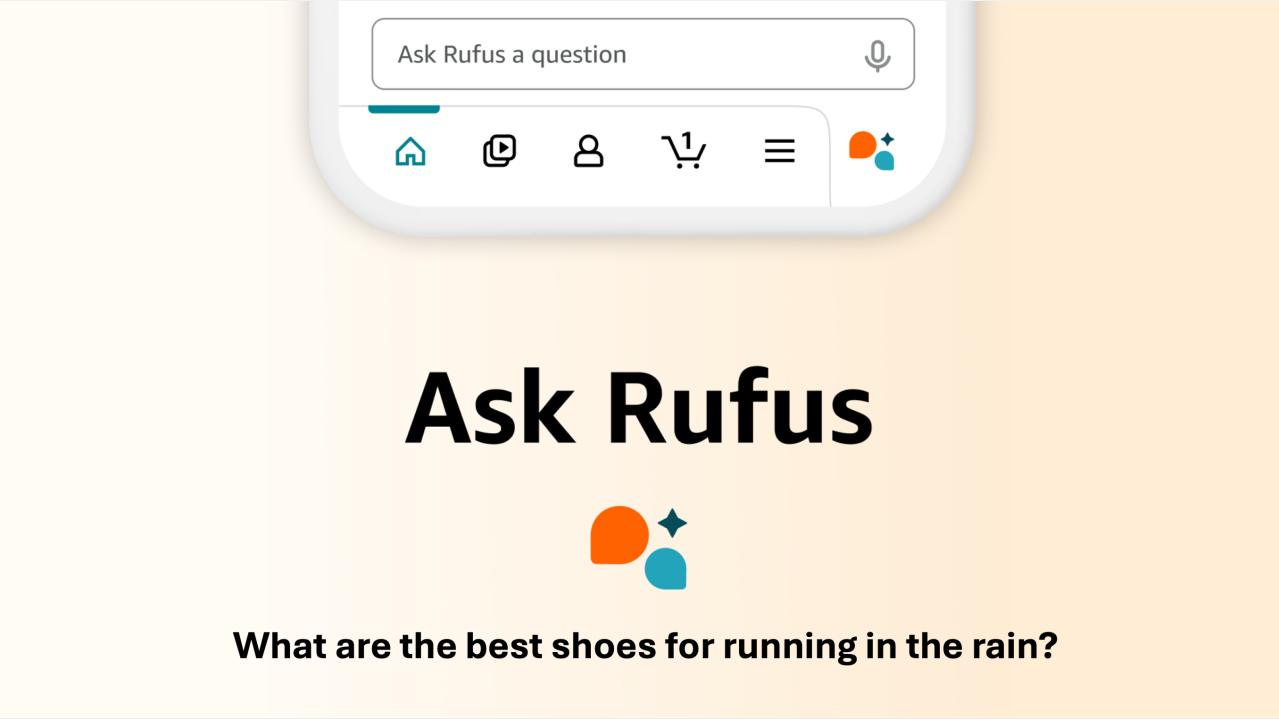
For years, success on Amazon depended on mastering keywords.
Sellers optimized:
- titles
- bullet points
- backend search terms
- PPC campaigns
The goal was simple:
👉 rank higher in search results.
But Amazon Rufus is changing that model completely.
Rufus, Amazon’s AI-powered shopping assistant, is pushing the marketplace away from traditional keyword-based search and toward something much bigger:
👉 AI-driven product recommendation and decision-making. (amalytix.com)
Rufus Is Not Just a Chatbot
Many sellers still treat Rufus as a simple AI feature layered on top of Amazon search.
That’s a mistake.
Rufus works differently from traditional Amazon search because it:
- interprets intent in natural language
- compares products conversationally
- explains recommendations
- generates answers dynamically
Instead of searching:
“wireless headphones”
Customers increasingly ask:
“What are the best headphones for long flights under $150?”
This changes how products become visible. (amalytix.com)
Amazon Search Is Becoming a Decision Engine
Traditional Amazon SEO was built around:
- keyword matching
- ranking position
- click-through rates
Rufus shifts the focus toward:
- contextual understanding
- use-case relevance
- explainability
The AI is not simply finding products.
It is deciding:
👉 which products best match a customer’s intent.
That’s a completely different system. (Dageno AI)
Why This Changes Everything for Sellers
Under the old system, visibility depended heavily on:
- keyword density
- exact-match optimization
- aggressive PPC strategies
With Rufus, products increasingly succeed because the AI can:
- understand them
- explain them
- confidently recommend them
This means sellers must optimize for:
- clarity
- context
- structured information
- real customer intent
not just keywords. (zonguru.com)
Reviews and Q&A Matter More Than Ever
One of the biggest shifts is where Rufus pulls information from.
The assistant analyzes:
- reviews
- Q&A sections
- A+ content
- product attributes
- external context
This means weak or incomplete product information becomes a real disadvantage.
A listing with:
- detailed customer feedback
- clear use cases
- structured benefits
may outperform a listing with stronger traditional SEO. (Velocity Sellers)
The Rise of “Explainable Products”
Perhaps the most important concept emerging from Rufus is this:
👉 products must become explainable.
AI systems favor products they can describe confidently.
That means products with:
- clear positioning
- consistent reviews
- obvious use cases
- strong informational content
gain an advantage.
In the AI era:
👉 ambiguity hurts visibility.
The End of Traditional Amazon SEO?
Not completely.
Keywords still matter.
But they are no longer enough.
Amazon is moving from:
- search retrieval
to: - AI-mediated recommendations.
That means the old playbook is weakening.
The sellers who continue optimizing only for ranking position may slowly lose visibility without fully understanding why. (evolveadagency.com)
A Bigger Strategic Shift
Rufus reflects a broader transformation happening across digital commerce:
- Amazon integrating AI into shopping
- Google integrating AI into search
- platforms becoming recommendation engines
Consumers increasingly want:
- guidance
- summaries
- decisions made faster
The future of eCommerce may involve less browsing and more:
👉 delegated decision-making.
Final Thought
Amazon Rufus is not just another platform update.
It represents the beginning of a new phase where:
- AI influences visibility
- algorithms shape product discovery
- and recommendation systems become more important than search rankings themselves.
For sellers, the question is no longer:
“How do we rank higher?”
It’s becoming:
“How do we become the product the AI chooses to recommend?”

From the publisher
Everything we know about running Amazon, in one course.
The commercial strategy, taught by operators who run our own brands.
 Erene Araojo