

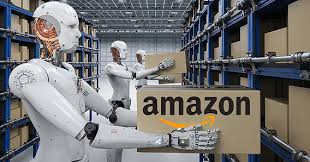
Amazon is no longer just automating warehouses.
It is redesigning the economics of labor itself.
With more than a million robots operating across its facilities and growing investments in AI-driven automation, Amazon is pushing logistics toward a future where human labor plays a very different role than it does today.
And this shift goes far beyond efficiency.
Automation Is Becoming the Foundation of Logistics
For years, Amazon invested heavily in:
- fulfillment centers
- robotics
- warehouse software
- AI-driven operations
At first, automation focused on supporting workers:
- moving inventory
- reducing repetitive tasks
- speeding up fulfillment
But the scale of today’s investment suggests something larger:
👉 automation is becoming the operating model itself.
Why Amazon Is Moving So Aggressively
Amazon operates under enormous pressure:
- faster delivery expectations
- rising labor costs
- global competition
- increasing order volumes
Automation helps solve all of these challenges simultaneously.
Robotic systems can:
- operate continuously
- reduce error rates
- improve speed and consistency
- scale more predictably than human labor
This creates powerful economic incentives.
AI Changes the Nature of Automation
Traditional automation followed fixed instructions.
AI-driven systems are different.
Modern warehouse AI can:
- optimize workflows dynamically
- predict bottlenecks
- coordinate robotic fleets
- improve performance in real time
This moves warehouses closer to becoming:
👉 autonomous operational environments.
The warehouse no longer simply contains technology.
It increasingly behaves like an intelligent system itself.
Human Roles Are Starting to Shift
The key question is no longer:
“Will robots assist workers?”
It is becoming:
“What role will humans play in highly automated logistics systems?”
As automation expands, human labor shifts toward:
- oversight
- exception handling
- systems management
- technical operations
At the same time, many repetitive physical roles may decline.
This represents a major transformation in the structure of work.
Amazon Is Setting New Industry Expectations
Amazon’s scale gives it enormous influence.
When Amazon automates:
- competitors feel pressure to follow
- consumer expectations rise
- operational standards shift
Other retailers and logistics providers may eventually need similar automation just to remain competitive.
This accelerates adoption across the entire industry.
Efficiency Is Only Part of the Story
The deeper shift is strategic.
Automation allows Amazon to:
- reduce operational dependency on labor markets
- improve long-term scalability
- increase control over fulfillment systems
- build more predictable infrastructure
In other words:
👉 robots are becoming infrastructure assets.
The Bigger Economic Question
Amazon’s strategy reflects a broader reality emerging across many industries:
- AI and robotics are changing how value is created
- software increasingly replaces repetitive human execution
- operational systems become more autonomous over time
This raises difficult questions about:
- employment
- workforce adaptation
- economic inequality
- the future role of human labor
The conversation is no longer theoretical.
It is already happening inside the world’s largest logistics networks.
Final Thought
Amazon’s robotics strategy is not simply about faster warehouses.
It is part of a much larger transition toward an economy where:
- automation scales faster than labor
- intelligent systems manage operations
- and human work becomes increasingly specialized.
The future of logistics may not be defined by how many workers a warehouse employs—
but by how effectively humans and machines operate together.
And Amazon is helping define what that future looks like.

From the publisher
Everything we know about running Amazon, in one course.
The commercial strategy, taught by operators who run our own brands.