

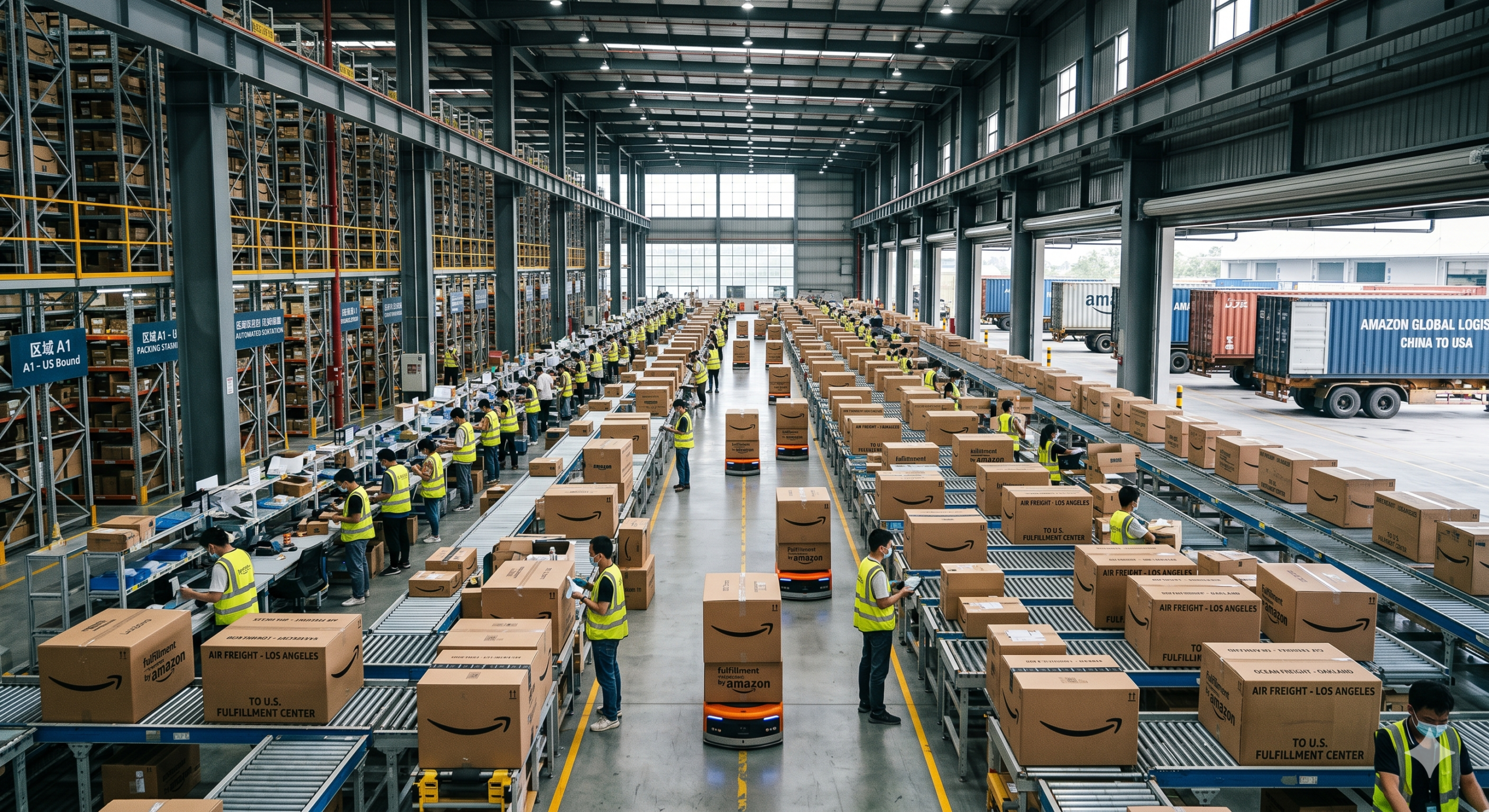
Amazon continues to strengthen its global logistics network with the opening of a new distribution center in China dedicated to U.S.-bound inventory. This move highlights the growing importance of cross-border eCommerce and the need for faster, more efficient international supply chains.
As global trade evolves, infrastructure like this is becoming a key competitive advantage.
Strengthening Cross-Border eCommerce
Selling internationally has traditionally been complex. Long shipping times, high costs, and customs processes often create friction for both sellers and customers.
By opening a distribution center in China, Amazon is aiming to:
- Simplify logistics for sellers exporting to the U.S.
- Reduce shipping times
- Improve inventory management across borders
This makes it easier for Chinese sellers to reach one of the world’s largest consumer markets.
Bringing Inventory Closer to the Source
One of the biggest advantages of this model is proximity to manufacturing hubs.
China remains a major global production center. By placing a distribution hub near suppliers, Amazon can:
- Consolidate inventory before international shipping
- Optimize packaging and transport
- Reduce delays in the early stages of the supply chain
This creates a more efficient flow of goods from factory to customer.
Faster and More Predictable Delivery
Cross-border shipping is often unpredictable. Delays at customs, fragmented logistics, and long transit times can affect customer experience.
With a more integrated system, Amazon can:
- Streamline international shipping processes
- Improve delivery time estimates
- Increase reliability for U.S. customers ordering from overseas sellers
This helps close the gap between domestic and international delivery expectations.
Benefits for Sellers
For sellers, especially small and medium-sized businesses, this development offers several advantages:
- Easier access to the U.S. market
- Lower operational complexity
- Better control over inventory and fulfillment
By handling more of the logistics process, Amazon reduces barriers to global expansion.
A Strategic Move in Global Competition
This investment is not just about efficiency—it is also about competition.
As global eCommerce grows, companies are racing to build stronger international networks. Faster cross-border logistics can:
- Attract more sellers to the platform
- Increase product availability
- Strengthen Amazon’s global position
In this context, logistics infrastructure becomes a strategic asset.
The Bigger Trend: Globalization of eCommerce
Amazon’s new distribution center reflects a broader trend: eCommerce is becoming increasingly global.
Consumers are more willing to buy from international sellers, and platforms are investing in the infrastructure needed to support this demand.
This includes:
- Cross-border fulfillment networks
- Integrated customs and shipping solutions
- Localized delivery capabilities
Final Thought
The opening of a China-based distribution center for U.S.-bound inventory shows how critical logistics has become in global eCommerce.
By reducing complexity and improving efficiency, Amazon is making international selling more accessible and scalable.
In the future, success in eCommerce will not just depend on what you sell—but on how efficiently you can move products across borders.

From the publisher
Everything we know about running Amazon, in one course.
The commercial strategy, taught by operators who run our own brands.
 Erene Araojo