

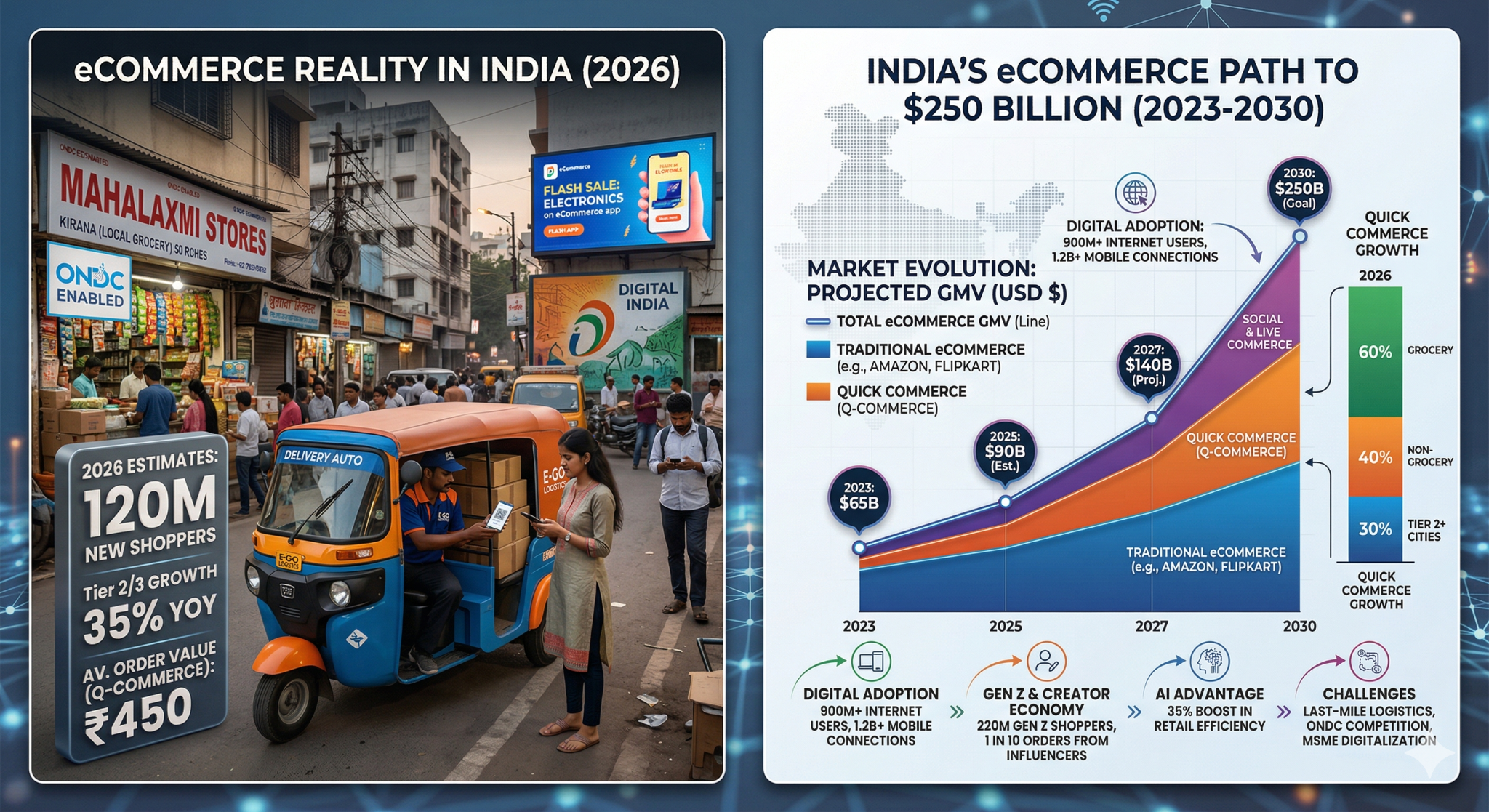
India is quickly becoming one of the most important eCommerce markets in the world. According to recent projections, the country’s online retail sector is expected to reach $250 billion by 2030, driven by rapid digital adoption and a growing consumer base.
This growth is not just about scale—it represents a major shift in how millions of people shop, pay, and interact with brands.
A Market Driven by Digital Adoption
One of the key drivers of India’s eCommerce growth is the rise of digital infrastructure.
Over the past decade:
- Internet access has expanded significantly
- Smartphone usage has surged
- Digital payment systems have become widely adopted
This has made online shopping accessible to a much larger portion of the population, including consumers in smaller cities and rural areas.
The Rise of New Consumers
Unlike more mature markets, much of India’s growth is coming from first-time online shoppers.
These consumers are:
- Younger and mobile-first
- Price-sensitive but value-driven
- Increasingly comfortable with digital payments
As more people come online, the overall market continues to expand rapidly.
Mobile-First Commerce
In India, eCommerce is largely a mobile-first experience. Many users access the internet primarily through their smartphones, which shapes how platforms are designed.
This has led to:
- Simple and intuitive app experiences
- Integration with digital wallets and payment apps
- Strong influence of social and video content on purchasing decisions
Mobile is not just a channel—it is the foundation of the entire ecosystem.
Logistics and Infrastructure Challenges
Despite its growth, India’s eCommerce market still faces challenges, especially in logistics.
Delivering across a vast and diverse country requires:
- Efficient last-mile delivery networks
- Strong partnerships with local logistics providers
- Investment in warehousing and infrastructure
Companies that can solve these challenges will gain a significant competitive advantage.
The Role of Marketplaces and Platforms
Large marketplaces like Amazon and Flipkart continue to play a major role, but the ecosystem is becoming more diverse.
New trends include:
- Direct-to-consumer (DTC) brands
- Social commerce platforms
- Quick commerce (ultra-fast delivery services)
This creates a dynamic and highly competitive environment.
A High-Growth Opportunity
The projected growth to $250 billion highlights the scale of opportunity—not only for local companies but also for global players looking to expand.
However, success in India requires:
- Understanding local consumer behavior
- Adapting pricing and product strategies
- Building efficient and scalable operations
Final Thought
India’s eCommerce market is not just growing—it is transforming rapidly. With millions of new consumers entering the digital economy, the potential is enormous.
For businesses, the opportunity is clear—but so is the challenge. Those who can combine local understanding, digital innovation, and strong logistics will be best positioned to succeed.
In the coming years, India is set to become one of the key battlegrounds for global eCommerce—and one of its biggest growth stories.

From the publisher
Everything we know about running Amazon, in one course.
The commercial strategy, taught by operators who run our own brands.
 Erene Araojo