

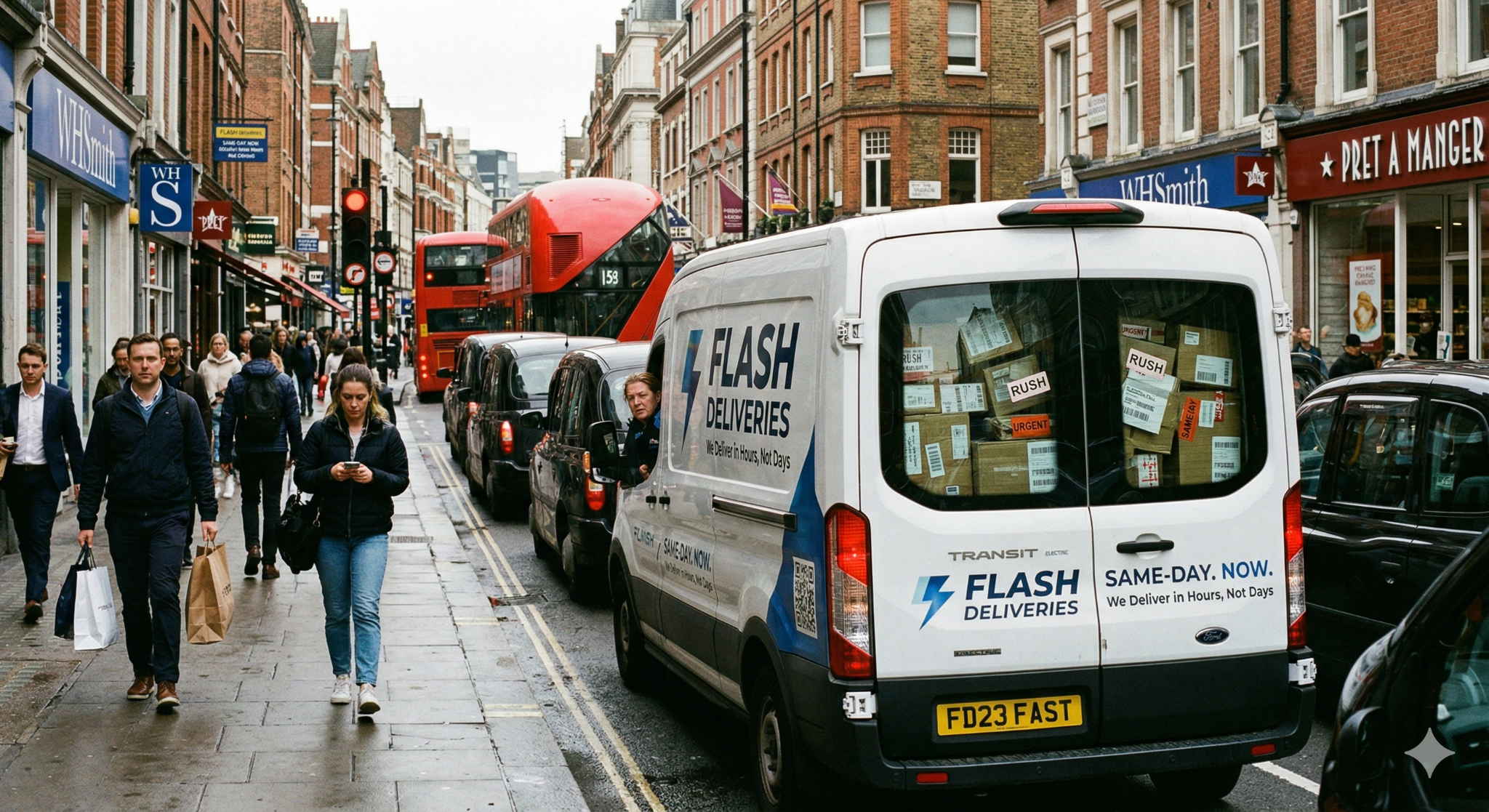
Same-day delivery has become one of the biggest promises in modern eCommerce. Customers expect faster, more convenient service than ever before—and in many cases, they assume that getting a product within hours is standard.
However, behind the scenes, logistics networks are struggling to keep up. A growing gap is emerging between what customers expect and what supply chains can realistically deliver.
The Rise of Instant Expectations
Over the past few years, companies like Amazon have redefined delivery standards. What used to take days now takes hours.
As a result, customer expectations have shifted:
- Same-day delivery is increasingly seen as normal
- Delays are less tolerated
- Speed often matters as much as price
This has created a new baseline that many retailers feel pressured to meet.
The Hidden Complexity of Speed
While same-day delivery sounds simple, it is extremely complex to execute.
To deliver within hours, companies need:
- Inventory positioned close to the customer
- Highly efficient warehouse operations
- Advanced routing and last-mile delivery systems
Every step must work perfectly—and in real time.
Even small disruptions, such as traffic, weather, or demand spikes, can cause delays.
The Cost Challenge
Faster delivery comes at a cost. Same-day fulfillment requires:
- More warehouses or micro-fulfillment centers
- Higher labor costs
- Expensive last-mile logistics
In many cases, these costs are difficult to absorb. Offering same-day delivery at scale while maintaining profitability is one of the biggest challenges in retail today.
Not Every Order Needs to Be Instant
One key issue is that not all purchases require immediate delivery. However, the expectation has become generalized across all product categories.
Retailers are starting to rethink this by:
- Offering tiered delivery options
- Charging premiums for faster service
- Optimizing standard delivery for efficiency
This approach helps balance customer expectations with operational reality.
A System Under Pressure
As demand for fast delivery grows, logistics networks are under increasing pressure. Capacity limits, infrastructure constraints, and rising costs are making it harder to scale same-day services sustainably.
This is especially true in less dense areas, where delivering quickly is more expensive and less efficient.
The Path Forward: Smarter, Not Just Faster
The future of delivery may not be about going faster, but about being smarter.
Companies are investing in:
- AI to optimize routing and demand forecasting
- Automation in warehouses
- Better inventory placement strategies
These innovations can help reduce the gap between expectations and capabilities—but they won’t eliminate it completely.
Final Thought
Same-day delivery has set a powerful new standard, but it has also exposed the limits of current logistics systems.
Retailers now face a critical question:
How do you meet rising customer expectations without breaking your operations or your margins?
The answer will likely define the next phase of eCommerce. In the end, success will not come from offering the fastest delivery at any cost—but from finding the right balance between speed, efficiency, and sustainability.

From the publisher
Everything we know about running Amazon, in one course.
The commercial strategy, taught by operators who run our own brands.
 Erene Araojo