

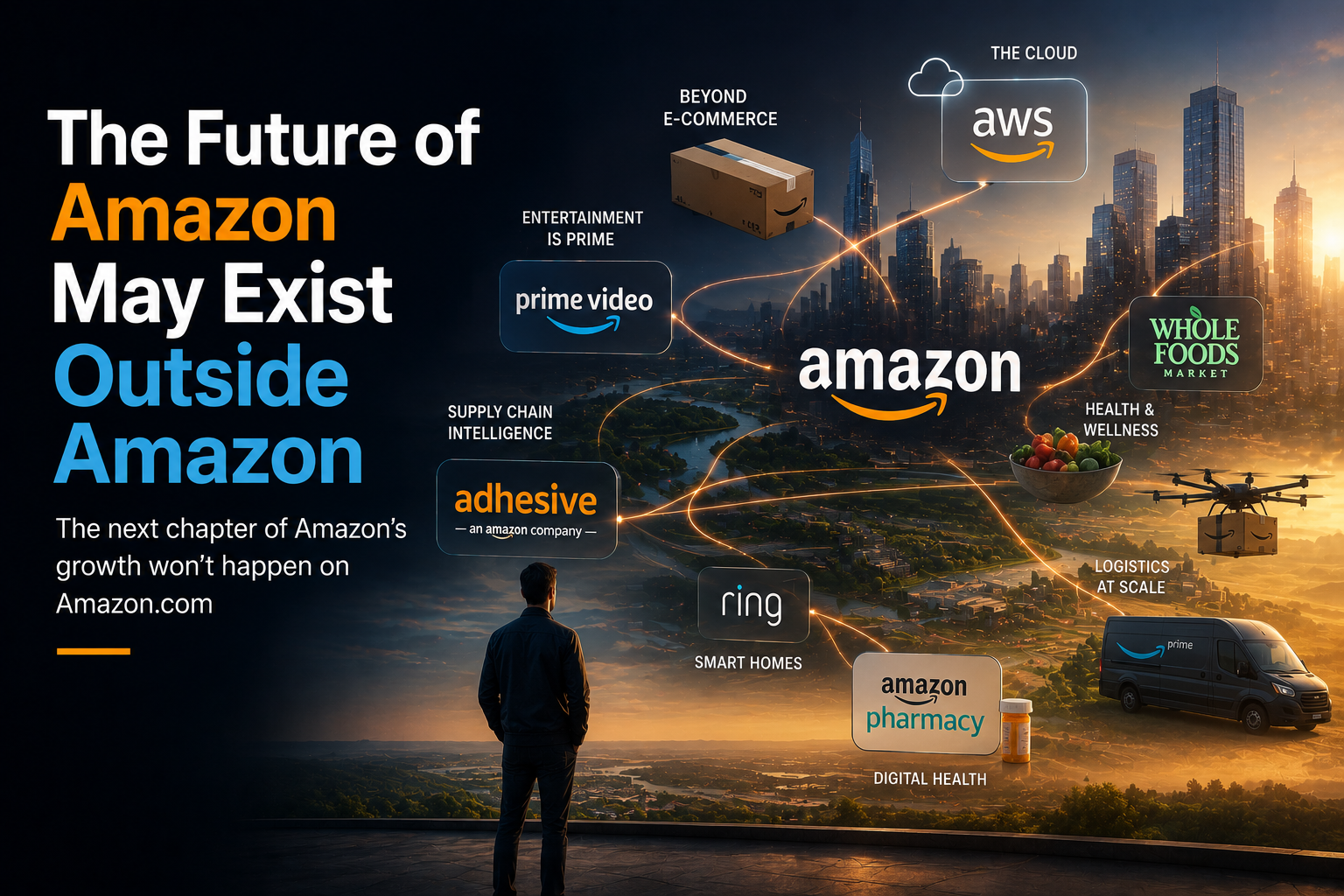
For most of its history, Amazon’s goal seemed obvious:
👉 bring more customers to Amazon.com.
But that strategy is evolving.
Increasingly, Amazon is building tools that allow consumers to interact with Amazon infrastructure without ever visiting Amazon’s marketplace.
And that may represent the company’s next major phase of growth.
Beyond the Marketplace
Amazon has expanded services such as:
- Buy with Prime
- third-party fulfillment
- logistics services
- external checkout solutions
These products allow businesses to use Amazon’s capabilities while maintaining their own customer experience.
The result is a subtle but important shift.
Amazon is moving from destination to infrastructure.
The AWS Playbook
Amazon has executed this strategy before.
Years ago, AWS was built to support Amazon’s internal operations.
Eventually, Amazon realized other companies needed the same infrastructure.
Today, AWS powers a large portion of the internet.
Now Amazon appears to be applying a similar model to commerce.
Owning the Infrastructure Layer
Instead of competing only for traffic, Amazon increasingly wants to provide:
- fulfillment
- payments
- logistics
- checkout experiences
- customer delivery networks
Even when purchases happen elsewhere.
This dramatically expands Amazon’s addressable market.
Why Businesses Are Interested
Many retailers face challenges around:
- shipping
- fulfillment
- customer expectations
- operational complexity
Amazon has spent decades solving these problems.
For many businesses, using Amazon infrastructure may be easier than building their own.
A Different Kind of Power
The most powerful companies are often not the ones customers see.
They are the ones providing the systems that everyone depends on.
Amazon increasingly fits that description.
Its influence grows every time a company adopts:
- Buy with Prime
- Amazon logistics
- Amazon fulfillment services
even if the consumer never realizes it.
The Bigger Shift
Commerce is becoming infrastructure-driven.
The companies that control:
- fulfillment
- payments
- logistics
- data
may become more influential than the companies selling products themselves.
Amazon understands this dynamic better than most.
Final Thought
The future of Amazon may not be defined by how many people shop on Amazon.com.
It may be defined by how many businesses rely on Amazon’s infrastructure behind the scenes.
Because the next phase of growth is not about owning the storefront.
It’s about owning the systems that make commerce possible.

From the publisher
Everything we know about running Amazon, in one course.
The commercial strategy, taught by operators who run our own brands.