

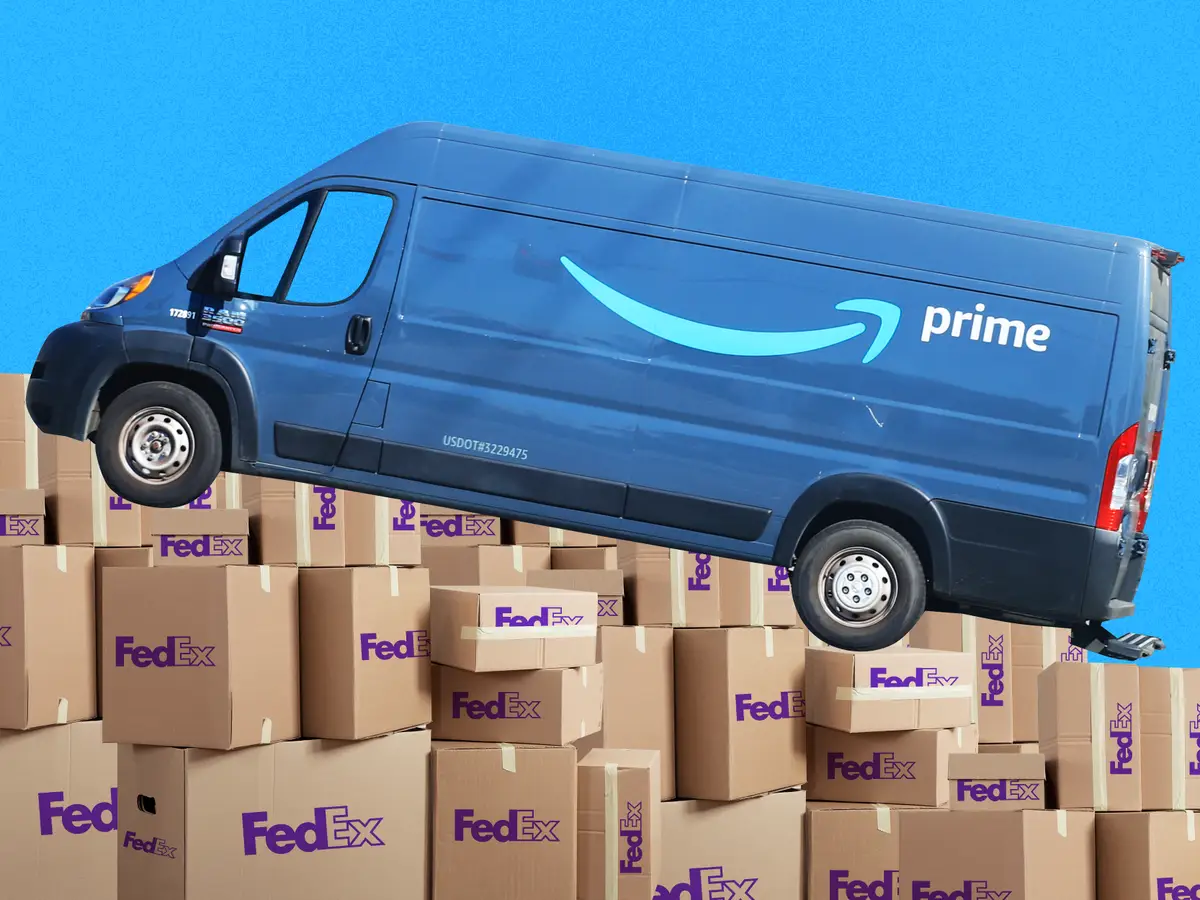
For years, Amazon built one of the most sophisticated logistics networks in the world.
The goal seemed straightforward:
👉 deliver Amazon orders faster and more efficiently.
But that mission is evolving.
Amazon is now expanding its logistics services beyond its own marketplace, entering areas traditionally dominated by companies like:
- FedEx
- UPS
- XPO
- Old Dominion
And that could reshape the transportation industry.
From Retailer to Logistics Provider
Amazon’s logistics network was originally designed to support eCommerce growth.
Over time, it expanded to include:
- fulfillment centers
- air cargo operations
- trucking networks
- last-mile delivery systems
Today, Amazon’s logistics capabilities rival some of the largest transportation companies in the world.
The difference is that logistics is no longer just supporting retail.
It is becoming a business of its own.
The Freight Opportunity
Freight transportation remains one of the largest sectors in global commerce.
Every product must move through:
- warehouses
- distribution centers
- transportation networks
before reaching customers.
Amazon sees an opportunity to monetize the infrastructure it has already spent years building.
Just as AWS transformed internal cloud infrastructure into a commercial service, Amazon may now be applying the same strategy to logistics.
Why This Matters
Most companies think of Amazon as:
- a retailer
- a marketplace
- a cloud provider
Few think of Amazon as a transportation company.
That may soon change.
If Amazon becomes a major freight provider, it could influence:
- shipping costs
- supply chain efficiency
- transportation technology
- logistics competition
across entire industries.
Infrastructure Creates Advantage
Amazon’s logistics advantage comes from scale.
The company already manages:
- millions of shipments
- complex forecasting systems
- advanced automation
- AI-driven routing
This operational expertise gives Amazon a strong foundation for expansion.
Competitors Face New Pressure
For traditional freight companies, Amazon’s arrival creates uncertainty.
Unlike most competitors, Amazon can leverage:
- retail revenue
- cloud revenue
- advertising revenue
to support long-term infrastructure investments.
This makes Amazon an unusually powerful competitor.
The Bigger Shift
Amazon’s expansion reflects a broader transformation.
The company is increasingly monetizing the infrastructure behind commerce rather than commerce alone.
The future may not be about selling products.
It may be about owning the systems that move products around the world.
Final Thought
Amazon built a logistics network to support its marketplace.
Now it appears ready to turn that network into a business in its own right.
And if history is any guide, industries should pay attention when Amazon decides to commercialize infrastructure.

From the publisher
Everything we know about running Amazon, in one course.
The commercial strategy, taught by operators who run our own brands.
 Erene Araojo