

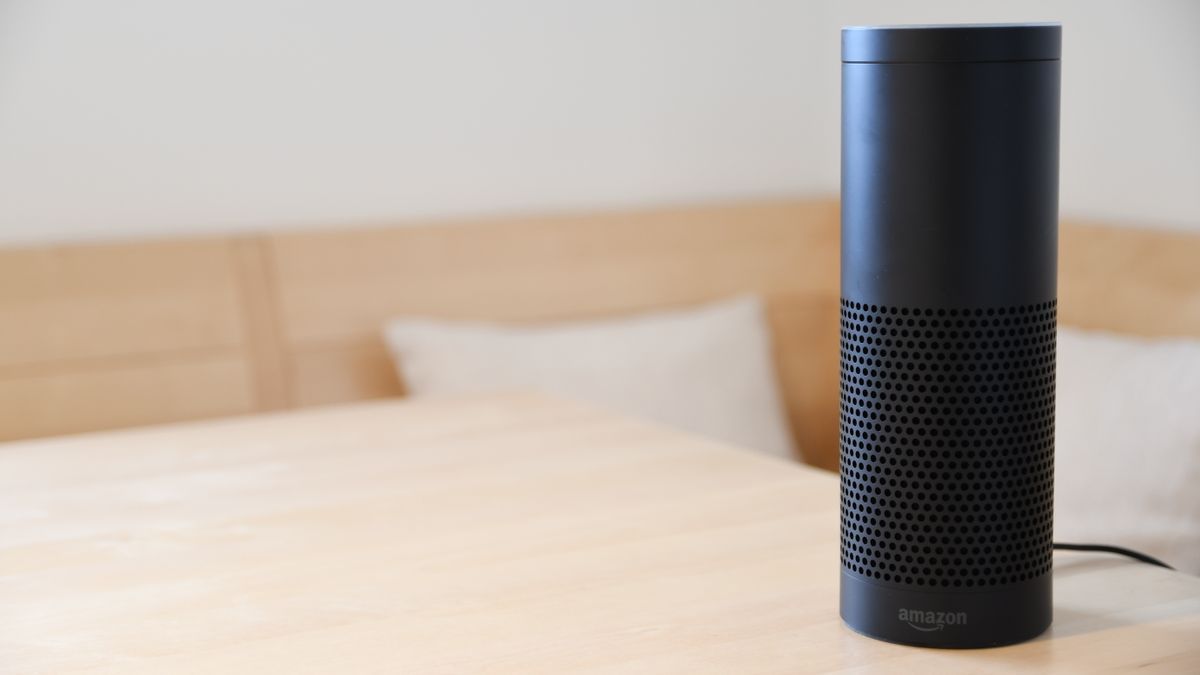
Amazon has announced an ad format called Branded Conversations, which lets a brand shape what its shopping assistant says when a shopper taps a sponsored prompt. It launches in the United States in January 2027, and no date has been given for any European store.
Nothing about this is available to a European seller now, and Amazon has given no date for when it will be. The US launch is about three months away, so this is a short warning rather than a distant one: it tells you what the recommendation layer is becoming and what will still be free when it gets here.
What a brand actually buys
The format sits on top of a mechanism that already exists. Sponsored Brands prompts appear in shopping results and on product detail pages, and tapping one opens a conversation with Amazon’s shopping assistant. Amazon’s own advertising documentation records that Sponsored Products prompts and Sponsored Brands prompts moved from open beta to general availability in the United States on 25 March 2026, with the United States as the only marketplace listed.
Branded Conversations adds the content of that conversation. An advertiser submits what Amazon calls a conversation brief, covering how their brand differs from competitors, how their products compare with others on the market and address customer needs, and which items can be combined in a routine or bundle. The brief can be edited mid-campaign and reported on.
Read that list again from the position of the seller who is not paying. Two of the three things a brief covers are comparative. The brand is not only describing itself, it is supplying the frame in which the assistant describes the alternatives, and the alternatives are other people’s products.

From the publisher
Everything we know about running Amazon, in one course.
The commercial strategy, taught by operators who run our own brands.
The figures are Amazon’s own
The number travelling with this announcement comes from Amazon’s chief executive Andy Jassy, on the company’s second-quarter earnings call: shoppers who click a sponsored prompt “convert 48% more often and spend 21% more on average than those who don’t interact with the format”.
Both figures are measured against people who did not click. A shopper who taps a prompt asking about a product has already declared more intent than one who scrolled past it, so a conversion gap between the two groups is partly the prompt working and partly the selection that produced the click. Amazon has published no sample size, no period and no category breakdown behind either figure, and the reporting metrics on its own prompts documentation are the standard advertising set rather than an uplift study.
That does not make the numbers wrong. It makes them a seller pitch delivered on an earnings call, which is a different object from a measurement, and it is the only performance evidence in public for the format this one is built on.
The shopper has already told Amazon what they think
An Ipsos survey from April 2026, as reported by eMarketer, found that over half of US adults say they would trust AI recommendations less if they knew advertisers influenced the answers, while just 14 percent would trust them more.
That is a stated preference rather than observed behaviour, and stated preferences about advertising are famously unreliable. People say they ignore ads and then click them. But the asymmetry is wide enough to be worth holding: for every adult who would trust a sponsored answer more, roughly four would trust it less.
It also sets the design constraint Amazon is working inside. A conversational recommendation only has value while the shopper believes it is a recommendation. Sell too much of it and the surface stops converting, which is the commercial reason to expect the paid share of these answers to stay smaller than advertisers would like.

What has not been said
No price has been published, so there is no way to model what a conversation brief costs against a sponsored product click. No European launch date has been given for Branded Conversations, and the underlying prompt format is documented as United States only.
Amazon has not said whether a brief can name a competitor, how a comparative claim inside a brief is checked, or what happens when two brands in the same category both buy one. Those three questions decide whether this is a listing-copy product or something closer to comparative advertising, and the announcement does not answer any of them.
It is also not clear what a seller without a brief gets. The assistant will still answer questions about unsponsored products, because a shopping assistant that only discussed advertisers would be useless, but the material it draws on for those products is the listing, the reviews and the attributes, which is the part a seller controls for free.
For the business operator
Do not buy anything for Branded Conversations yet. It is not available in any European store, it is not priced, and even the US launch is not until January 2027. Any agency presenting it as a 2026 opportunity in Europe is selling you a conference summary.
Spend the lead time on the inputs instead. Everything an assistant can say about an unsponsored product comes from the listing, the attributes, the A-plus content and the reviews, and those are the same assets that will make a brief cheap to write when the format does arrive. A seller whose listings do not currently state how the product differs from the obvious alternative has the work to do either way.
Write down the comparison you would want made about your product, in a paragraph, now. Not for Amazon, for yourself. It is the asset this format monetises, most catalogues do not have it written anywhere, and producing it is free.
From the consumer’s side
The shopper asking an assistant which of two kettles is quieter is not browsing, they are at the end of a decision and looking for someone to close it. That is why the format is valuable and why it is fragile. The answer carries weight precisely because it does not feel like an ad.
Disclosure is what decides how this lands. A sponsored prompt that is visibly labelled is a shopping aid the buyer can discount for themselves. An answer that reads as neutral and was written by one of the products in the comparison is the thing the Ipsos respondents said would cost them trust, and trust in this surface is the asset Amazon has the most reason to protect.
The three-line version
If you run the Amazon channel, file this as a three-month warning for the United States, and an undated one for Europe, rather than a plan. The line to take upward is that the recommendation layer is becoming inventory in the United States first, and the work that prepares for it, listing copy that states a comparison, is work worth doing on its own merits.
If you have just taken on digital trading, the gap this exposes is that nobody owns the answer layer internally. Search terms have an owner, ad spend has an owner, and what an assistant says about the product usually has nobody, because until now there was nothing to decide.
If you sign the budget, there is nothing to approve. No price, no European date, no independent measurement, and the only performance figures in public are the chief executive’s on an earnings call. Refuse any line item that cites the 48 percent without naming what it is measured against.
Sources
Amazon Ads, Sponsored Products prompts and Sponsored Brands prompts: https://advertising.amazon.com/resources/whats-new/unboxed-2025-sponsored-products-and-sponsored-brands-prompts
eMarketer, Amazon gives brands more control over AI shopping conversations: https://www.emarketer.com/content/amazon-gives-brands-more-control-over-ai-shopping-conversations
Amazon, Andy Jassy on Amazon Ads growth, Q2 2026 earnings: https://www.aboutamazon.com/news/company-news/amazon-ceo-andy-jassy-amazon-ads-growth-q2-2026-earnings