

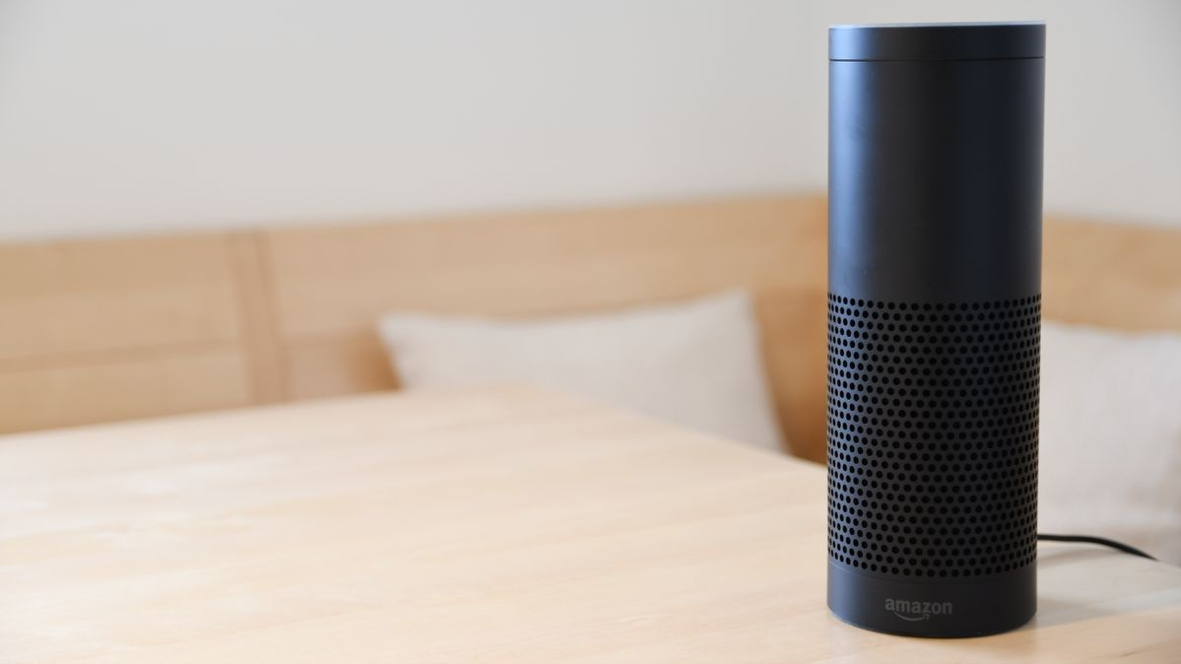
Four hundred million people used Alexa for Shopping in the last twelve months. Fifty million of them arrived in the last three. Andy Jassy told Amazon’s third-quarter earnings call he expects it to become “the primary shopping agent customers use to shop Amazon.”
Then came the sentence everyone has been quoting since, and it is the one line in the release that does not survive a second look.
In full: “U.S. customers using Alexa for Shopping are spending 50% more per order than those who don’t.”
The claim that needs its label
Two words in that sentence change what it means. It is per order, not in total, and it is US customers, not all of them. A higher average order value is compatible with flat or falling total spending if orders become less frequent, and a US measurement says nothing about the European shopper most readers here are selling to. Beyond that the figure arrives without a stated basis: no definition of an order, no period and no comparison method.
It should not be repeated without Amazon’s name attached to it, and it should not be repeated as evidence that the assistant makes people spend more, because the sentence does not establish that.
The reason is ordinary, and it matters. People who pick up a shopping assistant are not a random sample of shoppers. They shop more, shop more often, and are more comfortable in the platform’s own tools before they ever open it. A group selected by enthusiasm will out-spend a group that was not, whether or not the tool does a single useful thing. To show the tool caused the gap you would need the same shoppers measured before and after, or a comparison group built to match. Nothing in the claim suggests either was done.
So what the figure shows is that heavier shoppers use Alexa for Shopping. Whether Alexa for Shopping produces heavier shoppers is a different question, and this number does not answer it.
Tool comparison · FastMoss vs Kalodata
A platform’s claim about its own tool is not a measurement of your category. FastMoss and Kalodata do that job for TikTok Shop, reporting what is actually selling rather than what a platform says about its own surface.
Comparison coming soon
FTC disclosure: our tool comparisons carry affiliate links. If you sign up through one we may earn a commission, at no extra cost to you. We rank on merit, never on commission, and the verdict is written by a human.

From the publisher
Everything we know about running Amazon, in one course.
The commercial strategy, taught by operators who run our own brands.
What 400 million does and does not count
The same care applies to the headline figure, though less damningly.
Four hundred million is a count of customers who used the feature at least once in a year. It does not count how many use it regularly, or how many bought anything. One voice query that went nowhere counts the same as a weekly habit. Amazon has not published a usage frequency, a repeat rate or a conversion figure alongside it.
Nor has Amazon said whether the figure is global or limited to particular markets, which matters a great deal to a European seller trying to work out whether any of this reaches their listings yet.
One more wrinkle sits inside the twelve months, and it affects what the count can mean. Amazon released this assistant in February 2024 under the name Rufus, and renamed it Alexa for Shopping in May of this year. So a figure covering the last twelve months covers a period in which the product carried a different name for roughly half the time. A count spanning a rebrand is not wrong, but it is not a measure of uptake since the relaunch either, and it should not be read as one.
What the number does support is a direction, and the direction is steep. Three months added fifty million users, and those three months sit entirely after the rename. Jassy put customer interactions up 570 percent year on year, which is a usage measure rather than a user count and is moving faster than the headline. A feature growing at that rate is one Amazon is pushing hard, and the strategic signal is in Jassy’s sentence rather than in any of the figures: Amazon intends this to be the way people shop Amazon.

Why this changes what a listing is for
Take the direction seriously for a moment and the consequence for sellers is concrete.
A listing written for a search results page is written to win a glance. The title carries keywords, the first image carries the hook, and the detail sits below where most shoppers never reach. That design assumes a human scanning a grid.
A listing parsed by an assistant answering a spoken question is doing something else. The question is “will this fit my bike” or “is this safe for a gas hob” or “does this come with the cable”, and the answer comes from the structured attributes, not the hero image. Dimensions, materials, compatibility, what is in the box, power requirements: the fields sellers routinely leave thin because no human reads them.
The practical implication is that the parts of a listing with the least marketing attention are the parts an assistant depends on. A product that cannot answer a factual question will lose to one that can, regardless of which has the better photography.
There is a second source an assistant draws on, and sellers have less control over it. Questions a listing does not answer get answered from reviews, where the information is unstructured and frequently out of date. The defence is not to police reviews, which is neither possible nor permitted, but to make the structured fields unambiguous enough that nothing has to be inferred from prose.
Tool comparison · FastMoss vs Kalodata
If assistants are becoming the front door on every platform, the question is which of your products answer a factual question well in their category. Our head-to-head of FastMoss and Kalodata looks at how each tool reports category demand and product performance across European markets.
Comparison coming soon
FTC disclosure: our tool comparisons carry affiliate links. If you sign up through one we may earn a commission, at no extra cost to you. We rank on merit, never on commission, and the verdict is written by a human.
The walled garden around it
One further piece of context belongs here because it shapes who a seller is optimising for.
Amazon has blocked outside AI shopping platforms from scraping its site, so the assistant becoming the front door is not the open web arriving at Amazon. It is Amazon’s own assistant standing between its own catalogue and its own customers.
Jassy’s own framing is less closed than the behaviour. He said Amazon anticipates working with horizontal agents, and asked whether outside agents were affecting Amazon Ads, answered “The answer is no,” adding that few customers are doing much shopping that way yet. That reads less like a permanent wall than like a company which has not yet seen enough outside traffic to need a policy it will commit to.
For a seller that narrows the problem usefully. There is no general technique for being found by agents in the abstract, only the question of whether a catalogue answers questions well inside each platform the seller trades on.
It also means the optimisation target can change without notice and without any published rule. A platform’s own assistant is not a search algorithm with a documented ranking signal. How it decides what to recommend has not been published, and sellers should not assume the techniques that worked on search carry over.
What a seller does differently on Monday morning
The task is small, unglamorous and does not depend on any of Amazon’s figures being right.
- Take your five best-selling ASINs and read their attribute fields, not their titles. Dimensions, materials, compatibility, contents, power, care. Fill in every blank one honestly.
- Write down the three questions a customer asks most often before buying each product, the ones that come through messages or reviews. Check that the listing answers all three in structured fields rather than in a paragraph of marketing copy.
- Check your A-plus content and bullet points for claims that a factual question would expose. If the bullets say “fits most bikes” and the attributes do not name a size, an assistant has nothing to work with.
- Do not buy anything on the strength of the 50 percent claim. It is Amazon’s own figure about Amazon’s own product, with no published basis.
Where the honest uncertainty sits
The 50 percent spending claim has no stated methodology, no defined comparison group and no period. It is measured per order and limited to US customers, and it is an association published by an interested party, so it cannot be read as an effect.
The 400 million figure has no published definition of use, no frequency, no repeat rate and no conversion measure. Amazon stated no geography for it while explicitly limiting the spending claim to US customers, so the two headline figures do not describe the same population.
Amazon has published no ranking or recommendation rules for Alexa for Shopping, so there is no documented way to optimise for it. Everything above is reasoning from what an assistant must read in order to answer a question, not from anything Amazon has disclosed.
And the more-than-100 new capabilities announced ahead of the holidays have no published list of markets, so which of them reach a European storefront is not established.
The three-line version
- If you run the listings: read the attribute fields on your five best sellers this week and fill in every blank, because that is what an assistant answers from.
- If you have just taken on the channel: the figure to challenge is the 50 percent. Heavier shoppers use the assistant; that the assistant makes shoppers heavier has not been shown.
- If you sign the budget: approve attribute work, which is cheap and useful whatever happens. Refuse any proposal priced against Amazon’s own unverified uplift figure.
Sources
- Amazon Q3 2026 earnings call transcript: https://www.fool.com/earnings/call-transcripts/2026/10/30/amazon-amzn-q3-2026-earnings-call-transcript/
- PYMNTS: https://www.pymnts.com/news/artificial-intelligence/2026/amazon-positions-alexa-for-shopping-to-counter-third-party-agents/
- Modern Retail: https://www.modernretail.co/technology/amazon-says-more-than-400m-customers-have-used-alexa-for-shopping-in-the-last-12-months/