

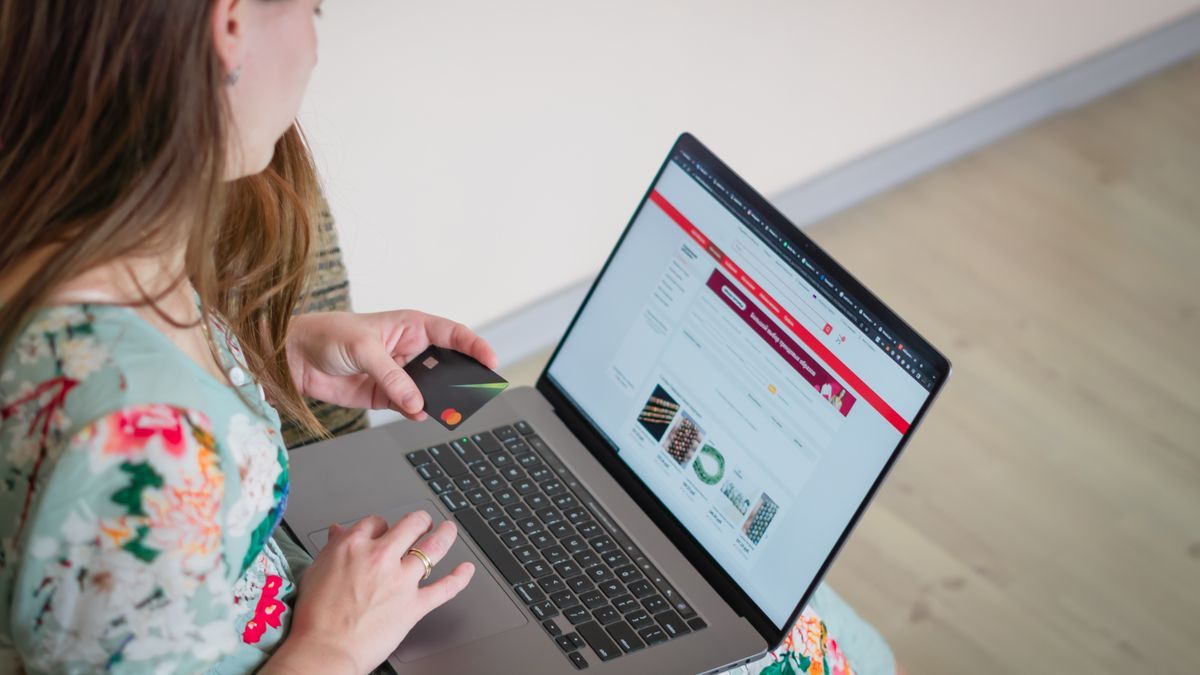
On 4 November Amazon opened a door that Amazon sellers have been paying to stand behind for twenty years, and let other people through it for nothing.
The Shop Direct Merchant Workspace is a free self-service portal. An outside retailer creates an account, verifies its website, hands over a product catalogue, and its products become eligible to appear in Amazon search without that retailer ever becoming an Amazon seller. Amazon’s own description of it is a fast, free direct AI connector from their store to Alexa for Shopping and Amazon.
No referral fee. No FBA. No fulfilment obligation. In Amazon’s words, there are no fees to participate in Shop Direct, and merchants can opt out at any time.
If you sell in the US store, the shelf you compete on just got wider, and the newcomers are not paying what you pay to stand on it.
There are two paths, and they are not the same deal
Before any of the mechanics, this is the part that decides whether Shop Direct is an opportunity or a liability, and it is the part the announcement does least to separate.
Across both routes the merchant keeps the operation. Shipping, delivery, returns, exchanges and customer service are managed directly by the merchant, in Amazon’s phrasing, and inventory and pricing stay on the merchant’s side too. Amazon is supplying demand and nothing else.
What differs is where the transaction happens.
On the Shop Direct path, the shopper taps a “Shop Direct” button, gets a notice that they are leaving Amazon, and lands on the merchant’s own store to buy. Amazon is a referrer. The merchant owns the checkout, the data and the relationship.
On the Buy for Me path, the shopper never leaves. They confirm delivery address, taxes, shipping fees and payment method on Amazon’s interface, and then, in Amazon’s description, Amazon’s AI securely completes the purchase from the merchant’s website. An order arrives on your storefront, placed by a machine acting for a customer you never met.
For an outside brand those are opposite propositions dressed as one feature. The first is free traffic. The second is an automated agent transacting on your site, with the customer’s expectations set by Amazon’s interface rather than yours, and your returns and service obligations attached to an order you did not take yourself.
There is no fee to participate and no stated commission on Buy for Me orders. That is Amazon’s position today, and it is worth writing down with the date on it.
Tool comparison · FastMoss vs Kalodata
When part of your competitive set stops paying platform fees, your own category economics are the thing to measure. FastMoss and Kalodata do that job for TikTok Shop, reporting category demand and product-level movement independently of the platform.
Comparison coming soon
FTC disclosure: our tool comparisons carry affiliate links. If you sign up through one we may earn a commission, at no extra cost to you. We rank on merit, never on commission, and the verdict is written by a human.

From the publisher
Everything we know about running Amazon, in one course.
The commercial strategy, taught by operators who run our own brands.
What it actually takes to join
The mechanics are deliberately light. Create a Shop Direct merchant account, verify the business website, share the catalogue through one of four named feed providers, Feedonomics, Salsify, CEDCommerce or VersaFeed, or directly through Amazon’s Selling Partner API. The feed type named in Amazon’s developer documentation is the Google product data feed format, which means a merchant already syndicating to Google Shopping is most of the way there. The friction Amazon has removed is not technical so much as contractual: the work was always doable, the permission was not there.
Who qualifies is the unstated part. Amazon offers the workspace to any eligible merchant and has not published what makes a merchant eligible. A programme that is free, open and selective on criteria nobody can read is one whose real size cannot be estimated from outside.
Availability covers US customers on Amazon.com, the Amazon Shopping app, mobile web browsers and Alexa for Shopping. Note the conditionality in Amazon’s own wording: products may be displayed in relevant searches and within Alexa for Shopping. Eligibility is not placement, and Amazon has not said what decides the difference.
Listings carry a “Shop Direct” label in Amazon search. That labelling is stated for search. It is not stated for the app, for mobile web or for Alexa, which matters more than it sounds, because a voice result has no room for a label at all.

This is the US store, and nothing has been said about Europe
Every element above applies to the US store. The developer documentation limits Shop Direct to the US store, no other country is mentioned anywhere in the announcement, and Amazon has given no timetable for any other market.
That makes this a watch item for a European operator rather than a change. The temptation with an Amazon mechanism is to assume export: Amazon tests in the US, it works, Europe gets it eighteen months later. Often true, and not evidence. A European seller cannot see a Shop Direct label in any European store today, cannot register, and has nothing to configure.
What a European seller can do is read the direction. Amazon is willing to put non-Amazon inventory on its own results page, for free, at the same moment it is raising fulfilment fees on the sellers who are already there. Whatever that is worth as a prediction, it is a clearer statement of where Amazon thinks its advantage lies than anything in a quarterly call.
Tool comparison · FastMoss vs Kalodata
A results page you cannot reason about is a reason for outside data rather than more spend. Our head-to-head of FastMoss and Kalodata looks at how each reports category demand and product performance.
Comparison coming soon
FTC disclosure: our tool comparisons carry affiliate links. If you sign up through one we may earn a commission, at no extra cost to you. We rank on merit, never on commission, and the verdict is written by a human.
What it means if you already sell there
The competitive arithmetic changes in a specific way, and only in one place: the search results page.
A Shop Direct listing carries no referral fee, no FBA cost, and no Amazon fulfilment obligation. The merchant behind it can price without a commission baked in, because there is no commission. Against a seller paying a category referral fee plus fulfilment, that is a structural cost advantage on identical goods, and it sits in the same shelf space.
Against that, the Shop Direct listing is at a disadvantage on everything Amazon has spent two decades training shoppers to expect. No Prime badge. No Amazon-guaranteed delivery date. Returns handled by a company the shopper has never heard of. A notice telling them they are leaving Amazon at the moment of highest intent.
So the honest read is not that cheap competitors will take the buy box. It is that the results page now contains listings playing by different rules, which makes a page-one position less comparable than it was, and makes advertising spend harder to reason about when some of the competition is not paying the platform at all.
From the consumer’s side
Both paths ask the shopper to do something Amazon has spent twenty years teaching them not to do, and the two asks are different sizes.
The Shop Direct path interrupts at the worst possible moment. A shopper who has decided to buy taps the button and is told they are leaving Amazon. Everything that made the decision easy, the saved card, the known delivery promise, the one-tap returns, the sense that a complaint has somewhere to go, stays behind on the page they are being walked off. Some will carry on. Many will go back and buy the thing with the Prime badge, which is a seller’s listing. That friction is a real defence for the incumbent, and it is the reason the free shelf space is worth less than it sounds.
The Buy for Me path removes that friction and replaces it with something stranger. From the shopper’s seat the purchase felt like an Amazon purchase. Their expectations about delivery speed, returns and who to shout at were set by Amazon’s interface. The obligations all sit with a merchant they may not remember choosing.
That mismatch is the thing to watch. When a delivery is late, the shopper’s model of what they bought and the merchant’s model of what they sold will not agree, and nothing in the announcement says who absorbs the difference.
Where the honest uncertainty sits
Amazon has published no merchant count for Shop Direct and no traffic data. The reach claims in its announcement are not defined, so there is no basis for saying how many shoppers see these listings or how often.
Amazon has not said what decides whether an eligible product is actually displayed, which is the difference between being in the programme and being on the page.
Nor has it said whether SP-API access charges apply to Shop Direct integrations, or how a Buy for Me order interacts with a merchant’s own fraud, tax and returns handling when the buyer’s expectations were set on Amazon.
The three-line version
- If you run the US marketplace channel: search your three highest-value keywords on Amazon.com this week and count the “Shop Direct” labels. That count, repeated monthly, is the only measurement of this that will mean anything to you.
- If you have just taken on the channel: the gap to name is that part of your competitive set may now be paying no referral fee at all, which makes a share-of-page comparison against last quarter misleading.
- If you sign the budget: nothing to approve. This is free to join for a non-Amazon brand and free to ignore for an Amazon seller. Refuse any agency proposal that prices a Shop Direct opportunity off Amazon’s reach claims, because Amazon has not defined them.