

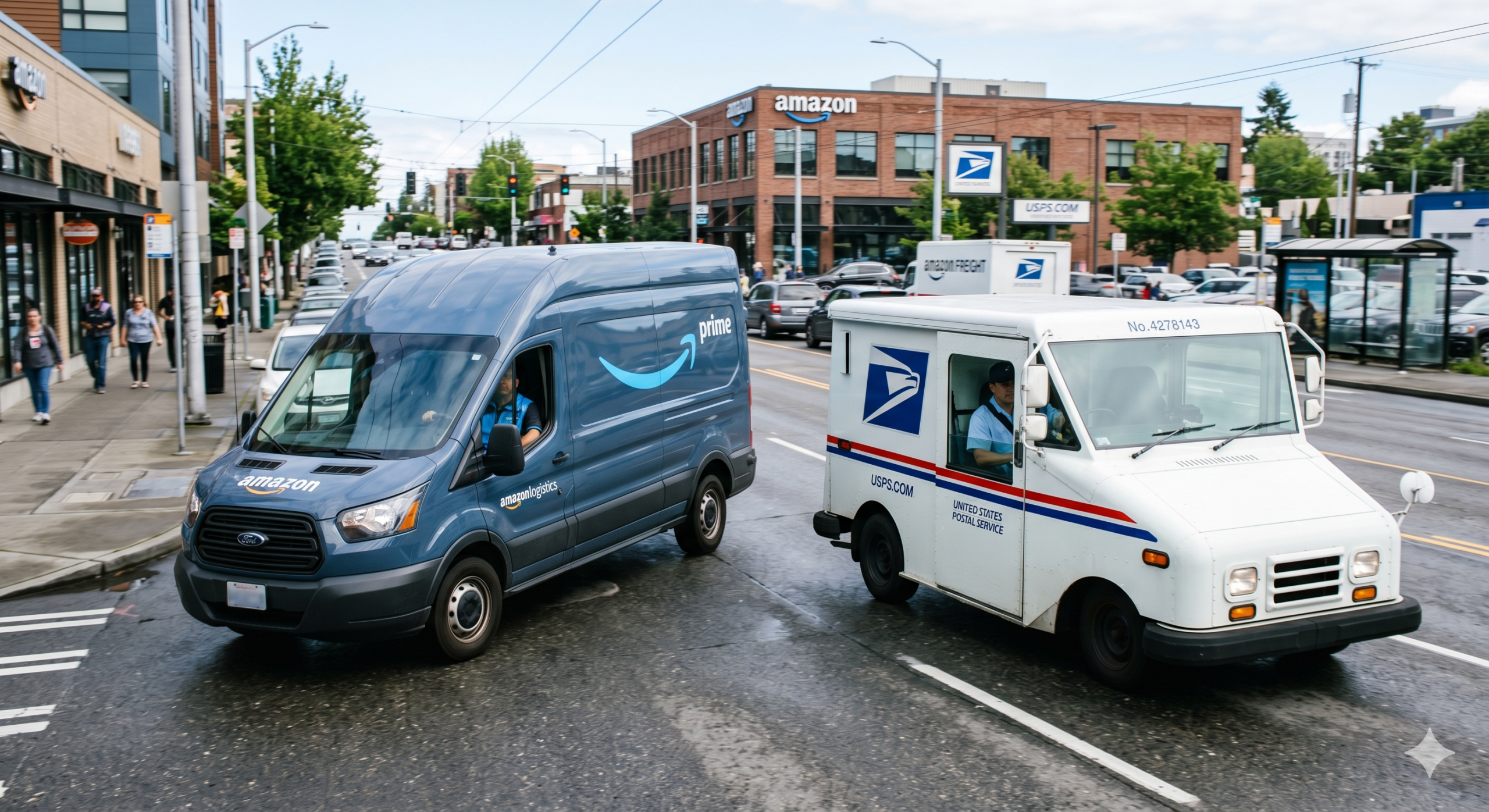
After months of tense negotiations, Amazon and the United States Postal Service (USPS) have reached a new agreement for package deliveries—preserving one of the most important partnerships in U.S. logistics.
Under the new terms, USPS will continue handling more than 1 billion Amazon packages annually, although Amazon will reduce its USPS delivery volume by roughly 20%.
While the deal avoids a much larger breakdown in the relationship, it also signals a broader transformation happening across the delivery industry.
A Critical Partnership for Both Sides
Amazon and USPS have worked together for decades, particularly in last-mile delivery and rural areas where USPS has strong nationwide coverage. Amazon itself described USPS as central to its ability to serve customers across the country.
For USPS, the relationship is financially significant:
- Amazon is its largest customer
- The partnership reportedly generates around $6 billion annually for USPS
- Amazon deliveries account for a major share of USPS package volume
At a time when USPS faces ongoing financial pressure, preserving most of this business was essential.
From Conflict to Compromise
The agreement follows months of uncertainty.
The tension began after USPS proposed a new competitive bidding system for package deliveries, potentially changing how large contracts like Amazon’s would be handled.
Amazon responded by preparing to:
- Expand its own delivery network
- Reduce dependence on USPS
- Potentially cut package volume dramatically
- At one point, reports suggested Amazon could reduce USPS deliveries by more than two-thirds. The final deal—a 20% reduction—represents a major de-escalation.
Why Amazon Still Needs USPS
Despite building one of the largest logistics networks in the world, Amazon still relies heavily on USPS in certain areas.
USPS remains especially valuable for:
- Rural delivery coverage
- Last-mile fulfillment
- Nationwide reach at scale
Amazon has invested billions into expanding its own logistics infrastructure, but replacing USPS entirely would be extremely difficult and expensive.
This agreement reflects a practical reality:
👉 Even Amazon cannot fully operate alone everywhere.
A Bigger Shift in Logistics Strategy
The new deal also highlights how logistics partnerships are changing.
Amazon is increasingly balancing:
- Its own internal delivery network
- Partnerships with USPS, FedEx, and others
- Greater operational flexibility
This creates a hybrid model where Amazon can:
- Control more of the customer experience
- Reduce dependency on external carriers
- Optimize costs dynamically
In other words, Amazon is moving toward a more diversified logistics strategy.
Rising Costs and Operational Pressure
The agreement comes during a period of increasing pressure across the logistics sector:
- Higher fuel costs
- Rising labor expenses
- Growing demand for faster delivery
Both USPS and Amazon are adjusting to this environment. Amazon has already introduced temporary surcharges for some sellers to offset transportation costs.
This suggests that the era of endlessly cheaper and faster shipping may be becoming harder to sustain.
What This Means for Customers and Sellers
For customers, the impact may not be immediately visible, but it could influence:
- Delivery speed in certain regions
- Availability of same-day or next-day shipping
- Future shipping costs
For sellers, especially those using Fulfillment by Amazon (FBA), the deal reinforces how important logistics infrastructure is to the entire eCommerce ecosystem.
The Bigger Picture
This agreement is about more than package volume—it reflects the future of modern commerce.
The key lesson is clear:
👉 Logistics is no longer just operational support. It is a strategic asset.
As eCommerce continues to grow, companies that can combine:
- Scale
- Flexibility
- Cost efficiency
- Reliable last-mile delivery
will have a major competitive advantage.
Final Thought
Amazon and USPS may have avoided a major split, but the negotiations revealed something important: even the largest companies in the world still depend on strategic partnerships to operate at scale.
The future of eCommerce logistics will not belong only to companies that build the biggest networks—but to those that know when to own infrastructure and when to collaborate.

From the publisher
Everything we know about running Amazon, in one course.
The commercial strategy, taught by operators who run our own brands.