

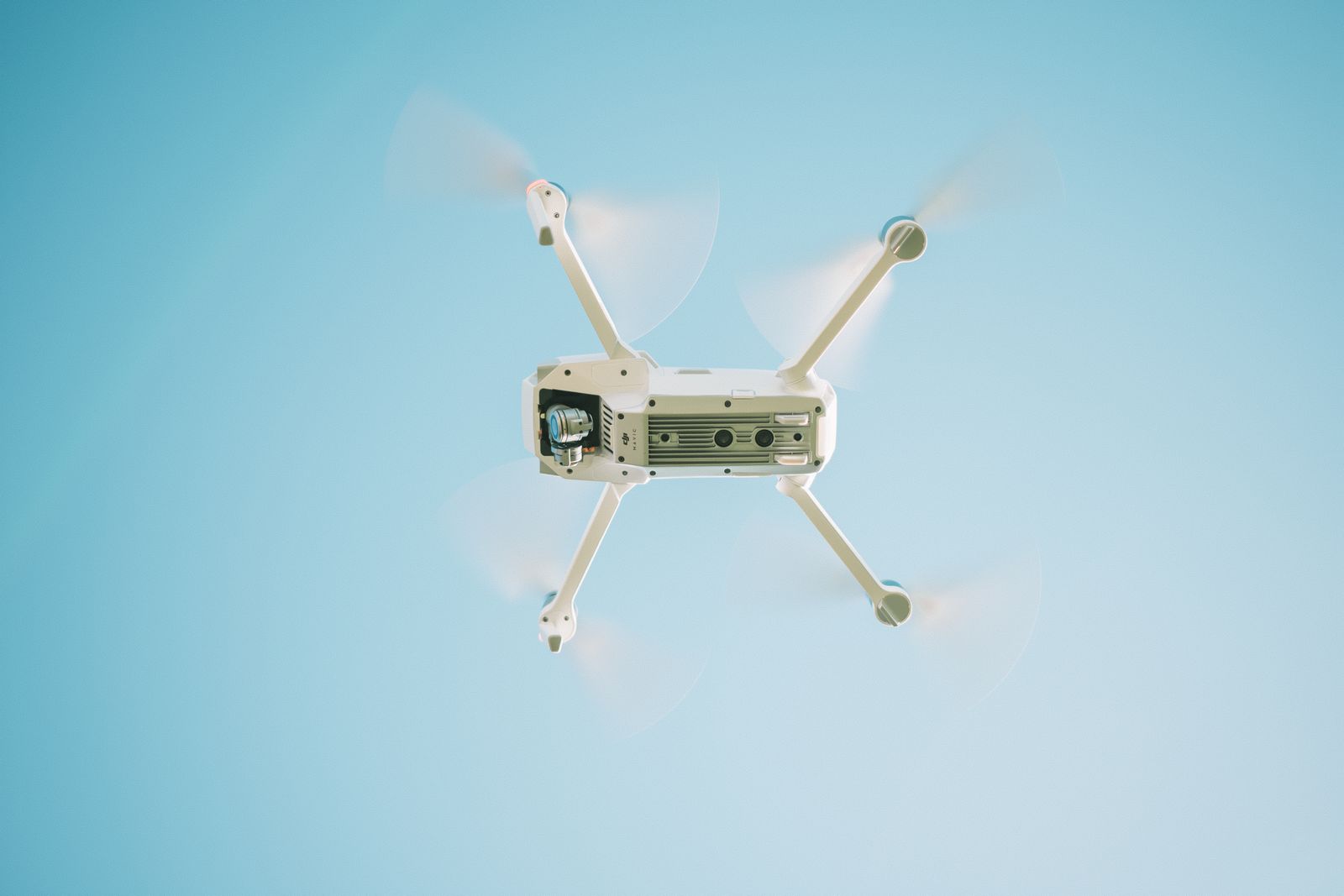
Amazon has begun delivering by drone in Darlington, the first time Prime Air has operated for customers outside the United States. It is a real service with real customers, and the interesting part is not that it launched. It is how narrow it is.
Four constraints define what this can carry: 2.2 kilograms or less, small enough to fit in a large shoebox, within a 12 kilometre radius of one fulfilment centre, to a customer who has a garden, yard or driveway. Any one of those would limit a delivery channel. Together they define a slice of a slice.
For a seller the question worth two minutes is therefore concrete rather than visionary: does anything in your catalogue fit inside that box, and does anything about your customer’s behaviour change if it arrives in an hour instead of a day. For most sellers the answer to the first is no, and that answer is more useful than a year of speculation about drones.
What actually launched
The service runs from Amazon’s fulfilment centre in Darlington, England, covering a 12 kilometre radius. Orders are delivered within 60 minutes or less of being placed. The drones travel at up to around 112 kilometres per hour, and delivery is available for items weighing 2.2 kilograms or less that fit in a large shoebox.
Customers need somewhere for the drone to drop to: a garden, yard or driveway. There is no additional charge at present, with the service included in an Amazon Prime membership.
This has been a long approach. Pilots were announced in 2023, testing in the United Kingdom and Italy began in 2024, and the service reached customers in Darlington by late August 2026. Three years from announcement to one town is the honest measure of how hard this is, and it is worth holding on to when the next launch gets described as imminent.

From the publisher
Everything we know about running Amazon, in one course.
The commercial strategy, taught by operators who run our own brands.
The constraints are the story
Take the weight limit first. At 2.2 kilograms and a large shoebox footprint, the eligible set is small consumer goods: a phone case, a supplement bottle, a paperback, a pack of batteries, a small toy. Anything bulky, fragile in an awkward shape, or heavy is out, and so is most of what people actually order in volume.
The 12 kilometre radius is tighter than it sounds. It is a single origin point, so the served area is one circle around one building rather than a town wide service, and the population inside a 12 kilometre circle around a fulfilment centre on the edge of a mid sized town is not large.
The garden, yard or driveway requirement is the one that quietly removes the most customers, and it removes them unevenly. Flats, terraced housing without rear access and dense urban centres are excluded by physics rather than by policy. That inverts the usual pattern of delivery innovation, which arrives in city centres first and reaches low density housing last. Drone delivery needs exactly the housing stock that same day vans find least efficient.
That inversion is the most strategically interesting thing in the launch. If drones serve suburban and semi rural households well and dense urban households badly, then drones are not a competitor to same day delivery in cities. They are a potential answer to the places where same day economics have never worked, which is a different and arguably larger prize.
Tool comparison · FastMoss vs Kalodata
Whether a faster delivery promise actually moves conversion is a category question, and categories behave differently enough that a general answer is worthless. Our FastMoss and Kalodata comparison is built around that kind of decision rather than around a feature grid.
Comparison coming soon
FTC disclosure: EcommSphere may earn a commission if you sign up through links in this section. It does not change what we publish, and neither tool paid to be named.
Why Darlington
A single site with a fixed radius around an existing fulfilment centre is the cleanest possible test geography. One origin, one airspace to work with, one set of routes, one customer base whose housing suits the drop requirement, and an existing building already holding the inventory. Nothing about the choice suggests Darlington is a commercial target. It suggests it is a controllable one.
That has an implication for anyone trying to guess the next location. The predictor is not market size. It is the combination of an existing fulfilment centre, permission to fly a defined corridor, and housing with private outdoor space within a short radius. Large cities score badly on the third and often on the second, which is why the obvious guesses may be the wrong ones.
There is a second reason the choice of a small town matters, and it is about failure. A new delivery mode fails in ways nobody has a runbook for: a drop into the wrong garden, a drone down in a field, an item damaged on landing, a customer who cannot find their parcel. Those incidents are survivable at the scale of one radius around one building and expensive at the scale of a city. Launching somewhere small is how you learn what goes wrong while the number of people affected stays manageable.
The pace also tells you something about the cost of permissions rather than the cost of technology. The aircraft have existed and flown for years. What took the time was the approval to fly them over people’s houses on a repeating commercial schedule, and that is a per country and probably per corridor cost. A company that has to re-earn that permission in every jurisdiction will expand slowly and unevenly, regardless of how good its drones become.
One thing to be careful quoting
The delivery window for the United Kingdom service has been described inconsistently across Amazon’s own announcements, with different published statements giving different timings for the same service. The figure attached to this launch is 60 minutes or less.
If you are putting this in a deck or a customer facing claim, use 60 minutes and attribute it to the launch announcement, and do not treat a shorter figure found elsewhere as an upgrade. The structure of the service is well established. The precise promise is not stated consistently, and a delivery claim is exactly the kind of thing that gets checked.
Tool comparison · FastMoss vs Kalodata
Speed claims are only worth making if they change behaviour in your category, and that is measurable rather than intuitive. We are running FastMoss and Kalodata through the same brief so the comparison reflects the decision you are actually making.
Comparison coming soon
FTC disclosure: EcommSphere may earn a commission if you sign up through links in this section. It does not change what we publish, and neither tool paid to be named.
What sellers should do
- Check whether any of your SKUs fit inside 2.2 kilograms and a large shoebox. That single filter decides whether drone delivery is ever relevant to you, and it takes one query against your catalogue.
- If products do fit, note that packaging design becomes a channel eligibility question rather than a cost question. Dimensional efficiency is what gets a product into the box.
- Do not build a forecast on this. One site with a 12 kilometre radius cannot move your numbers, and a plan built on an assumed expansion is a plan built on nothing.
- Watch the housing pattern rather than the technology. The next locations will look like the last one, and that means suburban housing near an existing fulfilment centre.
What it means for the wider network
Amazon does not run three year pilots for public relations. Building a separate delivery mode with its own aircraft, its own permissions and its own eligibility rules is a commitment to a long term cost curve, and the reason to want that curve is the last mile in low density areas, which has always been the most expensive part of the network and the least improved by scale.
It also lands in a week where Amazon tightened country coverage requirements on Pan-EU FBA and opened bidding for placement in its fastest United States delivery network. Read together, the pattern is a company steadily separating delivery speed from the flat Prime promise and attaching conditions to each level of it. Drone delivery is currently free and included. The direction of travel across the rest of the week suggests that is a launch condition rather than a permanent one.
What we are not saying
We are not saying drone delivery is a gimmick. It is a working service with genuine constraints, and the constraints point at a real problem worth solving. We are not saying it will scale on any particular timetable, because Amazon has not published one, and three years to reach one town does not support confident extrapolation. What we are saying is that the eligibility rules, not the aircraft, determine whether this ever touches your catalogue, and that most sellers can answer that with one query and move on.
Sources
- Ecommerce News Europe, https://ecommercenews.eu/amazon-prime-air-launches-in-the-uk/