

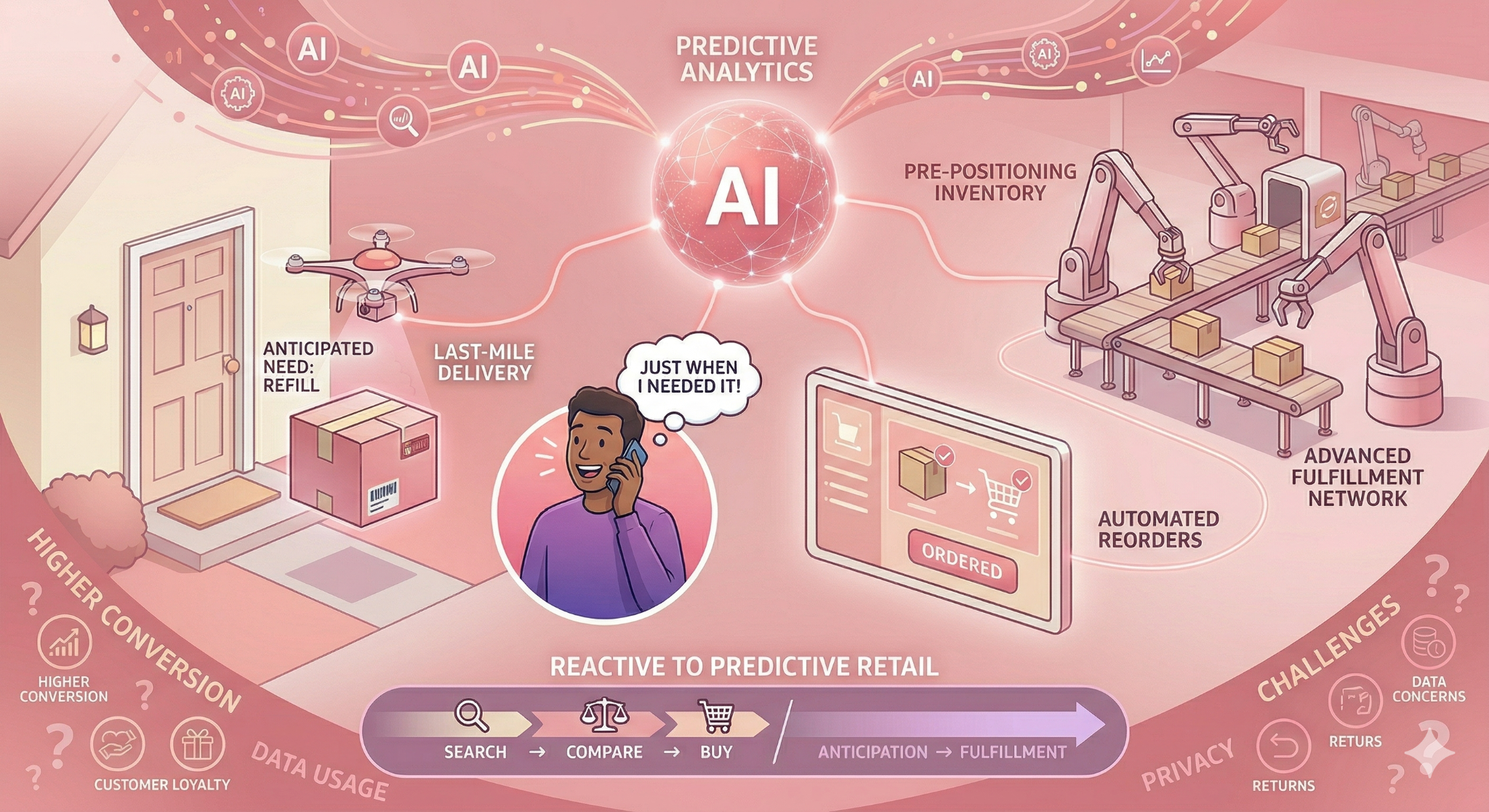
Imagine a world where you don’t have to search for products, compare options, or even place an order. Instead, the products you need arrive exactly when you need them—sometimes before you even realize it yourself. This is the idea behind anticipatory commerce, one of the most promising trends shaping the future of eCommerce.
As the market for anticipatory commerce infrastructure continues to grow, it is becoming clear that retail is moving toward a more predictive and automated model.
What Is Anticipatory Commerce?
Anticipatory commerce uses data, artificial intelligence, and predictive analytics to forecast what customers are likely to buy—and when. Based on these predictions, companies can take action in advance.
This can include:
- Recommending products before a customer searches for them
- Pre-positioning inventory closer to the customer
- Automating reorders of frequently purchased items
In some cases, it may even involve shipping products before the customer completes a purchase.
From Reactive to Predictive Retail
Traditional eCommerce is reactive: a customer searches, selects, and buys. Anticipatory commerce changes this by making retail proactive.
Instead of waiting for demand, companies try to predict and fulfill it in advance. This reduces friction in the buying process and creates a faster, smoother experience.
For customers, this means less effort. For businesses, it means higher conversion rates and stronger customer loyalty.
Powered by Data and AI
This model relies heavily on data. Companies analyze:
- Purchase history
- Browsing behavior
- Seasonal trends
- External factors (weather, events, etc.)
AI systems then use this data to generate accurate predictions and automate decisions. The more data they have, the better they perform.
Logistics Becomes a Competitive Advantage
Anticipatory commerce is not just about predicting demand—it also depends on logistics infrastructure.
To deliver products quickly (or even before purchase), companies need:
- Advanced fulfillment networks
- Smart inventory placement
- Fast last-mile delivery
This is why investment in logistics and supply chain technology is growing alongside this trend.
Benefits for Businesses and Consumers
For businesses:
- Higher conversion rates
- Better inventory management
- Increased customer retention
For consumers:
- Faster and more convenient shopping
- Fewer stockouts
- More personalized experiences
Challenges to Overcome
Despite its potential, anticipatory commerce raises important questions:
- How accurate can predictions be?
- Will customers feel comfortable with automated purchasing?
- How should companies handle returns or incorrect predictions?
There are also concerns around privacy and data usage.
Final Thought
Anticipatory commerce represents a shift from “shopping” to “having needs automatically fulfilled.”
As technology continues to improve, the line between predicting and acting will become increasingly blurred. Companies that can anticipate demand accurately and execute efficiently will gain a powerful advantage.
In the future, the most successful retailers may not be the ones who respond the fastest—but the ones who act before the customer even asks.

From the publisher
Everything we know about running Amazon, in one course.
The commercial strategy, taught by operators who run our own brands.
 Erene Araojo