

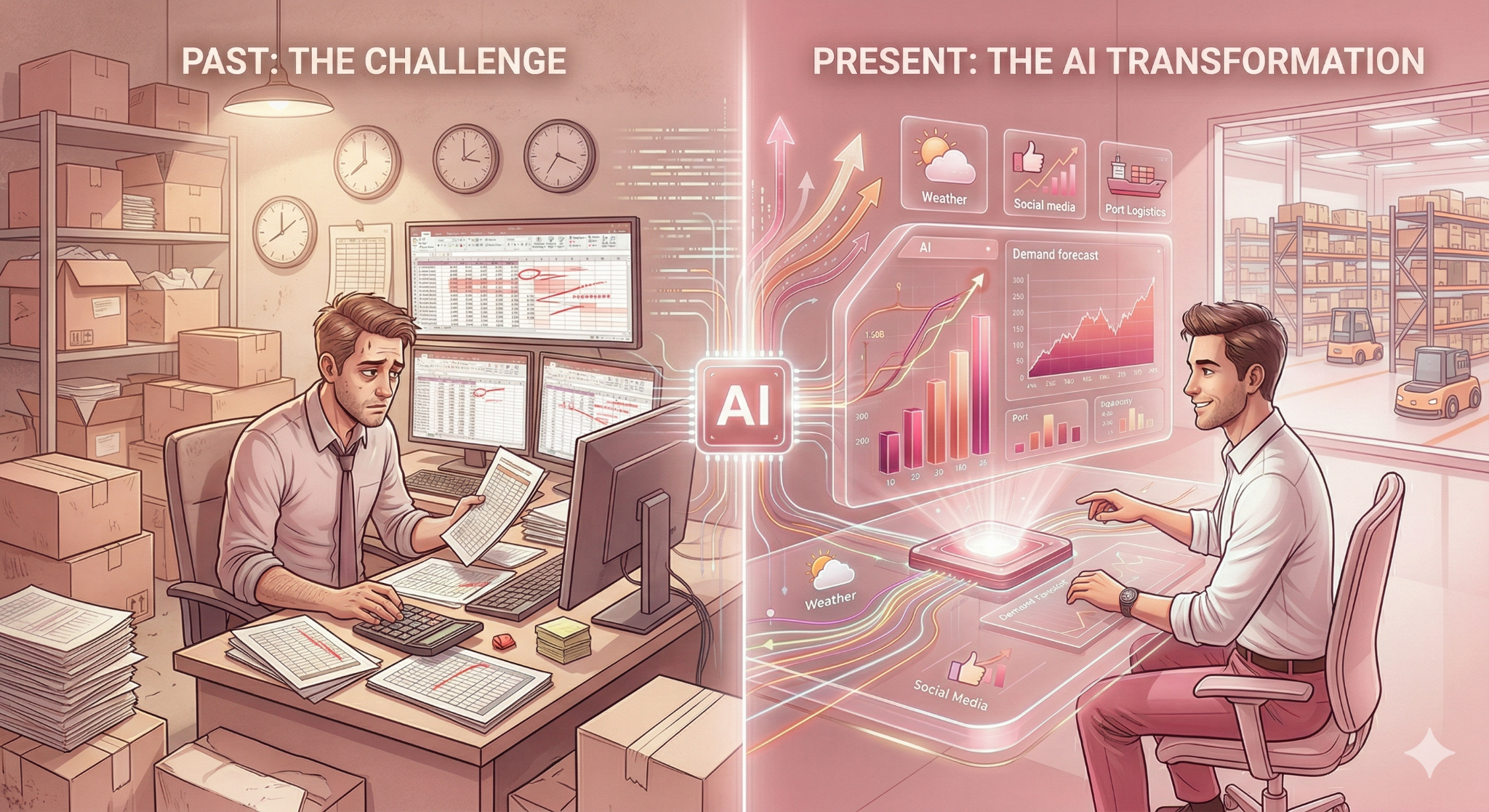
Planning demand has always been one of the hardest parts of running a business. Companies need to predict what customers will buy, when they will buy it, and in what quantity. If they get it wrong, they either run out of stock or end up with too much inventory.
Today, artificial intelligence (AI) is helping companies make these decisions more accurately and with less manual work.
From Guesswork to Smarter Predictions
In the past, demand planning relied heavily on historical data and human judgment. While experience is still important, it often wasn’t enough to deal with fast-changing markets.
AI changes this by analyzing large amounts of data—such as past sales, trends, seasonality, and even external factors—to generate more accurate forecasts. This helps companies respond better to real demand instead of relying on assumptions.
Saving Time for Better Decisions
One of the biggest benefits of AI is that it automates routine tasks. Instead of spending hours adjusting spreadsheets or reviewing forecasts, teams can focus on improving strategy.
For example, companies like Bayer are using AI-powered tools to make demand planning more “hands-free.” This allows their teams to spend less time managing data and more time understanding and improving forecast quality.
Reducing Waste and Shortages
Better forecasts lead to better outcomes. With AI:
- Companies can avoid overstocking products that won’t sell
- They can reduce stockouts of high-demand items
- They can improve overall inventory efficiency
This has a direct impact on costs and customer satisfaction.
Adapting Faster to Change
Markets today change quickly—new trends, disruptions, and unexpected demand shifts are common. AI systems can adapt faster than traditional methods, updating forecasts as new data comes in.
This flexibility is especially important in industries where demand is unpredictable or influenced by many external factors.
A Shift in the Role of Planners
AI is not replacing demand planners—it is changing their role. Instead of focusing on manual forecasting, planners now act more as decision-makers and analysts.
They review AI-generated insights, adjust strategies, and focus on exceptions rather than routine work.
Final Thought
AI is turning demand planning from a slow, manual process into a faster, smarter, and more reliable system.
Companies that adopt these tools can make better decisions, reduce costs, and respond more quickly to customer needs. In a world where demand is constantly changing, this is becoming a key advantage.

From the publisher
Everything we know about running Amazon, in one course.
The commercial strategy, taught by operators who run our own brands.
 Erene Araojo