

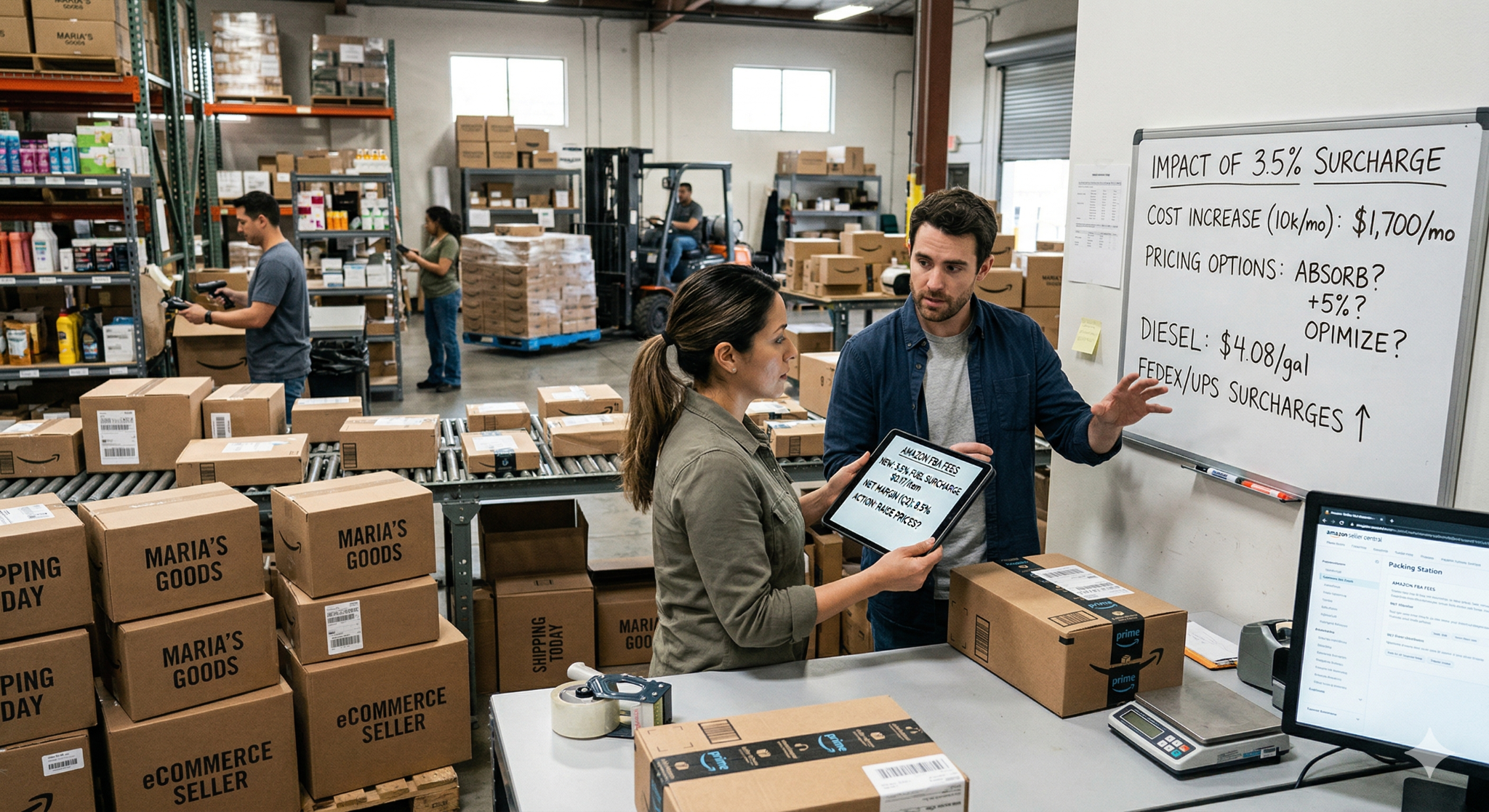
The economics of eCommerce are changing. What was once a race toward faster and cheaper delivery is now facing a new reality: rising logistics costs.
Amazon’s introduction of a 3.5% fuel surcharge for certain sellers, driven in part by global factors like rising energy prices and geopolitical tensions, is a clear signal that the industry is entering a new phase.
Why Costs Are Increasing
Delivery has always been one of the most expensive parts of eCommerce, but recent developments have made it even more challenging.
Key factors include:
- Rising fuel prices
- Increased transportation costs
- Ongoing supply chain disruptions
- Higher labor and operational expenses
These pressures are forcing companies to rethink how they price and deliver products.
What the Surcharge Means for Sellers
For Amazon sellers, the new surcharge directly impacts margins. A 3.5% increase may seem small, but in a business with already tight margins, it can be significant.
Sellers now face difficult decisions:
- Absorb the extra cost and reduce profit
- Increase product prices
- Optimize operations to offset the impact
Many will likely adopt a combination of these strategies.
Impact on Customers
While the surcharge is applied to sellers, the effects are likely to reach customers.
In practice, this could mean:
- Slightly higher product prices
- Fewer “free shipping” options
- More variation in delivery costs
Customers may not see the surcharge directly, but they will feel its impact over time.
The End of “Free” Delivery?
For years, free and fast shipping has been a key driver of online shopping. However, as costs rise, this model is becoming harder to sustain.
Retailers are beginning to explore alternatives:
- Charging for premium delivery speeds
- Setting higher minimum order values
- Offering subscription-based shipping models
The idea of “free delivery” is not disappearing—but it is being redefined.
A Shift Toward Efficiency
Rising costs are pushing the industry toward greater efficiency. Companies are investing in:
- Better inventory placement
- Route optimization using AI
- Automation in warehouses
The goal is to reduce costs without compromising customer experience.
A Broader Industry Trend
Amazon’s move is not an isolated case—it reflects a wider shift across the logistics and eCommerce sectors. As global conditions change, cost pressures are likely to remain.
This means that both retailers and consumers will need to adjust expectations.
Final Thought
The introduction of a fuel surcharge marks a turning point. eCommerce is no longer just about speed and convenience—it is also about sustainability and cost control.
For sellers, it means adapting to tighter margins. For customers, it may mean paying a bit more for the convenience they’ve come to expect.
In the end, the future of eCommerce will depend on finding a balance between affordability, efficiency, and service quality.

From the publisher
Everything we know about running Amazon, in one course.
The commercial strategy, taught by operators who run our own brands.
 Erene Araojo