

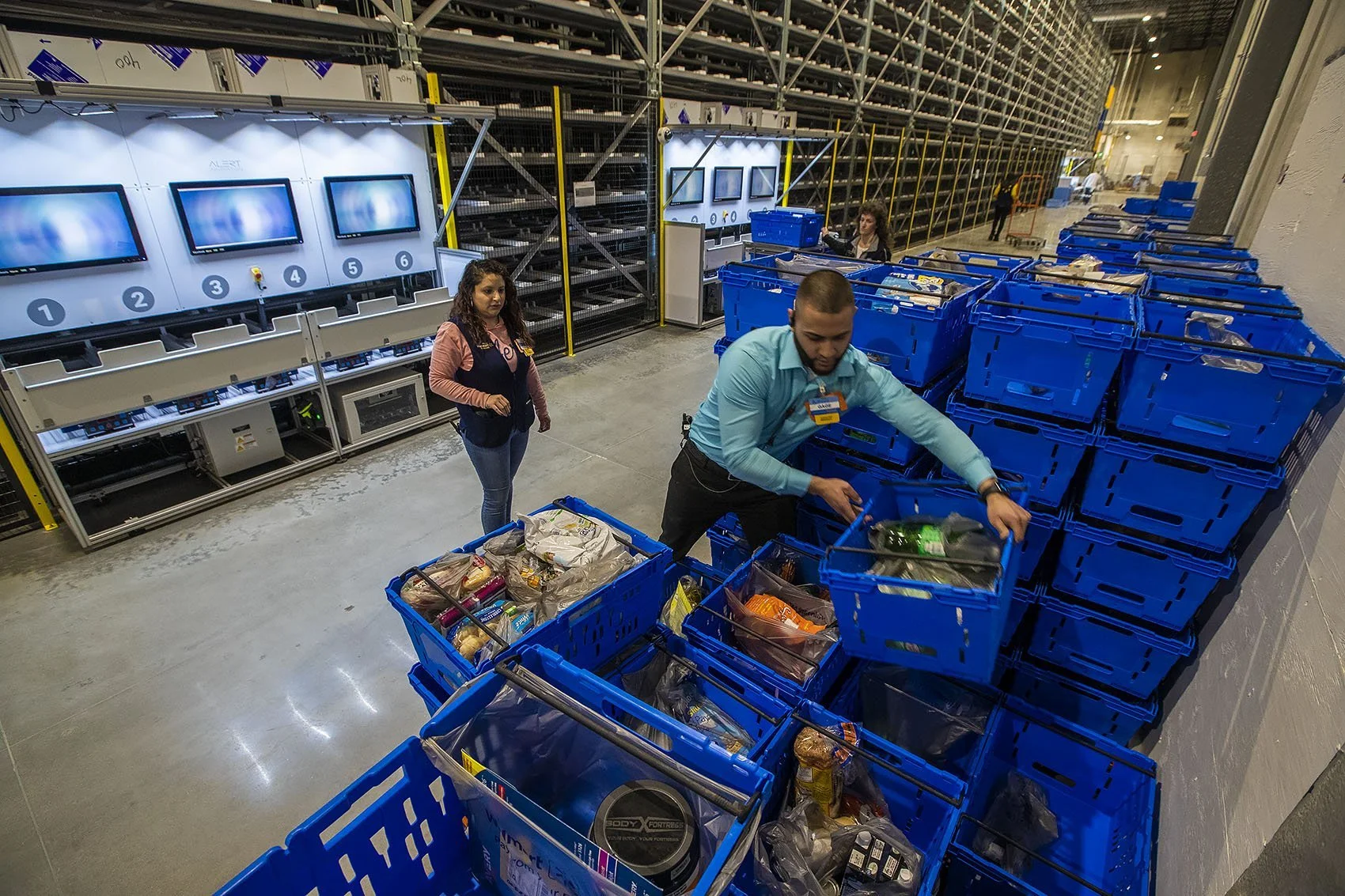
Walmart just revealed that roughly 50% of its online sales are now automated.
That’s not a chatbot stat. That’s not a warehouse robot headline. That’s half of ecommerce revenue being driven by automation systems — recommendations, replenishment, ad optimization, merchandising, pricing logic, and fulfillment orchestration.
This isn’t experimentation anymore. This is infrastructure.
And if you sell on Walmart Marketplace — or compete with sellers who do — this matters more than the headline suggests.
- Walmart says 50% of its online sales are now powered by automation systems. That’s structural, not experimental.
- This affects pricing, ad delivery, recommendations, and replenishment — not just warehouse robots.
- Sellers who rely on manual optimization will lose visibility over time.
- Retail media on Walmart is likely becoming algorithm-first, not rep-managed.
- Operators should audit listings, pricing logic, and ad automation immediately.
What Actually Changed
Walmart isn’t just automating fulfillment centers (they’ve been doing that for years). The bigger shift is upstream:
- AI-driven product recommendations
- Automated replenishment and subscription flows
- Predictive inventory positioning
- Algorithmic pricing adjustments
- Retail media automation
When half of online transactions are influenced or executed through automated systems, the algorithm becomes the primary merchandiser.
That changes who wins.
Historically, strong marketplace operators could outwork competitors: better keyword optimization, aggressive repricing, hands-on ad management, constant tweaks.
In an automation-heavy ecosystem, the system decides what gets surfaced.
And systems reward clean data, strong signals, and predictable performance.

From the publisher
Everything we know about running Amazon, in one course.
The commercial strategy, taught by operators who run our own brands.
Why This Is Bigger Than an Efficiency Story
Most coverage will frame this as cost reduction or operational efficiency.
That’s missing the point.
When automation drives 50% of sales, Walmart is essentially centralizing merchandising logic at scale.
Think about what that means:
- Search ranking becomes more model-driven.
- Retail media delivery leans harder on conversion data loops.
- Inventory placement becomes predictive rather than reactive.
- Promotions are surfaced algorithmically, not manually curated.
Walmart is building something closer to Amazon’s flywheel — but with a heavier emphasis on automated decisioning across the stack.
And once that reaches majority penetration, it’s hard to roll back.
Who This Helps
- 1. Large, operationally disciplined brands – Brands with clean catalog data, consistent inventory levels, and strong conversion history will benefit. Automation rewards signal quality.
- 2. Sellers investing in retail media properly – If Walmart’s ad system feeds performance data back into organic ranking (very likely), strong paid performance compounds organic visibility.
- 3. High-velocity SKUs – Automation thrives on predictability. Fast-moving items give the model more data.
Who This Hurts
1. Manual optimizers
If your strategy depends on daily tinkering without structured data hygiene, you’ll slowly lose ground.
2. Sellers with messy catalogs
Poor titles, weak attributes, inconsistent inventory — the algorithm will deprioritize you.
3. Low-margin repricers playing short-term games
Algorithmic pricing systems adapt faster than manual repricing strategies.
The Retail Media Angle (Underrated Risk)
Here’s where it gets interesting.
If Walmart is automating half of transactions, retail media likely plays a bigger role than publicly stated.
Automation systems need inputs:
- Click-through rates
- Conversion rates
- Basket behavior
- Repeat purchase signals
Retail media campaigns generate those signals.
This creates a feedback loop:
Better ads → better conversion → stronger algorithmic placement → more organic lift.
We’ve seen this dynamic play out on Amazon. Walmart may be accelerating into the same model.
If that’s true, retail media budgets on Walmart are not optional anymore. They’re structural.
The Competitive Signal
This move also tells us something about platform competition.
Amazon has long leaned into algorithmic retail. Shopify brands rely more on manual control. TikTok Shop leans into discovery algorithms.
Walmart is clearly choosing automation scale as its core differentiator.
If they can combine:
- Predictive fulfillment
- Algorithmic merchandising
- Growing retail media
- Marketplace scale
- Marketplace scale
They become a far more serious second marketplace — not just a supplementary channel.
That matters for brands diversifying off Amazon.
What Operators Should Do Next
Here’s the practical checklist:
1. Audit Your Catalog Data
Are all attributes complete? Are images conversion-optimized? Is backend metadata clean?
Automation systems punish ambiguity.
2. Evaluate Inventory Stability
Frequent stockouts degrade algorithm trust. Predictability matters more in automated systems.
3. Reassess Retail Media Strategy
If you’re under-invested in Walmart ads, that gap will widen over time. Paid data likely fuels organic placement.
4. Tighten Pricing Strategy
Random repricing without logic will get outpaced by model-driven competitors.
5. Monitor Organic Rank Movement
If rankings fluctuate more frequently, that’s algorithmic recalibration in action.
The Bigger Pattern
This isn’t just about Walmart.
We’re watching every major commerce platform shift from:
“Tools that help humans sell”
to
“Systems that decide what sells.”
That’s a different game.
Operators who understand how platforms think — how data feeds ranking loops, how automation prioritizes velocity, how ads reinforce placement — will win.
Those who treat Walmart as a secondary manual channel will slowly fade into page three.
Half of online sales being automated is the tipping point.
The algorithm is no longer assisting.
It’s driving.