

Online shopping is entering a new phase. Instead of customers browsing endlessly through websites, comparing products, and reading reviews, a new technology is starting to take over: AI shopping agents.
Companies like Shopify are pushing this concept forward, aiming to make shopping faster, simpler, and more personalized than ever before.
What Are AI Shopping Agents?
AI shopping agents are tools that can search, compare, and even purchase products on behalf of the user. Instead of manually scrolling through dozens of options, a customer can simply describe what they need, and the AI does the rest.
For example, instead of searching for “best running shoes,” a user could say:
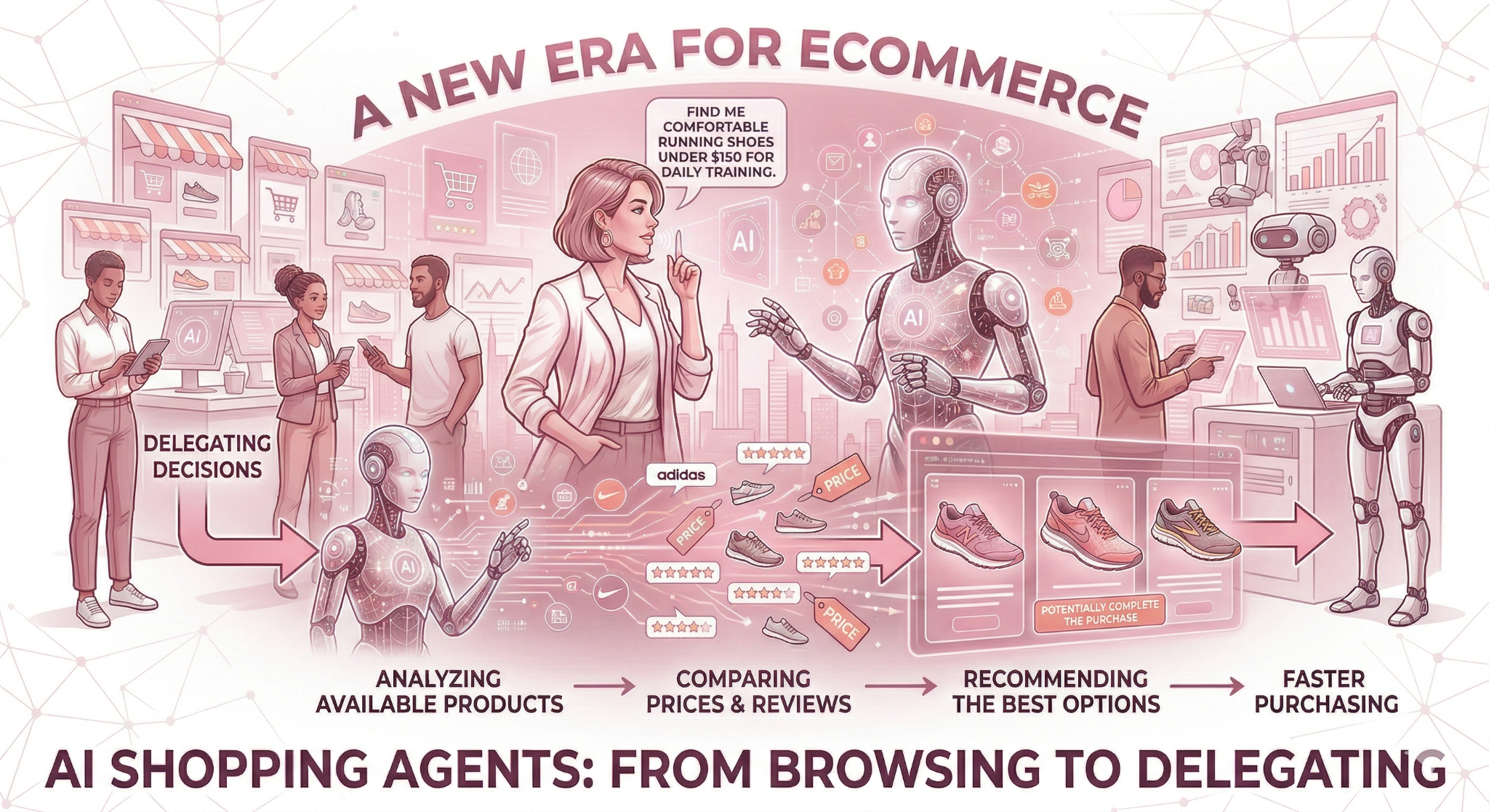
“Find me comfortable running shoes under $150 for daily training.”
The AI agent would then:
- Analyze available products
- Compare prices and reviews
- Recommend the best options
- Potentially complete the purchase
From Browsing to Delegating
This shift changes the role of the customer. Shopping is no longer about browsing—it’s about delegating decisions.
This has major implications:
- Less time spent on websites
- Fewer manual comparisons
- Faster purchasing decisions
For consumers, this means convenience. For businesses, it means a completely new way of competing.
A New Competitive Landscape
If AI agents choose products for users, then being selected by the algorithm becomes more important than attracting clicks.
This could change key aspects of eCommerce:
- Product visibility may depend more on data quality than design
- Pricing strategies may need to adapt to algorithmic comparison
- Reviews and product information become even more critical
In this environment, brands are no longer just competing for attention—they are competing for algorithmic preference.
Personalization at Scale
AI agents can learn from user behavior, preferences, and past purchases. Over time, they can deliver highly personalized recommendations that feel tailored to each individual.
This level of personalization is difficult to achieve manually, but AI makes it scalable. The result is a shopping experience that feels more relevant and efficient.
Challenges and Questions
Despite the potential, there are still open questions:
- How much control will users give to AI?
- Will people trust agents to make purchasing decisions?
- How will brands influence AI-driven recommendations?
There are also concerns around transparency, bias, and competition.
Final Thought
AI shopping agents could fundamentally change how people buy online. Instead of navigating stores, customers may rely on intelligent systems to do the work for them.
For retailers, this means adapting to a world where success depends not only on attracting customers, but also on being the best choice for AI systems.
In the near future, the question may no longer be “How do we get customers to our site?” but rather:
“How do we become the product that AI chooses?”

From the publisher
Everything we know about running Amazon, in one course.
The commercial strategy, taught by operators who run our own brands.
 Erene Araojo