

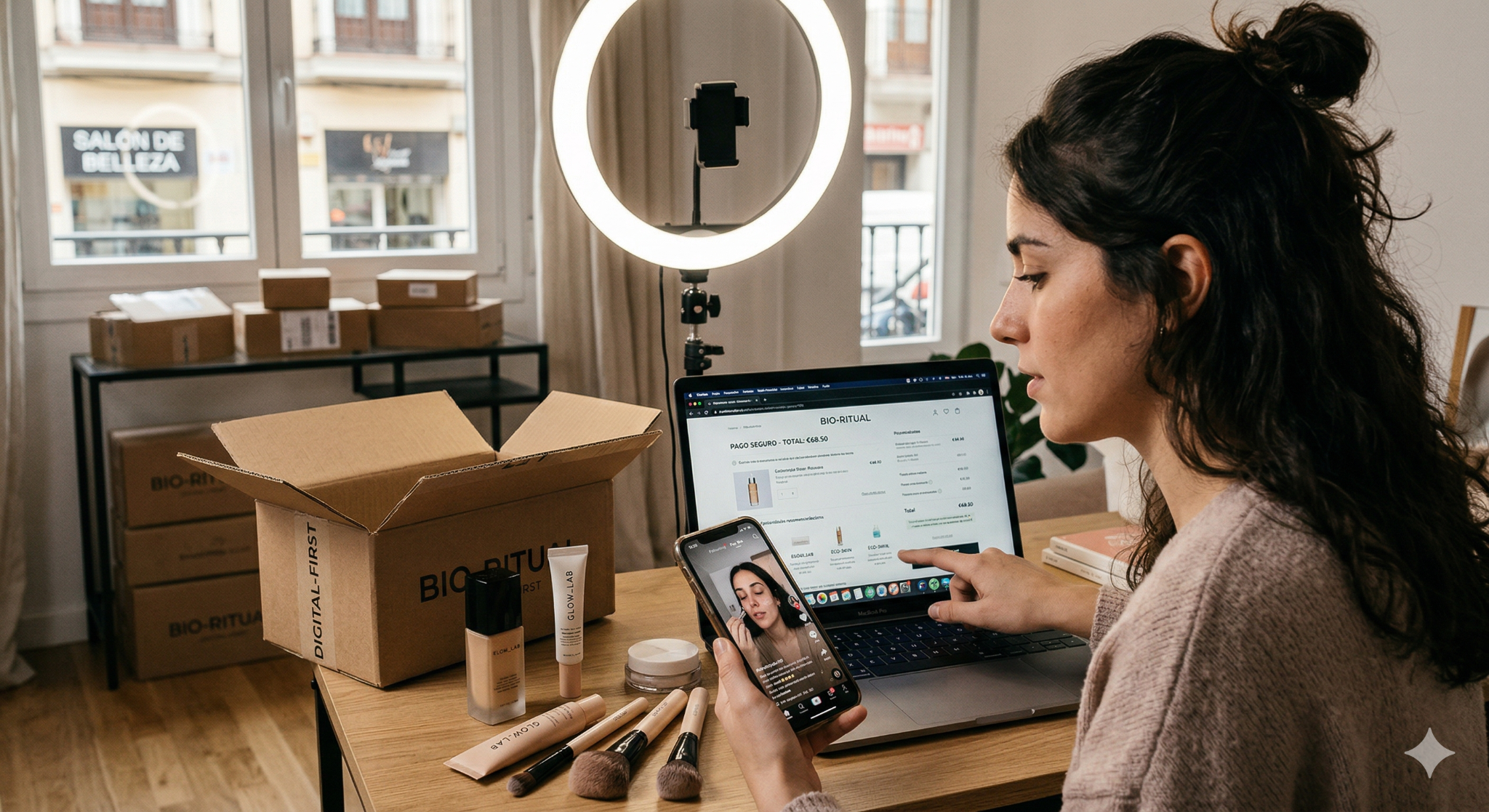
The global beauty industry is evolving quickly, and one trend stands out above the rest: the shift toward digital-first strategies. As more brands prioritize online channels, the beauty market continues to grow—recent reports show a growth close to 10% globally.
This change is not just about selling products online. It reflects a deeper transformation in how consumers discover, evaluate, and purchase beauty products.
From Store Counters to Screens
Traditionally, beauty shopping was an in-store experience. Customers visited physical stores to test products, ask for advice, and make decisions.
Today, much of that journey has moved online. Consumers now:
- Discover products through social media
- Watch tutorials and reviews from creators
- Compare options across multiple platforms
- Purchase instantly via mobile devices
This shift has made digital channels the primary driver of growth in the beauty sector.
The Power of Content and Community
Beauty is one of the most content-driven industries. Platforms like TikTok, Instagram, and YouTube play a central role in shaping demand.
Short videos, tutorials, and influencer recommendations allow consumers to see products in action. This builds trust and makes it easier to decide what to buy.
In this environment, content is not just marketing—it is part of the shopping experience.
Direct-to-Consumer and Brand Control
Many beauty brands are adopting direct-to-consumer (DTC) models, selling directly through their own websites and apps. This allows them to:
- Control the customer experience
- Collect valuable data
- Build stronger relationships with customers
Digital-first brands can also launch products faster and respond quickly to trends.
Personalization and Data
Digital channels provide access to large amounts of customer data. Brands use this data to offer:
- Personalized recommendations
- Targeted promotions
- Customized product suggestions
In beauty, where preferences vary widely, this level of personalization is a major advantage.
Challenges in a Competitive Market
While growth is strong, competition is also increasing. New brands can enter the market more easily thanks to digital platforms, making it harder to stand out.
Brands must:
- Continuously create engaging content
- Maintain authenticity
- Deliver consistent quality and service
Logistics and fulfillment also need to keep up with faster online demand.
The Future of Beauty Is Digital
The continued growth of the beauty market shows that digital is no longer just an additional channel—it is the core of the business.
Physical stores still play a role, especially for experience and brand presence, but the main driver of growth is online.
Final Thought
The beauty industry is becoming a clear example of how digital transformation reshapes entire sectors.
Brands that succeed will be those that combine:
- Strong digital presence
- Engaging content
- Data-driven decisions
In the end, beauty is no longer just about products—it’s about experiences, storytelling, and connection in a digital world.

From the publisher
Everything we know about running Amazon, in one course.
The commercial strategy, taught by operators who run our own brands.
 Erene Araojo