

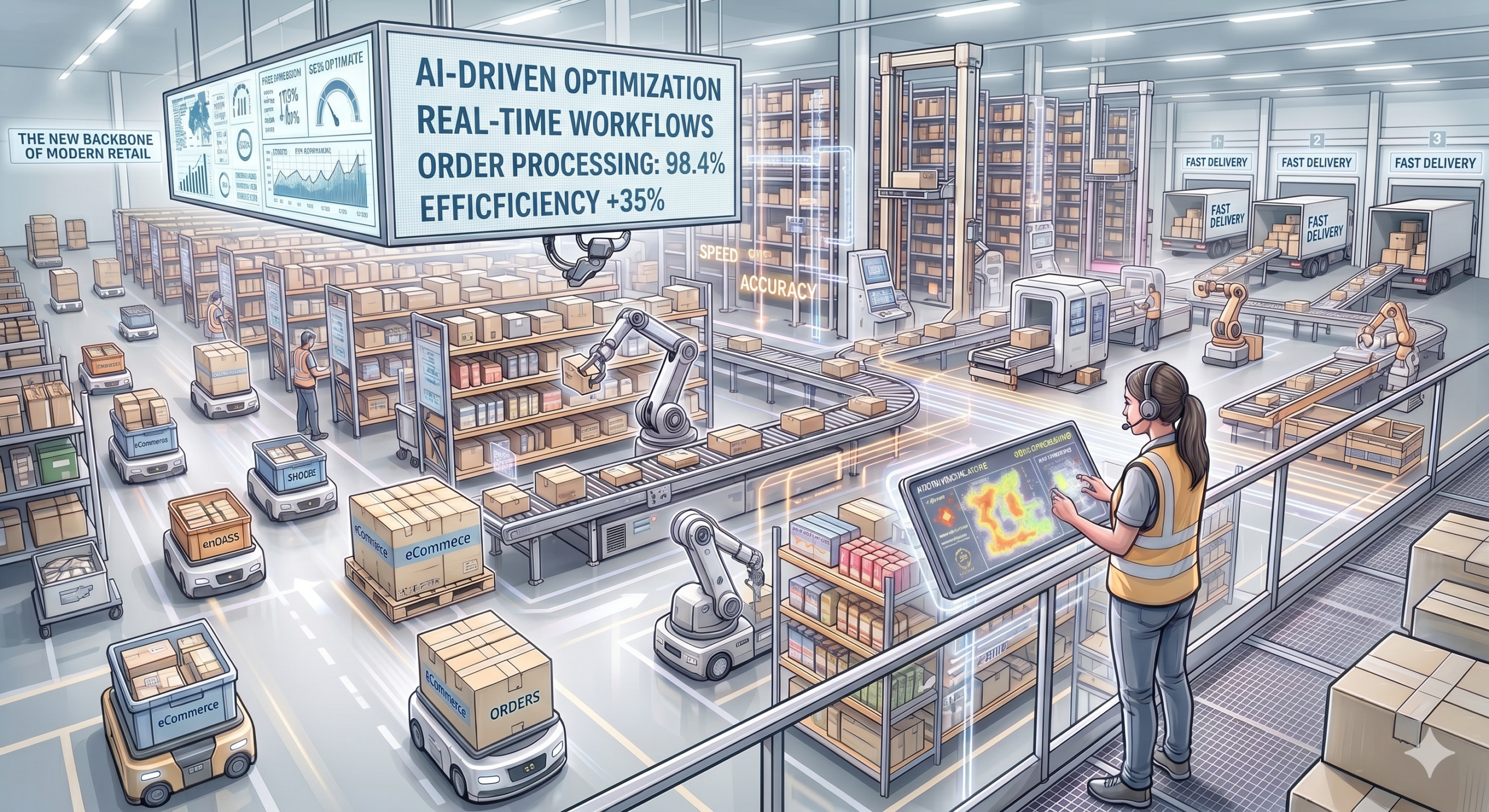
As eCommerce continues to grow, the pressure on logistics operations has never been higher. Faster delivery expectations, rising costs, and increasing order volumes are forcing companies to rethink how their warehouses operate.
The answer for many is clear: AI-driven warehouse automation. With companies like Home Depot investing in automation solutions and acquiring specialized firms, this technology is quickly becoming a core pillar of competitive advantage.
From Manual Warehouses to Intelligent Systems
Traditional warehouses rely heavily on human labor for picking, packing, and moving goods. While this model worked in the past, it struggles to keep up with today’s demands.
AI-driven automation changes this by introducing:
- Smart robots that move and sort products
- AI systems that optimize workflows in real time
- Automated decision-making for inventory and order routing
The result is a shift from manual operations to intelligent, self-optimizing systems.
Why AI Makes a Difference
Automation alone is not new. What makes the current wave different is the integration of artificial intelligence.
AI enables warehouses to:
- Predict demand and prepare inventory in advance
- Optimize picking routes to reduce time and effort
- Adapt to changes in order volume instantly
This makes operations not just faster, but smarter and more flexible.
Speed, Cost, and Accuracy
AI-driven warehouses deliver improvements across three key areas:
- Speed: Orders are processed faster, supporting same-day or next-day delivery
- Cost: Reduced reliance on manual labor lowers operational expenses
- Accuracy: Fewer errors in picking and packing improve customer satisfaction
These benefits directly impact both profitability and customer experience.
A Strategic Investment
The acquisition of automation companies by major retailers highlights a key point: this is not just a technological upgrade—it is a strategic investment.
Companies are recognizing that:
- Logistics is a competitive differentiator
- Efficiency at scale is critical for growth
- Automation is necessary to remain competitive
Owning and controlling these capabilities gives businesses more flexibility and long-term advantages.
Challenges to Consider
Despite its potential, AI-driven automation comes with challenges:
- High upfront investment
- Integration with existing systems
- Workforce adaptation and training
However, as technology matures, these barriers are becoming easier to overcome.
The Future: Self-Optimizing Warehouses
Looking ahead, warehouses are expected to become increasingly autonomous. Future systems will:
- Continuously learn and improve performance
- Adjust operations without human intervention
- Fully integrate with supply chain and demand planning systems
This vision of self-optimizing warehouses is already starting to take shape.
Final Thought
AI-driven warehouse automation is transforming the foundation of retail and eCommerce. As companies invest in smarter, faster, and more efficient operations, logistics is becoming a key driver of success.
In the end, the winners in eCommerce will not just be those who sell the best products—but those who can deliver them with the greatest speed, efficiency, and intelligence.

From the publisher
Everything we know about running Amazon, in one course.
The commercial strategy, taught by operators who run our own brands.
 Erene Araojo