

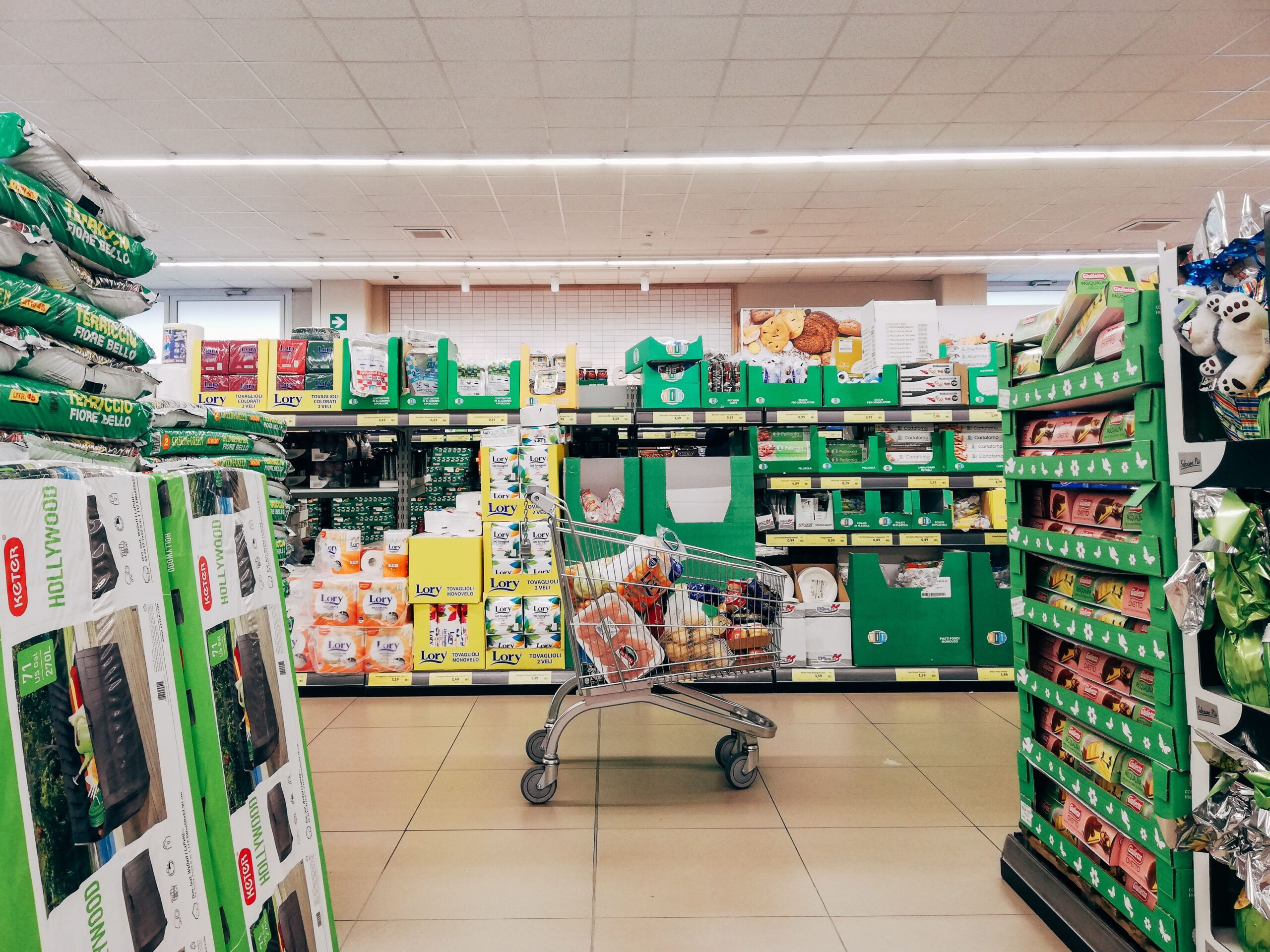
3,000 sellers are already on Kaufland.nl
Roughly 3,000 sellers were already on board when Kaufland opened its Dutch marketplace on 8 September, carrying more than 9 million articles across more than 6,400 categories. For a seller weighing the channel, that is the fact that matters. A marketplace that opens with a full shelf is not asking merchants to build its assortment for it.
The announcement also carries three growth percentages, and they are being quoted this week as though they describe the same thing. They do not. Each has a different denominator, and none of them measures anything in the Netherlands.
Three percentages, three denominators
Take them one at a time, because the differences are the whole point.
- 124 percent is the growth of Kaufland’s international business in gross merchandise value over the previous financial year, described as one of the strongest drivers. International business is a segment inside the marketplace, not the marketplace.
- 11.9 percent is the growth of the Kaufland marketplace as a whole, in GMV, over the same period. That is the company-wide figure, and it is the one to use if you want a single number for how fast the business is moving.
- 322 percent is the GMV growth of Kaufland.pl, year on year. It describes Poland and nothing else.
Put beside each other, those three tell a coherent story rather than a contradictory one. A young international segment compounding from a small base pulls hard on a percentage and lightly on the total, which is why the headline figure is 124 and the whole-business figure is 11.9. Poland’s 322 percent is the same effect at country level: a very fast multiple of a recent starting point.
The mistake to avoid is treating any of them as a forecast for the Netherlands. A new market has no base year, so it cannot repeat a growth rate earned somewhere else. None of the three figures is a measurement of Dutch demand, Dutch traffic or Dutch conversion, and no Dutch figure of any kind has been published, because the site is days old.
Tool comparison · FastMoss vs Kalodata
Sizing a market you have never sold in is the same problem whichever platform it sits on, and guessing is expensive. FastMoss and Kalodata are built for reading category demand by country before you commit stock, which is the discipline this launch calls for.
Comparison coming soon
FTC disclosure: our tool comparisons carry affiliate links. If you sign up through one we may earn a commission, at no extra cost to you. We rank on merit, never on commission, and the verdict is written by a human.

From the publisher
Everything we know about running Amazon, in one course.
The commercial strategy, taught by operators who run our own brands.
What actually opened
Kaufland.nl joins marketplaces in Germany, France, Italy, Poland, Austria, Czechia and Slovakia. Spain has been announced as the next market, which the company counts as nine European countries in total. Eight of those are trading today.
Around 3,000 of Kaufland’s roughly 15,000 marketplace sellers are already set up for the Dutch site. That ratio is the interesting part. One seller in five across the network has opted into a market that launched this month, which suggests the onboarding cost of adding a country is low for merchants already inside the network, and that the Dutch shelf will fill faster than a standing start would imply.
The category count is the other figure worth reading properly. More than 6,400 categories against more than 9 million articles works out at a shallow average depth per category, which is what a broad, general marketplace looks like at launch rather than a deep one. It means most categories are thin today. Whether that is an opening or a warning depends entirely on whether the buyers arrive, and no buyer figure has been published.
Gerald Schönbucher, who sits on the board of Kaufland e-commerce, frames the proposition for Dutch shoppers as breadth of range at attractive prices on a platform he describes as fair and secure. That is a positioning statement rather than a measurement, and it is worth separating from the figures above.
The part the announcement leaves out
There is no information in the launch release about warehousing, fulfilment or shipping arrangements for sellers on the Dutch site. That is a large silence for a market entry, and it is the silence a seller should read first.
Dutch buyers have been trained by the incumbents to expect fast, cheap and predictable delivery with easy returns. Meeting that expectation from a warehouse in another country is possible and it is not free. Until the fulfilment arrangement is described, a seller considering the channel has to assume they are shipping it themselves, and price the channel accordingly rather than optimistically.
The same applies to the cost of selling. No commission rates, fee structure or launch terms for Dutch sellers appear in the announcement, so the margin question cannot be answered from it. Anyone presenting you with a Kaufland.nl profit model this week is filling in blanks the company has not filled in.
Why a full shelf on day one changes the calculation
Most marketplace launches ask merchants to take a risk in exchange for being early. The shelf is thin, the traffic is unproven, and the reward for arriving first is less competition. That trade is real, and it is usually a bad one for a small catalogue, because thin traffic against thin assortment is mostly just thin.
Nine million articles on launch day inverts the trade. A seller arriving now is not building the assortment, they are joining one, which means less scarcity advantage and more immediate competition. The upside moves from being early to being findable, and findability on a shelf that size is mostly a question of price, content quality and delivery promise rather than timing.
The market being entered is also not an empty one. The Netherlands already has two large online retailers well ahead of everything else, with Bol and Amazon.nl together accounting for far more gross merchandise value than the rest of the top five combined. A new marketplace is not walking into open ground, it is asking Dutch shoppers to add a third destination to a habit that currently has two. That is a demand-side problem, and no amount of assortment solves it on its own.
So the honest framing for a seller is not a land grab. It is a normal channel evaluation, run on an assortment that already looks like a mature marketplace, with a traffic figure nobody has published yet.
Tool comparison · FastMoss vs Kalodata
Deciding whether a new national channel earns its operational cost is a question of category evidence rather than enthusiasm. Our head-to-head of FastMoss and Kalodata compares how each handles European market coverage when you are working a country cold.
Comparison coming soon
FTC disclosure: our tool comparisons carry affiliate links. If you sign up through one we may earn a commission, at no extra cost to you. We rank on merit, never on commission, and the verdict is written by a human.
What a seller does differently on Monday morning
There is no deadline here, which makes this a decision rather than a scramble. Four steps are worth taking before the channel gets added to anyone’s roadmap.
- Check whether your category is already dense on Kaufland.nl. With 3,000 sellers live and a catalogue of that size, this is a ten minute exercise on the public storefront and it will answer most of the question.
- Ask for the fee schedule and the fulfilment options in writing before committing listing work. Neither is published, and a channel whose cost you cannot state is a channel you cannot plan.
- Price a Dutch delivery and a Dutch return from your existing warehouse. If you are already shipping into the Netherlands for another channel, this is close to free. If you are not, that cost is the real entry price and it has nothing to do with the marketplace.
- Do not use the German or Polish growth rates in an internal business case. They measure other markets over other periods, and using them to size a Dutch opportunity is borrowing a number that was never about you.
Where the honest uncertainty sits
No Dutch traffic, visitor or sales figures exist. The site is days old and nothing has been published, so any claim about Dutch demand on this platform is currently an opinion.
The commercial terms for sellers are not in the announcement, and neither is the fulfilment model. Those two absences together are most of what a seller needs to decide.
And the growth percentages, though genuine, describe periods and territories that have already happened elsewhere. They establish that the network is expanding. They establish nothing about whether this particular market works.
The three-line version
- If you run the channel: spend ten minutes on the live storefront checking how dense your category already is, then ask for fees and fulfilment options in writing.
- If you have just taken on marketplaces: the gap to name is that three different growth figures are circulating internally as though they were one, and none of them is about the Netherlands.
- If you sign the budget: nothing needs approving this week. Refuse any Dutch business case built on the 124 percent or the 322 percent, because neither measures this market.
Sources
- Kaufland Unternehmen newsroom: https://unternehmen.kaufland.de/presse/newsroom/2026/september/kaufland-marktplatz-waechst-weiter-start-in-den-niederlanden
- EcommerceNews.eu: https://ecommercenews.eu/ecdb-bol-widens-lead-over-amazon/