

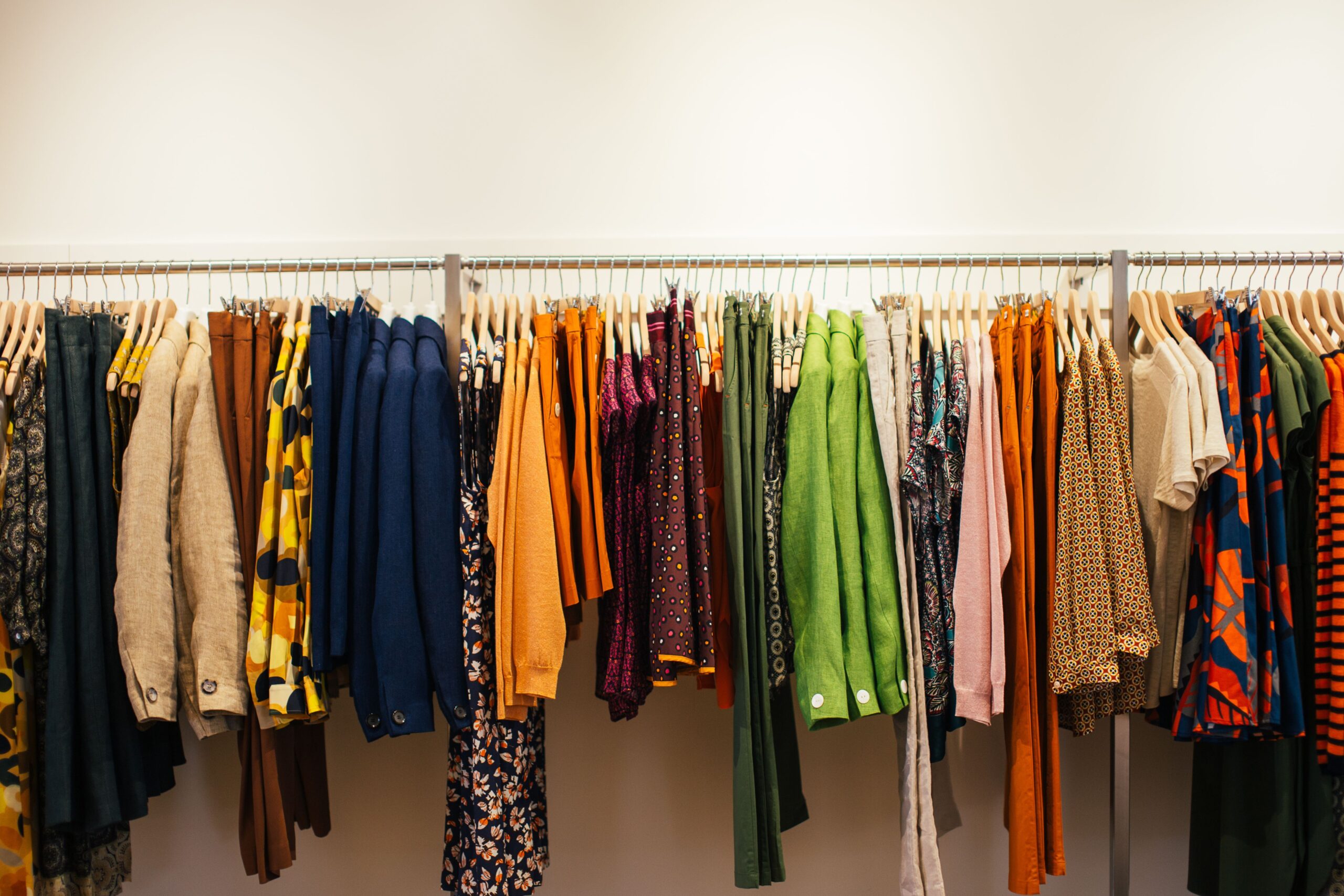
Primark to start home delivery in Great Britain
Primark has decided to sell online for home delivery in Great Britain. In the company’s own words, it has “shared our decision to introduce home delivery in Great Britain in the future”. There is no launch date, and none has been announced.
One number in the announcement is concrete, and it is the one to read as intent. A 90 million pound acquisition of an automated fulfilment centre in Sheffield, to support future e-commerce logistics. Statements of direction are cheap. Buying a fulfilment centre is not, and it is the part of this that has already happened.
The premise that just died
For most of the last decade, Primark was the standing counter-example to the idea that every retailer ends up selling online. The model was internally consistent: extremely low prices, no delivery cost to absorb, no returns operation to fund, and stores that worked as the whole of the distribution network. Anyone teaching retail strategy used it as the exception that proved the rule was optional.
That premise is now retired, and it is worth saying so plainly, because a lot of commercial thinking in fast fashion was quietly resting on it. If the business built hardest against home delivery economics has concluded it needs home delivery, the question is no longer whether online is compulsory at the value end of the market. It is what it costs to arrive late.
Note what has not changed. Nothing published says stores are being reduced, repositioned or given a different role. This is an addition to a store estate, not a replacement of one, and reading it as the beginning of a shift away from physical retail is reading in something the announcement does not contain.
Tool comparison · FastMoss vs Kalodata
The platforms named as competitive pressure in this story are the ones most sellers struggle to see inside. FastMoss and Kalodata both track what is actually moving on TikTok Shop by category and by country, which is the closest thing to a price and demand read on that end of the market.
Comparison coming soon
FTC disclosure: our tool comparisons carry affiliate links. If you sign up through one we may earn a commission, at no extra cost to you. We rank on merit, never on commission, and the verdict is written by a human.

From the publisher
Everything we know about running Amazon, in one course.
The commercial strategy, taught by operators who run our own brands.
What 90 million pounds does and does not tell you
The figure is an acquisition cost for an existing automated facility, not the cost of building a new one and not a measure of what the site will handle. No capacity figure, no throughput figure and no headcount has been published for it, so the number tells you about commitment rather than about scale.
As a signal of commitment it is a good one. Automated fulfilment capacity is the expensive, slow part of selling online, and buying it rather than leasing pick-and-pack capacity from a third party is the decision of a business that expects volume and expects to keep the margin on it. A retailer testing the water rents. A retailer that has decided buys the building.
As a guide to timing it tells you very little. Commissioning an automated site, integrating it with stock systems, and building the returns flow behind it are not same-quarter jobs. The gap between owning the asset and shipping the first order is usually measured in quarters, and the absence of a date is consistent with that rather than evasive about it.
The part of this most likely to be underestimated is the asset the company already owns. A retailer with hundreds of high-street shops has somewhere to send a return that costs almost nothing to process, and somewhere to put a collection order that never touches a courier. Returns are the line that ruins the economics of selling cheap clothing online, and a store network is the cheapest returns network anybody can own. The business arriving late to delivery is also the one arriving with the thing that makes delivery affordable, which is why a late entry here is not obviously a weak one.

Great Britain is not the United Kingdom
The announcement covers Great Britain. It does not say the United Kingdom, and the difference is not pedantry.
Great Britain excludes Northern Ireland, where post-Brexit arrangements make the movement of goods a different problem with different paperwork. Most coverage of this story has already flattened the distinction, and anyone building a competitive map from a summary rather than the statement will carry that error forward.
The practical point for a seller is narrow but real. If your own competitive analysis assumes a new national online competitor, check which nation. A launch that covers Great Britain and not Northern Ireland changes the picture for anyone whose business is weighted towards the island of Ireland, and it tells you something about how the company is thinking about cross-border complexity.
Who the company names as the reason
The announcement points at the competition directly, which is unusual and therefore informative. Shein, Temu and TikTok Shop are named, along with second-hand fashion platforms such as Vinted.
That list is worth reading for its shape rather than its contents. Three of the four are not conventional retailers at all. Two are cross-border marketplaces that ship individually from overseas, one is a social platform that turned a feed into a shop, and one is a resale market where the inventory is other people’s wardrobes. None of them competes with Primark on the thing Primark is best at, which is a physical store full of very cheap clothes in a town centre.
What they do compete for is the habit. All four have trained a shopper to expect that the cheap purchase arrives at the door, and that expectation transfers. Once a customer has it, a retailer without delivery is not competing on price, it is competing against convenience with price, and that is a losing trade over a long enough period.
One honest caveat on the naming. A company’s own account of who it is responding to is a strategic statement, not a market measurement. No share, traffic or switching data accompanies it, and businesses routinely name the competitors that make the most convincing case for a decision already taken.
Tool comparison · FastMoss vs Kalodata
Understanding what the social and cross-border platforms are actually selling, and at what price, is the analysis underneath this story. Our head-to-head of FastMoss and Kalodata compares their category coverage and how quickly each gets you to a usable read on a market.
Comparison coming soon
FTC disclosure: our tool comparisons carry affiliate links. If you sign up through one we may earn a commission, at no extra cost to you. We rank on merit, never on commission, and the verdict is written by a human.
What a seller does differently on Monday morning
For most operators, nothing this week. A competitor with no launch date is not a change to anybody’s trading conditions, and saying so is more useful than inventing urgency. Three things are worth logging.
- If you sell value clothing, accessories or homeware into Great Britain, put a marker in your planning for a large new online competitor with store-level buying power and no date. You cannot plan against it yet. You can stop being surprised by it.
- Watch the Sheffield site rather than the press releases. Commissioning progress, hiring and carrier arrangements around a fulfilment centre are the leading indicators of a launch window, and they are visible well before a marketing announcement.
- Check that your own competitive set is written as Great Britain rather than the UK where it matters. It is a small correction that stops a compounding error.
Where the honest uncertainty sits
There is no launch date, no range description and no pricing approach. Whether the online assortment matches the store assortment, and whether delivery is charged or bundled, are the two things that would determine the competitive effect, and neither is known.
The capacity of the Sheffield facility is unpublished, so the scale of the operation cannot be estimated from the acquisition price.
And the decision itself is described as a decision for the future. Retail plans of this size are announced, revised and occasionally shelved. This is a firm direction backed by a real asset, which is stronger than most announcements, and it is still not a date.
The three-line version
- If you run the range: nothing changes this week. Add a dated marker to your competitive review and correct any document that says UK where the announcement says Great Britain.
- If you have just taken on the category: the gap to name is that the value end of the market is about to gain a delivery competitor with store economics, and no date exists to plan against.
- If you sign the budget: there is nothing to approve. Refuse any defensive spend justified by this announcement until a launch window and a range are published.
Sources
- InternetRetailing: https://internetretailing.net/primark-to-launch-online-delivery-in-uk/