

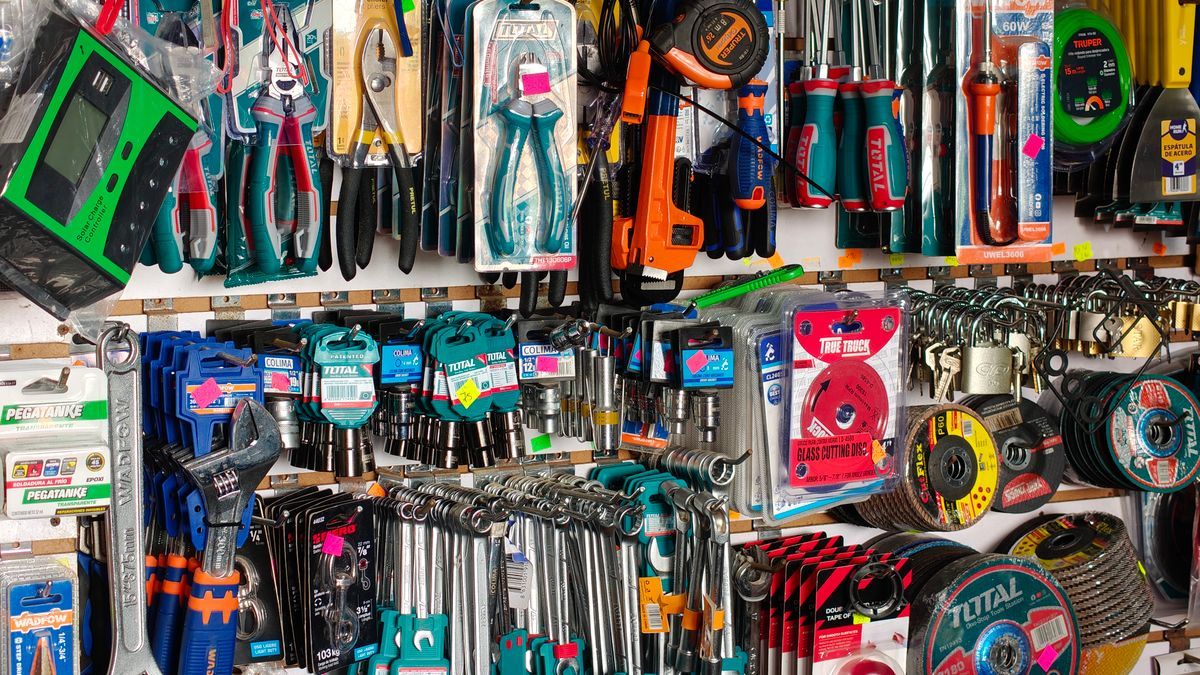
Amazon pack format now covers 193 product types
Amazon has launched a total product quantity variation theme across 193 product types, primarily in hardlines, giving sellers a structured way to express how many units a listing contains and how those units are packed. It is optional for both new and existing listings, there is no deadline, and Amazon has published no ranking or conversion benefit for adopting it.
That combination, a real structural improvement with no reward attached and no clock running, is exactly the kind of change most sellers ignore and a few use. The case for looking at it now is that optional is the cheapest it will ever be.
The problem this is trying to fix
Multipacks are one of the quietest sources of catalogue damage in a seller’s account, and the reason is that a marketplace listing has historically had nowhere sensible to put pack maths.
A seller with a product that sells as a single, a three-pack and a twelve-pack has three quantities of the same thing. Without a supported way to express that relationship, the usual outcomes are all bad in different ways. The three listings sit apart, so reviews, ranking history and sales velocity split three ways instead of compounding. Or they are forced into a variation family built on a theme that does not fit, such as size or style, which makes the selector on the detail page read as nonsense to a shopper. Or the quantity is pushed into the title and the bullet points, where it is text rather than data, so it cannot be filtered, compared or displayed consistently.
The commercial cost shows up as shoppers landing on the wrong quantity and bouncing, as a five-star single-unit listing sitting next to an unreviewed twelve-pack, and as three listings competing with each other for the same search term.

From the publisher
Everything we know about running Amazon, in one course.
The commercial strategy, taught by operators who run our own brands.
What the new theme actually does
The theme splits quantity into two separate attributes: the total number of units, and the number of packs those units arrive in. Amazon’s own example is a box of zip ties. Seventy-two ties in one box gives a unit count of 72 and a pack count of one, and the listing displays as “72 count”. The same seventy-two ties supplied as six separately bagged sets of twelve keeps the unit count at 72 and sets the pack count to six, displaying as “72 count (6 packs of 12)”.
The important part is that those are now two fields rather than one string. A shopper comparing offers can see that two listings both contain seventy-two units and differ only in how they are bagged, which is a genuinely different purchase for anyone buying for a workshop, a site or a household. A seller can express a difference that previously had to be smuggled into the title.
Tool comparison · FastMoss vs Kalodata
Pack configuration is a pricing decision as much as a catalogue one, and it is worth knowing which quantity a category actually buys. FastMoss and Kalodata both track product-level demand, which is the fastest way to see whether the single or the multipack is carrying the volume.
Comparison coming soon
FTC disclosure: E-CommSphere may earn a commission if you buy a tool through our links. It costs you nothing extra and it does not change which tool we recommend.
Who this covers, and who it does not
Coverage is 193 product types, described by Amazon as primarily in hardlines categories. Hardlines is the durable, non-consumable half of a general catalogue: tools, hardware, automotive, garden, kitchen equipment, office supplies, pet hardware and similar. Consumables, apparel, beauty and media are not the initial target, and EcomCrew reports that Amazon intends to extend the theme to more categories later in 2026.
Two things follow. If you sell in hardlines and hold multipack families, this is live for you now and the only question is whether to use it. If you sell in a category outside the 193, there is nothing to do this month, but the direction of travel is worth filing: a structured quantity attribute is the sort of thing that starts optional in one category group and becomes the expected way to list everywhere.
Checking whether your product types are in scope is the first concrete step, and it is a catalogue query rather than a strategy exercise.

What Amazon has not said
This is where discipline is required, because the absence is unusually clean. Amazon has published no ranking benefit, no conversion lift and no promise that adopting the theme will improve search placement. The theme is described as optional for both new and existing listings, and no deadline of any kind has been set.
So any argument for adopting it that rests on performance is unsourced. If somebody tells you this change will lift your ranking, they are extrapolating from the general principle that better structured data tends to help, which is reasonable as a belief and is not a published fact about this theme.
The honest case for adoption is different and narrower. It is that a coherent variation family consolidates the signals that were previously split, gives the shopper a sensible selector, and removes quantity text from the title where it competes with everything else you want to say. Those are catalogue quality arguments. They are worth something, and they are not a promised uplift.
Why optional is the moment to do the work
Catalogue changes are cheap when nobody is watching and expensive when a date is attached. An optional theme with no deadline means you can restructure one family, watch it for a few weeks, and decide whether to do the rest, with no risk of suppression and no queue. The same work done in the week a requirement lands is done at speed, across everything, with support tickets.
There is a second reason, which is that the work is mostly not the listing change. It is the mapping: deciding, for each family, what the consumer unit is and what the pack configurations are. That question often exposes inconsistencies that have been sitting in a catalogue for years, such as the same product described as a six-pack in one listing and as six units in another. Sorting that out has value whether or not the theme ever becomes mandatory, and it is the part that takes the time.
Tool comparison · FastMoss vs Kalodata
Optional catalogue work is easiest to justify when you can see what the change is worth in the category, not just in your own account. FastMoss and Kalodata give that outside view from different angles, so a listing project gets prioritised on evidence rather than on tidiness.
Comparison coming soon
FTC disclosure: E-CommSphere may earn a commission if you buy a tool through our links. It costs you nothing extra and it does not change which tool we recommend.
The trade-off nobody mentions
Consolidating separate listings into one variation family is not free, and the case for it is weaker than catalogue purists tend to admit. It is worth weighing before you restructure anything that currently works.
The upside is consolidation: one detail page accumulating attention, reviews and sales history instead of three. The downside is also consolidation. If you have one quantity with a long, strong review history and another with a handful of poor reviews, putting them in the same family means the shopper sees both, and the weaker child now sits on the page that used to sell well. A family is only as reassuring as its worst-reviewed member.
There is a second, more specific risk for anyone with an established listing. A listing that ranks well for its main terms carries history that took time to build, and restructuring it is a change to a page that is currently earning. The sequence that protects you is obvious once stated: restructure the family whose current arrangement is plainly broken first, and leave your best-performing standalone listing alone until you have seen what the change does elsewhere.
Finally, if your quantities are genuinely different products to a shopper rather than the same product in different amounts, a quantity theme is the wrong tool. The test is whether a buyer who wanted one would consider the other. If the answer is no, they do not belong on the same page, however neat it would look in the catalogue.
What to do this week
Query your catalogue for the eligible product types. If none of your listings fall in the 193, stop here and revisit when the category expansion lands.
List your multipack families. Every product you sell in more than one quantity, with the current listing structure noted: separate listings, forced variation, or quantity buried in the title.
Define the consumer unit before you touch anything. One number per product, applied consistently. This is the decision that makes the rest mechanical.
Test one family, not the catalogue. Pick the family where the current structure is most obviously wrong, restructure it, and hold it for a few weeks against the unchanged ones. You will get a read on whether it is worth doing at scale, which is more than Amazon has given anyone.
Do not expect a ranking gift. Budget the work as catalogue hygiene with a conversion hypothesis attached, and if a stakeholder asks what the uplift will be, the accurate answer is that nobody has published one.
The three-line version
If you run the catalogue. Query the 193 product types, list your multipack families, fix the consumer unit for each, then restructure one family and hold it against the others for a few weeks.
If you have just taken on the listings. The pack inconsistencies you are about to find predate you, and an optional theme with no deadline is the cheapest moment you will get to fix them.
If you sign the budget. This is hours rather than spend, and there is no published uplift to justify it. Fund it as catalogue hygiene or not at all.
Sources
Amazon, Seller Central announcement, new variation theme for total product quantity: https://sellercentral.amazon.com/seller-forums/discussions/t/dcea0ef0-ce36-4503-b579-dfc8a369c8d8
EcomCrew, Amazon’s new quantity variation theme covers 193 product types: https://www.ecomcrew.com/amazons-new-quantity-variation-theme-covers-193-product-types/