

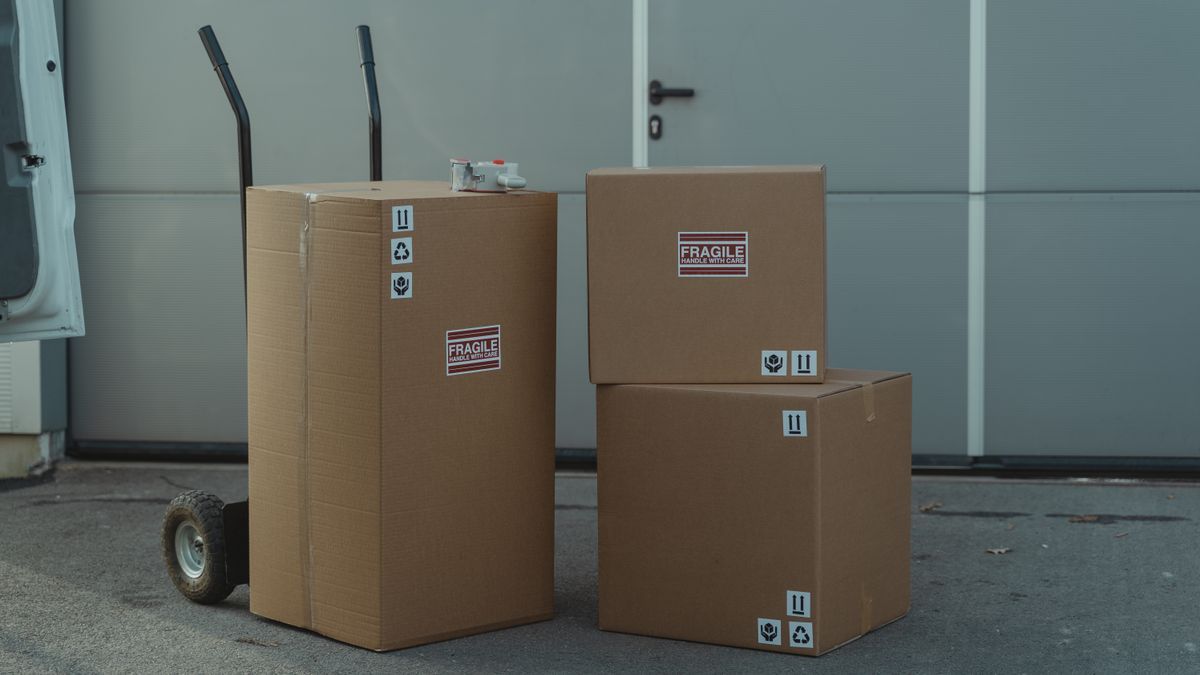
From November, every low-value parcel entering the European Union carries a second public charge on top of the 3 euro customs duty that has applied since July. The charge is settled law with a start date. The number attached to it is not. For anyone importing into Europe, that is an unusual planning problem: the cost is certain, its size is not, and it lands three weeks before Black Friday.
The useful move this week is to stop waiting for the figure and start working out the order value at which direct-from-China shipping stops paying for itself. That number is calculable today.
What has actually been decided
The European Union’s customs reform entered into force this month after formal adoption by the Council and the Parliament. The Commission’s own announcement is precise about what the regulation created: it “established an EU-wide handling fee for small parcels to cover the increasing costs customs authorities face when processing these low-value goods.”
On timing, the Commission says the EU “will start to apply it from November 2026 with a fixed amount, to be established in a delegated act by the Commission.” The customs directorate’s own reform page is tighter still, saying the fee “will be introduced by 1 November 2026” and that “the Commission will determine its amount in a delegated act.”
So three of the four things an operator needs are fixed. There is a fee. It is EU-wide. It starts on or before 1 November. Only the amount is outstanding, and it arrives through a delegated act rather than a fresh negotiation.

From the publisher
Everything we know about running Amazon, in one course.
The commercial strategy, taught by operators who run our own brands.
The number in circulation, and what it rests on
A figure of 2 euros is being reported across European trade press. The wording in the coverage matters: the proposal “is now to set the amount at 2 euros”, with member states and the Parliament given a further month to weigh in. That is a proposed amount inside an already-decided mechanism, not a rate anyone has confirmed.
The Commission has published no amount on any of its own pages. Its press release, its customs reform page and its September news index all describe the fee without naming a figure. Plan for a fee. Do not build a landed-cost model that treats 2 euros as settled.
The delegated act route matters more than it sounds. It means the figure will arrive as a technical instrument rather than a political negotiation, and it means the window for changing it is narrow and procedural. Operators who have been treating the amount as something still up for argument have been reading the wrong process.
The charge that is already running
The handling fee is the second layer, not the first. In December 2025 the EU decided to abolish the 150 euro customs duty exemption that had let low-value consignments in free. Since 1 July 2026 a flat 3 euro customs duty applies per item on consignments valued up to 150 euros.
Two details about that duty are routinely dropped from the coverage and both change how you plan. It is explicitly temporary, running “from 1 July 2026 until July 2028, following which normal customs duties will be levied”. And the switch back is tied to a system rather than only to a date: the customs directorate’s wording is that “once the Data Hub is fully operational, normal customs duties will apply”, with the hub becoming mandatory for e-commerce on 1 July 2028. The current arrangement is a bridge, not a destination.

The volume this was built for
The scale explains the design. In 2025, 5.9 billion low-value items were imported into the EU, four times the volume recorded in 2022, with over 90 percent originating from China. The trajectory is steeper than the total suggests: that figure is up roughly 26 percent on 2024’s 4.6 billion, which had itself almost doubled on the year before.
That is why this is a handling fee rather than a tax. It is framed as recovering what it costs customs authorities to process parcels they cannot realistically inspect. The practical consequence for a seller is the same either way: a fixed sum per item, indifferent to what the item is worth.
Tool comparison · FastMoss vs Kalodata
When a fixed charge lands on every imported item, the products that break first are the low-priced, high-volume ones. Finding out which of your categories actually run at low average order values, and what competitors are charging in them, is a data question before it is a pricing one. FastMoss and Kalodata both track product-level pricing and sales velocity on TikTok Shop.
Comparison coming soon
FTC disclosure: we may earn a commission if you buy through links on this page. It costs you nothing and does not change what we recommend.
Who is liable now, and it is not the shopper
Sitting in the same reform is the change with the sharpest consequence for a seller, and it has almost nothing to do with the fee. Under the new rules, responsibility for duty payment and compliance with standards “is no longer with the consumer but with the platforms, sellers or carriers involved in the transactions”. Non-EU online platforms and sellers are “responsible for customs formalities and duty payments for the goods they sell into the EU”.
The enforcement attached to that is not decorative. Non-compliance “carries penalties, including fines, the loss of certain customs privileges, and even access restrictions”.
This reverses the arrangement most cross-border sellers have been operating under, in which the parcel arrived and the customer discovered the charge at the door. It also changes who carries the fee once its amount is set. A charge that lands on a consumer can be refused along with the parcel. A charge that lands on a seller who can lose customs privileges for handling it wrongly is a different kind of obligation, and it is the reason the amount matters less than most of the coverage suggests.
Where the arithmetic breaks
A fixed charge is regressive against order value, and that is the whole mechanism. On a 12 euro item shipped direct to a European customer, the 3 euro duty alone is a quarter of the goods value before freight, payment fees or returns. Add a handling fee on top and the fixed public cost of putting one cheap item into Europe rises again.
Run it the other way and the picture inverts. On a 90 euro item the same fixed charges are a rounding error. The measure does not attack cross-border selling. It attacks cheap cross-border selling, which is a different business and, for most of the past decade, the one that has been winning.
Stock already held inside the EU pays none of this. European fulfilment has spent years losing on landed cost to direct-from-China shipping. For the first time in that period, part of the gap is legislated rather than operational, which means it will not be competed away.
Worth noticing where the pressure concentrates. The direct-shipping model depends on the fixed charge staying small relative to the basket, so the pressure falls on basket size rather than unit price: one charge spread across four items hurts less than four charges on four orders. That works until the customer notices they are being asked to buy three things to make one worth ordering.
It also puts a date on something operators have been arguing about abstractly for two years. The question was never whether European stock would become competitive again. It was when, and by how much, and the first half of that is now on the calendar.
Tool comparison · FastMoss vs Kalodata
If your competitors ship direct from China, their cost base changes in November and yours may not. Watching whether their prices move, and when, is the cleanest early read on how much of the charge they intend to absorb. Both FastMoss and Kalodata track seller and product pricing over time.
Comparison coming soon
FTC disclosure: we may earn a commission if you buy through links on this page. It costs you nothing and does not change what we recommend.
For the business operator
Put 3 euros in as known and a second charge in as a range, then read off the order value at which your direct-shipped units stop clearing their costs. That threshold is the decision, and it barely moves whether the fee lands at 1 euro or 3.
Separate your catalogue by average selling price rather than by category. The exposure sits entirely in the cheap end, and most catalogues have never been sorted that way.
If you already hold European stock, this is the quarter to say so in your listings and your ads. The advantage is real and competitors will eventually reprice around it.
From the consumer’s side
The charge is designed to be paid by the importer, and on a low-value parcel there is rarely enough margin to absorb it. Most of it will surface at the customer’s checkout, either as a visible handling line or as a quietly higher price.
The behaviour that follows is predictable and it is already visible in how shoppers responded to the July duty. Buyers do not usually abandon a cheap marketplace over a small fixed charge. They consolidate, putting several items into one order to spread a per-item cost they do not fully understand, and they become sharply more sensitive to a second charge appearing after they thought they had finished. A European seller whose price is complete at the point it is shown gains something here that has nothing to do with the goods.
The three-line version
If you run the marketplace or the supply chain, rebuild landed cost this week with the fee as a range rather than a number, and sort the catalogue by selling price to find the units that stop working. The line to take upward is that the mechanism and the date are settled and only the amount is open, so waiting for the figure costs planning time and buys nothing.
If you have just taken on cross-border or European expansion, the gap this exposes is that most landed-cost models were built when low-value consignments entered free, and have been patched twice since December 2025 rather than rebuilt. The 2028 expiry of the temporary duty means they will need rebuilding again.
If you sign the budget, there is nothing to buy here. This is a modelling exercise your team can do in an afternoon with a spreadsheet, and any vendor selling a compliance product against a fee whose amount the Commission has not published is selling you certainty that does not exist yet. Refuse the tooling pitch and fund the repricing work instead.
Sources
European Commission, EU Customs Reform press release IP/26/1904 — https://ec.europa.eu/commission/presscorner/api/files/document/print/en/ip_26_1904/IP_26_1904_EN.pdf
European Commission, DG Taxation and Customs Union, EU customs reform — https://taxation-customs.ec.europa.eu/customs/eu-customs-reform_en
RetailDetail EU — https://www.retaildetail.eu/news/general/additional-handling-fee-adds-another-2-euros-to-the-cost-of-e-commerce-packages/