

What would halving your returns be worth?
TikTok says that is what live selling does to fashion. In its first UK LIVE Shopping Report it claims that clothes bought during a livestream come back at less than half the rate of clothes bought from an ordinary product page. Returns are where fashion margin goes to die, so a format that halves them is worth more than a format that doubles reach, and that is true even if you have no intention of ever going on camera.
The claim arrives with a deadline attached. TikTok Shop UK’s Black Friday period runs to 30 November, which gives a UK seller about a fortnight to test the thing themselves rather than take the number on trust. And the number does need testing, because every figure in this report belongs to TikTok.
What a LIVE actually is
If you have not sold this way, the format is less exotic than it sounds and more demanding than it looks.
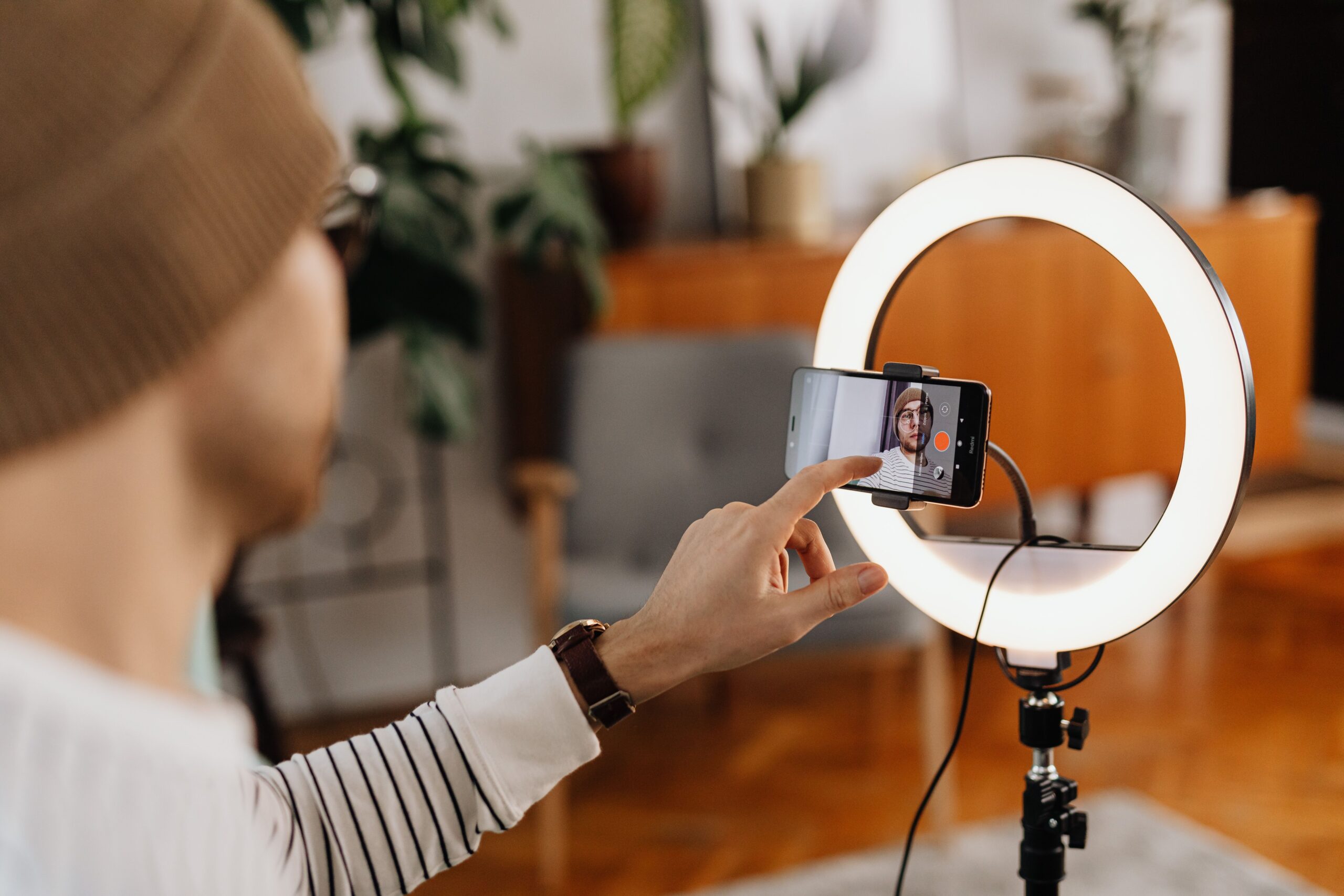
A LIVE is a livestream: someone stands in front of a camera for an hour or several, holds products up, answers questions typed into a chat window, and the products are purchasable from a panel on the same screen without the viewer leaving the app. It is QVC with a comment feed, run from a desk.
The demanding part is the hours. TikTok says more than 6,000 LIVE sessions now run on TikTok Shop UK every day, which tells you where the competitive floor sits. The resale retailer Fashionphile broadcasts around 35 hours a week and plans to move to 55 to 60 next year. Those are rotas, not campaigns, and nobody is doing this with a spare afternoon.


From the publisher
Everything we know about running Amazon, in one course.
The commercial strategy, taught by operators who run our own brands.
Why the returns figure is the interesting one
TikTok’s claim is that fashion items bought in a LIVE session are returned at less than half the rate of items bought through static product listings, meaning the ordinary photograph-and-description page that most of your catalogue sits on. For pre-loved items specifically, it reports returns of fewer than one in 100 transactions.
There is a plain mechanism behind it, which is why it is more believable than most of the report. A shopper who has watched someone hold a garment, turn it over, show how it sits on a real body and answer a question about the waist is far better informed than one who studied three photographs and a size chart. Most fashion returns are not buyer’s remorse, they are a mismatch between what someone expected and what arrived, and live video closes that gap in a way still photography cannot.
What TikTok has not published is the arithmetic. There are no actual return rates, just the ratio, and no period over which it was measured. So you cannot tell whether this is 40% falling to 18%, which would be transformative, or 8% falling to 3.5%, which would be pleasant. The direction is credible. The magnitude is unaudited.
Tool comparison · FastMoss vs Kalodata
The reason a platform’s own report is the only source on this is that LIVE session performance is almost invisible from outside. That is precisely the gap FastMoss and Kalodata are built to fill, tracking live sessions, products and creators across TikTok Shop so you can check a claim against your own category rather than taking it on trust. They are our comparison this month, and this story is the clearest illustration of why the category exists.
Comparison coming soon
FTC disclosure: E-CommSphere may earn a commission if you subscribe through links in this comparison. We are carrying it on a story about a platform’s own marketing claims, so it is worth saying plainly that it does not change the price you pay, and it does not decide which tool we rate higher or what we write about TikTok.
The headline claim comes in two sizes
The figure TikTok actually wants you to repeat is a different one, and it is worth looking at closely, because it has arrived in the trade press in two incompatible forms.
The version being quoted everywhere is that 61% of UK small and medium-sized businesses using LIVE say a single session generates more revenue than their other channels do in a typical week. A companion figure says almost a quarter, 24%, report that one session beats a full month.
The other version, reported from the same document, attributes to a survey of 735 UK business decision-makers the finding that 76% said a single session could outsell a full day on their other channels.
A day and a week are not the same claim. One says a livestream is a good afternoon’s trading; the other says it replaces your entire week. The percentages differ by fifteen points, and no published account ties the 61% to that 735-business sample. We are not going to pick the more flattering one, and you should know the other exists before you quote either in a meeting.
Where live selling actually works
The most useful thing in the report is not any single number but the shape they make together, which is that LIVE is wildly uneven across categories.
TikTok says LIVE accounted for 90% of UK pre-loved luxury gross merchandise value on TikTok Shop between August 2025 and August 2026. Gross merchandise value, usually shortened to GMV, is simply the total value of goods sold before fees, returns and discounts come off it. So in second-hand designer goods, livestreaming is not one channel among several, it is almost the whole business. That share is measured against every other format on the platform, including shoppable videos.
Beauty is strong but not dominant: TikTok puts UK beauty LIVE growth at 37% over the same twelve months. LIVE drove 48% of MAC’s TikTok Shop sales during one campaign week, a campaign figure rather than a steady state, but it shows the ceiling.
The pattern is not mysterious. Live selling earns its hours where the buyer has a question that photographs cannot answer. Is this bag real? What condition is it actually in? How does this shade sit on skin like mine? Where the product raises no such question, a livestream is an expensive way to show someone a thing they could already see.
Tool comparison · FastMoss vs Kalodata
If live selling concentrates by category, the only question that matters is what it does in your category, which no platform report will ever answer. FastMoss leans towards creator and video discovery, Kalodata towards product and shop economics, and either will tell you more about your own shelf than a national average will.
Comparison coming soon
FTC disclosure: E-CommSphere may earn a commission if you subscribe through links in this comparison. It does not change the price you pay, and it does not decide which tool we rate higher.
The purchases you will never see
One finding deserves to be better known, because it undercuts how most sellers will judge this experiment.
In a survey of 2,000 UK adults, 32% of those who had watched a LIVE went on to buy the product in a physical shop. Of those in-store buyers, 43% bought a beauty product.
Think about what that does to your measurement. If roughly a third of the people a livestream persuades complete the purchase somewhere else entirely, then the revenue you record against that session understates what it did, and the missing part is invisible to you by definition. In marketing this problem is called attribution, which is just the business of working out which activity caused which sale. Live selling has an attribution problem in the direction that makes it look worse than it is. A brand with shops will notice an unexplained lift. A pure online seller simply loses the credit.
Which numbers have a method behind them
It is worth knowing which of these figures come with their workings shown, because they do not all.
The consumer research is properly described: 2,000 UK adults, conducted by the polling firm OnePoll, commissioned by the agency Ready10 on TikTok Shop’s behalf, with fieldwork between 1 and 5 October. Sample size, pollster, commissioner and dates, which is everything a reader needs.
The business-side headline figures are not. The 61% and the 24% carry no stated sample, no fieldwork dates and no named pollster anywhere in the published coverage.
The platform statistics are internal and unaudited by nature. TikTok says UK LIVE views rose 80% year on year between August 2025 and August 2026, and LIVE sales rose 55%. Growth percentages without a starting figure describe direction, not size, and no absolute figure for UK LIVE sales has been published anywhere.
Jan Wilk, head of TikTok Shop UK, describes LIVE as a way of bringing expert advice online, which is a fair account of what the good sessions do and also the framing that sells the format. The interests are not concealed, just worth saying out loud: TikTok benefits from UK sellers committing hours of free content in the run-up to Black Friday, and the report landed the day before that window opened.
What a seller does differently on Monday morning
If you sell UK fashion, beauty, collectables or anything pre-loved, the fortnight to 30 November is the cheapest test you will get, because the audience is already there.
Run enough sessions to measure rather than one to sample, keep the products consistent between them, and record two things the report cannot give you. The first is your own revenue per LIVE hour, including the fully loaded cost of whoever is presenting. The second, and the more valuable, is your own return rate on items sold in a session against the same items sold from their ordinary product pages.
Measure the second one even if the revenue disappoints. A lower return rate improves the margin on every unit you sell that way, permanently, whereas a good night’s revenue is a good night. If TikTok’s halving holds up even partially in your catalogue, it changes the economics of the channel more than any sales figure in the report.
If you sell outside those categories, the honest answer is that this report does not tell you much, and you should not let a national growth percentage talk you into staffing a studio. Ask the question the concentration data implies: does my product leave the buyer uncertain about something a video could settle? If it does not, your hours are better spent elsewhere.
Whatever you conclude in the next fortnight, conclude it from your own numbers. This report is the best available map of UK live selling because it is the only one, and it was drawn by somebody selling the territory.
Sources
- ChannelX, “TikTok Shop UK LIVE Shopping report, a week’s revenue in one LIVE” – https://channelx.world/2026/11/tiktok-shop-uk-live-shopping-report-a-weeks-revenue-in-one-live/
- TheIndustry.fashion, “Live shopping drives 90% of pre-loved luxury sales on TikTok Shop UK” – https://www.theindustry.fashion/live-shopping-drives-90-of-pre-loved-luxury-sales-on-tiktok-shop-uk/
- TheIndustry.beauty, “Live shopping drives beauty sales on TikTok Shop” – https://theindustry.beauty/live-shopping-drives-beauty-sales-on-tiktok-shop-as-creator-led-commerce-gains-momentum/
- Home of Direct Commerce, “TikTok Shop LIVE Shopping report” – https://homeofdirectcommerce.com/news/tiktok-shop-live-shopping-report/