

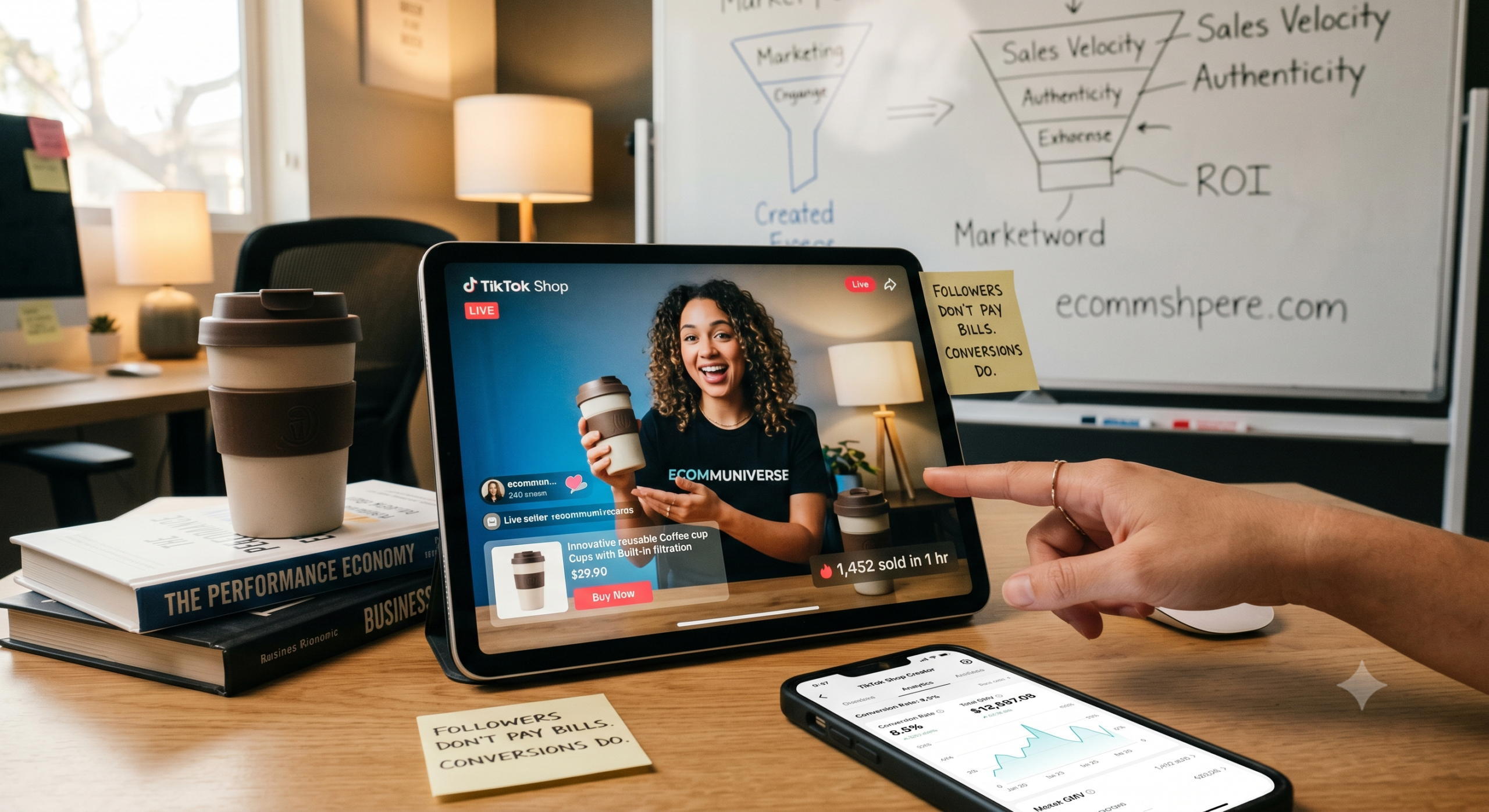
For years, the creator economy was built on one simple metric:
👉 followers.
The logic was straightforward:
- More followers = more influence
- More influence = more brand deals
- More visibility = more revenue
But TikTok Shop is changing that model completely.
Today, follower count matters less than ever. What matters now is:
- conversion
- sales velocity
- engagement quality
- purchasing behavior
In other words, the creator economy is evolving into a sales economy.
From Influence to Performance
Traditional influencer marketing focused heavily on reach.
Brands asked:
- How many followers does this creator have?
- How many views do they generate?
But TikTok Shop changes the equation because the platform can directly track:
- clicks
- purchases
- conversion rates
- revenue generated
This means creators are increasingly judged not by popularity—but by performance.
Why Small Creators Are Winning
One of the biggest surprises in TikTok Shop is that smaller creators often outperform larger influencers.
Why?
Because audiences care more about:
- authenticity
- trust
- relatability
A creator with:
👉 20,000 engaged followers
can sometimes generate more sales than someone with:
👉 2 million passive viewers.
This is reshaping how brands think about partnerships.
Commerce Changes the Incentives
When sales become measurable, the entire creator ecosystem changes.
Before:
- Viral content was enough
- Attention was the goal
Now:
- Conversion is the goal
- Content must drive action
- Performance becomes transparent
This pushes creators toward:
- stronger storytelling
- clearer product positioning
- more community engagement
The focus shifts from visibility to results.
TikTok’s Algorithm Accelerates the Shift
TikTok’s recommendation system already favors performance over follower size.
TikTok Shop takes this even further.
Products and creators that generate:
- engagement
- transactions
- repeat purchases
receive more visibility.
This creates a feedback loop:
👉 better performance → more reach → more sales
Follower count becomes secondary.
A New Type of Creator Emerges
The platform is also creating a new category of creator:
👉 the commerce creator
These creators are less focused on:
- personal branding
- lifestyle influence
- celebrity status
and more focused on:
- selling products effectively
- understanding buyer psychology
- optimizing conversion
This looks less like traditional influencing—and more like modern retail media.
What This Means for Brands
For brands, the implications are massive.
The old model:
👉 pay for exposure
is being replaced by:
👉 pay for measurable outcomes
Brands now prioritize creators who can:
- move inventory
- generate consistent conversions
- scale campaigns profitably
This makes creator partnerships more data-driven than ever.
The Bigger Shift
What’s happening on TikTok Shop reflects a broader transformation in digital commerce:
- attention is becoming transactional
- creators are becoming sales channels
- algorithms are rewarding revenue generation
The line between:
- influencer
- affiliate marketer
- salesperson
is starting to disappear.
Final Thought
TikTok Shop is not just changing eCommerce—it’s changing the economics of influence itself.
In the next phase of the creator economy, success may no longer belong to the people with the biggest audiences, but to those who can:
- build trust
- drive action
- and convert attention into revenue
Because in the age of social commerce, followers are no longer the most valuable metric.
Sales are.

From the publisher
Everything we know about running Amazon, in one course.
The commercial strategy, taught by operators who run our own brands.
 Erene Araojo