

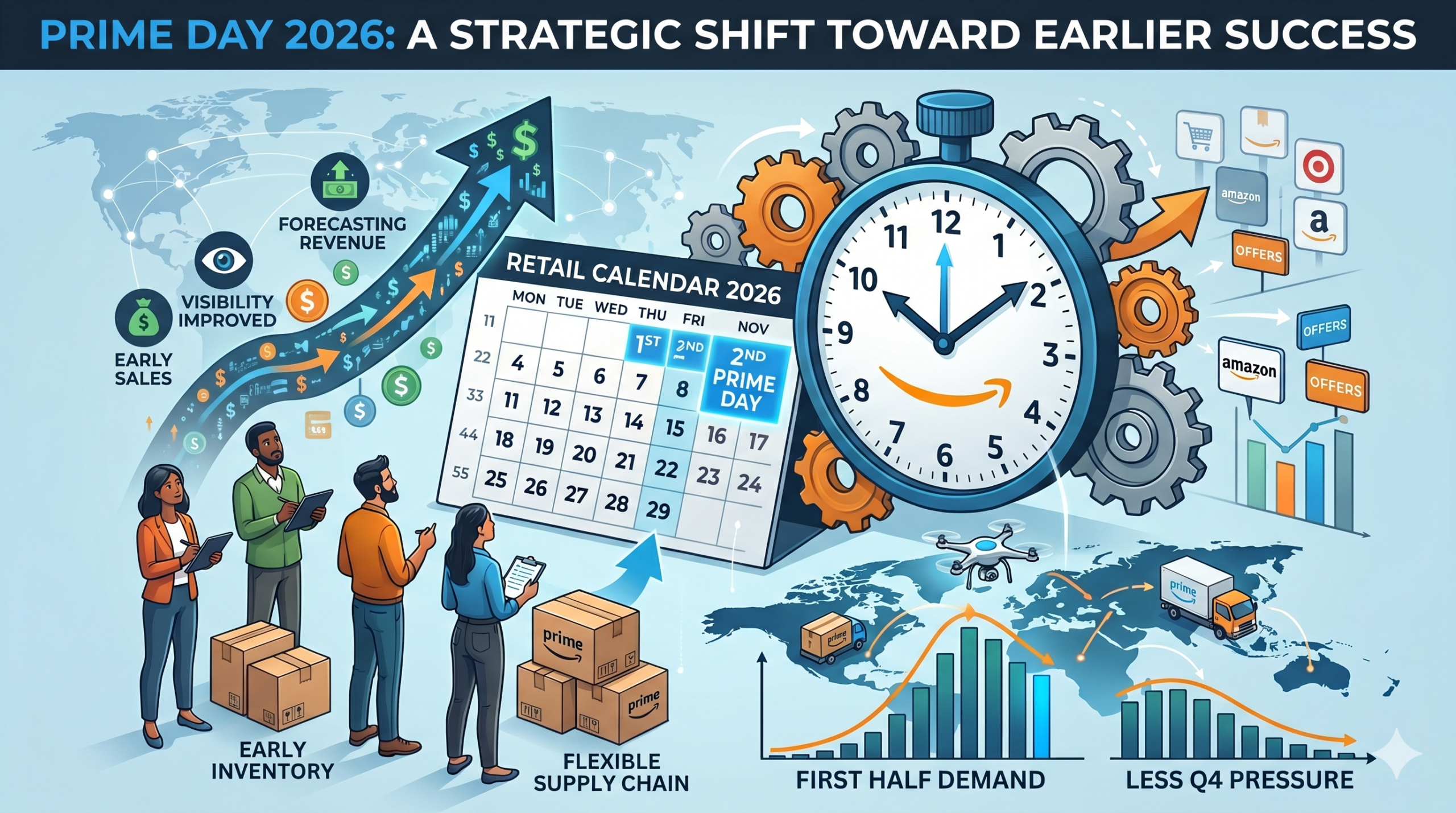
Amazon has confirmed that Prime Day 2026 will take place earlier than usual, and while this may seem like a simple calendar adjustment, it actually signals something much more strategic.
Prime Day is no longer just a sales event—it’s a global demand engine that shapes inventory planning, marketing strategies, and even competitive behavior across the entire retail industry.
More Than Just a Date Change
At first glance, moving Prime Day earlier might look like a minor operational decision. But timing in retail is critical.
By shifting the event forward, Amazon can:
- Capture consumer spending earlier in the year
- Spread demand more evenly across quarters
- Reduce pressure on peak seasons like Q4
This helps Amazon optimize both revenue flow and operational efficiency.
A Strategic Advantage in the Retail Calendar
Prime Day has become one of the biggest shopping events globally, often compared to Black Friday.
By moving it earlier, Amazon:
- Gets ahead of competitors’ promotions
- Secures consumer budgets before other sales events
- Extends the overall shopping season
This creates a first-mover advantage in capturing demand.
What It Means for Sellers
For sellers, this shift is significant.
An earlier Prime Day means:
- Inventory must be prepared sooner
- Marketing campaigns need to start earlier
- Cash flow planning becomes more important
Those who adapt quickly can benefit from:
- Increased visibility
- Higher sales volumes
- Early momentum for the rest of the year
Those who don’t may struggle to keep up.
Pressure on Supply Chains
Prime Day already puts massive pressure on logistics networks. Moving it earlier adds another layer of complexity.
Sellers and suppliers must:
- Accelerate production timelines
- Ensure stock availability
- Coordinate fulfillment earlier in the cycle
This reinforces the importance of efficient and flexible supply chains.
A Signal of Changing Consumer Behavior
This move also reflects how consumer behavior is evolving.
Shopping is becoming:
- More continuous throughout the year
- Less concentrated in traditional peak periods
- Driven by events and promotions rather than seasons
Amazon is adapting to—and shaping—this behavior.
The Competitive Ripple Effect
When Amazon moves, the market follows.
Other retailers will likely:
- Launch competing promotions
- Adjust their own sales calendars
- Increase marketing activity around the same period
This amplifies the overall impact of the event across the industry.
The Bigger Picture
Prime Day is no longer just about driving sales—it’s about controlling when and how demand happens.
By adjusting its timing, Amazon is:
- Smoothing revenue cycles
- Reducing operational bottlenecks
- Strengthening its influence over the retail calendar
Final Thought
An earlier Prime Day is more than a scheduling change—it’s a strategic move that reflects how modern eCommerce operates.
In a world where demand can be created at any time, the winners are those who can anticipate, prepare, and execute ahead of the curve.
For sellers and brands, the message is clear:
Prime Day isn’t just an event to participate in—it’s one you need to plan for earlier than ever before.

From the publisher
Everything we know about running Amazon, in one course.
The commercial strategy, taught by operators who run our own brands.
 Erene Araojo