

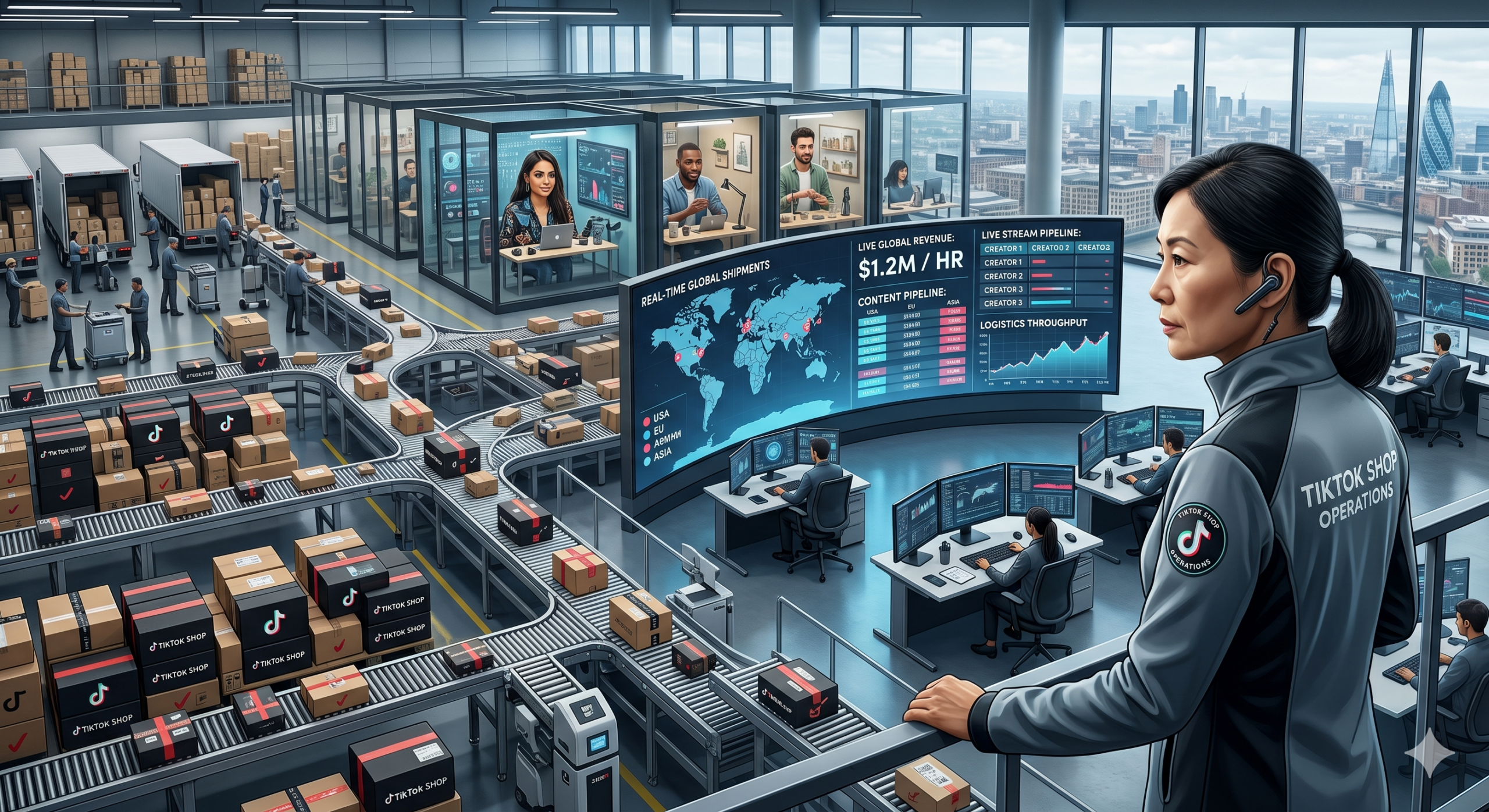
TikTok is no longer just a place to experiment with content—it is becoming a core sales channel. One of the clearest signs of this shift is that brands are now building dedicated storefronts on TikTok Shop, turning the platform into a direct driver of revenue.
This marks a major evolution in eCommerce: from using social media for marketing to using it for full-scale commerce operations.
From Campaigns to Continuous Presence
In the past, brands approached TikTok as a campaign-based channel:
- Launch a product
- Run a few influencer collaborations
- Generate short-term buzz
Today, that approach is changing.
By building storefronts, brands are:
- Creating a permanent presence on the platform
- Offering a full product catalog
- Enabling ongoing, not just temporary, sales
This turns TikTok from a marketing tool into a persistent sales environment.
Bringing the Store to the Consumer
Traditional eCommerce requires users to:
👉 Leave the platform → Visit a website → Complete a purchase
TikTok Shop reverses this flow:
👉 Stay on the platform → Discover → Buy instantly
With storefronts, brands can now:
- Showcase products directly within TikTok
- Offer a seamless shopping experience
- Reduce friction in the buying process
This increases both conversion rates and customer convenience.
The Role of Content in Driving Sales
Unlike traditional online stores, TikTok storefronts don’t operate in isolation—they are powered by content.
Every video, creator collaboration, or livestream becomes:
👉 A direct entry point into the storefront
This creates a powerful system where:
- Content drives traffic
- Storefronts capture demand
- Data informs future content
The result is a continuous sales loop.
Why Brands Are Making the Shift
Several factors are pushing brands to invest more heavily in TikTok Shop:
- Higher conversion potential compared to traditional social media
- Direct access to consumers without relying on external platforms
- Stronger integration between marketing and sales
- Ability to scale through creators and viral content
For many brands, the platform is no longer optional—it is becoming essential.
A New Competitive Dynamic
As more brands build storefronts, competition on TikTok is increasing.
Success now depends on:
- Content quality and consistency
- Speed in reacting to trends
- Strong creator partnerships
- Operational readiness to handle demand
This creates a fast-paced, highly dynamic environment.
Operational Implications
Turning TikTok into a sales channel requires more than marketing:
- Inventory must support sudden spikes in demand
- Fulfillment needs to be fast and reliable
- Customer service must adapt to platform-native interactions
Brands need to align marketing, operations, and logistics to succeed.
The Bigger Picture
The rise of TikTok storefronts reflects a broader shift in eCommerce:
- Platforms are becoming marketplaces
- Content is becoming infrastructure for sales
- The line between discovery and purchase is disappearing
This is not just a new feature—it is a new model of commerce.
Final Thought
Brands building storefronts on TikTok Shop are not just following a trend—they are adapting to a new reality.
eCommerce is moving closer to where attention lives. And increasingly, that place is not a website—it’s a feed.
In the future, the most successful brands won’t just drive traffic to their stores.
They will build their stores where the traffic already is.

From the publisher
Everything we know about running Amazon, in one course.
The commercial strategy, taught by operators who run our own brands.
 Erene Araojo