

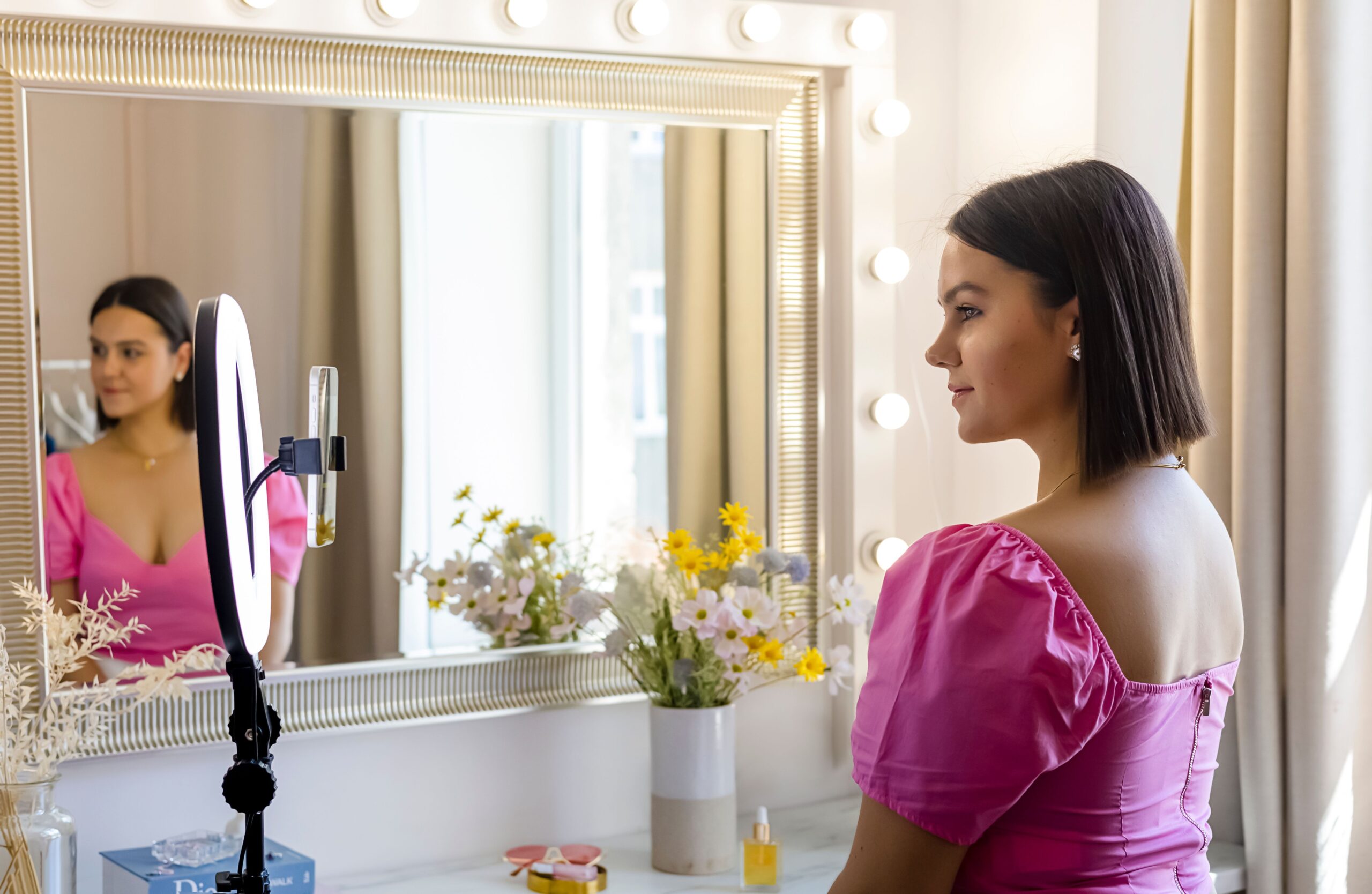
Sephora will launch products on TikTok first
A beauty retailer with its own app, its own loyalty programme and a global store estate has decided that some products will appear on TikTok before they appear anywhere it owns. “Sephora will debut on TikTok Shop in the U.S. through a pilot starting on Sept. 19”, and the featured product drops “will launch exclusively through Sephora’s TikTok Shop, with select items later rolling out to the retailer’s other shopping channels or other retail partners”.
Two things before anyone repositions a business on the strength of it. This is a pilot in the United States, so there is nothing here a European seller can look at, click on or copy this month. And no numbers have been published: no sales figures, no forecast, no audience data, nothing. The story is a decision, not a result.
Why a launch sequence is the news
For most of TikTok Shop’s existence, the sensible assumption for an established brand was that it sat late in the channel order. New product went to the brand’s own site and its anchor retail partners, where margin is best and the customer relationship is owned. TikTok got what was left: promotions, overstock, older lines, the things you push with volume rather than protect with scarcity.
Giving TikTok the exclusive first drop inverts that. It says the discovery value of launching there is worth more than the margin and control of launching on your own property, at least for selected products. That is a much stronger statement than a retailer opening a TikTok Shop, which is now unremarkable, and it is why this is worth writing up despite there being no figures attached to it.
Sephora’s own framing is careful. Its global chief digital officer, Anca Marola, calls the platform “a powerful extension of our global digital strategy and our commitment to meeting clients wherever they discover beauty”, and describes the approach as “a test-and-learn mindset”, scaling “our retailtainment model in the US” while “gathering critical insights to inform our digital innovation and future rollout across our global network”. That is the language of an experiment with an eye on export, not of a completed strategy. Take it at face value.
The same posture shows up elsewhere on the platform. PacSun’s chief merchandising officer, Richard Cox, describes TikTok Shop in almost the same register: “It’s a place for us to learn what’s working versus not.”
Tool comparison · FastMoss vs Kalodata
If launch order is becoming a strategic decision, you need to see which products and creators are actually moving volume on TikTok Shop. FastMoss and Kalodata are the two tools built for that, and they answer the question differently.
Comparison coming soon
FTC disclosure: our tool comparisons carry affiliate links. If you sign up through one we may earn a commission, at no extra cost to you. We rank on merit, never on commission, and the verdict is written by a human.

From the publisher
Everything we know about running Amazon, in one course.
The commercial strategy, taught by operators who run our own brands.
What a seller does differently on Monday morning
There is no task here, and we are not going to invent one. Nobody can join a US pilot from Europe, and there is no mechanism, programme or eligibility attached to this story at all.
What there is, is a decision worth revisiting, and it is a decision most sellers made by default rather than on purpose: where does a new product launch first.
If your current answer is “Amazon, then everywhere else”, it is worth asking what that answer is actually optimising for. Launching first on Amazon buys search demand you already have and a fulfilment path you already trust. It does not buy attention, because Amazon’s search results page is not a discovery surface for a product nobody is looking for yet. A new product’s hardest problem is that nobody knows to search for it.
That is the gap a launch on a content platform fills, and it is why a retailer with everything to lose from cannibalising its own channels is willing to try it. For a smaller seller the calculation is easier, not harder: you have less channel equity to protect and more to gain from anyone finding out the product exists.
The honest version of the action, then, is a question to put on your own list rather than a step to take this week. Pick one product in your next launch window and ask what would actually happen if it debuted on a content platform with a creator programme behind it, two weeks before it appeared on your marketplace listings. If the answer is that you have no way to run that test, that is the real finding, and it is a capability gap rather than a channel decision.
Tool comparison · FastMoss vs Kalodata
Finding the right creator is most of the work in a launch-first plan. We compare FastMoss and Kalodata on creator search, product-to-creator matching and how much of the performance history you can actually inspect.
Comparison coming soon
FTC disclosure: our tool comparisons carry affiliate links. If you sign up through one we may earn a commission, at no extra cost to you. We rank on merit, never on commission, and the verdict is written by a human.
What a launch-first plan actually requires
If the idea is tempting, it is worth being clear about what it costs, because “launch on TikTok first” is a sentence that hides three operational commitments.
It requires creators lined up before the product exists. A launch on a content platform works because several people talk about the thing in the same week. That is a booking and briefing exercise with lead times, not something you arrange after the stock lands. Sephora’s own framing points at this: the model being scaled is described as “retailtainment”, which is to say programmed entertainment around product, and programming implies a schedule.
It requires stock you are willing to strand. A launch-first drop means committing units to one channel, with no marketplace listing absorbing the overflow if the videos do not land, and no second channel to clear into for a period if you want the exclusivity to mean anything. For a small seller that is a real risk of dead inventory, and it is the reason this is a decision about a single product rather than a policy for a catalogue.
And it requires a reason for the shopper to buy now. An exclusive drop is a scarcity mechanic. If the same product is on your marketplace listing at the same price a week later, the mechanic does nothing except delay your marketplace revenue by a week. Sephora is pairing exclusivity with a rollout that comes “later” and only for “select items”, which is the shape that makes the scarcity credible.
None of those three is exotic. All of them are things a seller either has or does not have, and a seller who has none of them should read this story as interesting rather than instructive.
The signal worth separating from the noise
There is a version of this story that is genuinely useful and a version that is a press release, and the difference is which claim you take from it.
The press-release version is that TikTok Shop is now a premium channel because a premium retailer joined it. That does not follow. Retailers join channels they are unsure about all the time, which is what a pilot is, and the quotes here are careful to say exactly that.
The useful version is narrower. A retailer with a mature owned-channel strategy has judged that, for some products, being discovered matters more than being sold on its own property. That judgement is about discovery scarcity, not about TikTok’s prestige. It is the same judgement that shows up when brands give a product to a creator before a retailer, or seed a launch to a community before a marketplace.
For an operator, that is the reusable insight: the value of a channel is no longer only the revenue it produces, it is also the demand it creates that other channels then capture. Sellers who measure channels purely on their own attributed sales will systematically undervalue the ones that make products findable and overvalue the ones that harvest existing intent. That is a measurement problem, and it is worth more than any conclusion about beauty retail.
The limits of reading anything into this
We want to be blunt about how much this story can carry, because stories of this shape get overloaded.
One retailer, one country, one pilot, in a category that is unusually well suited to short video. Beauty is the easiest possible case for social commerce: the products demonstrate visually in fifteen seconds, they are cheap enough to buy on impulse, they are repurchased, and the audience is already there discussing them without being prompted. A launch-first decision in beauty does not tell you that a launch-first decision works in tools, or homeware, or anything with a considered purchase cycle and a returns problem.
Nor do we know whether it worked, because it has not happened yet. A pilot starting on 19 September will produce information in the fourth quarter at the earliest, and there is no commitment published to share any of it. It is entirely possible that this is reported next year as a test that did not repeat.
What is durable regardless of the outcome is the reason the test is being run at all. A retailer of this size does not hand a first drop to a third-party platform unless it believes discovery has moved and its own channels no longer supply enough of it. That belief is now common enough among large retailers to be visible in their launch calendars, which is a different and more reliable signal than any survey about where shoppers say they discover products.
The three-line version
- If you run the channel: nothing this week. Ask one question instead: where does your next product launch first, and did anyone decide that on purpose?
- If you have just taken on the launch calendar: the gap to name is that launch order has been a default for years rather than a decision.
- If you sign the budget: the real question is whether you can measure a channel that creates demand another channel then captures.