

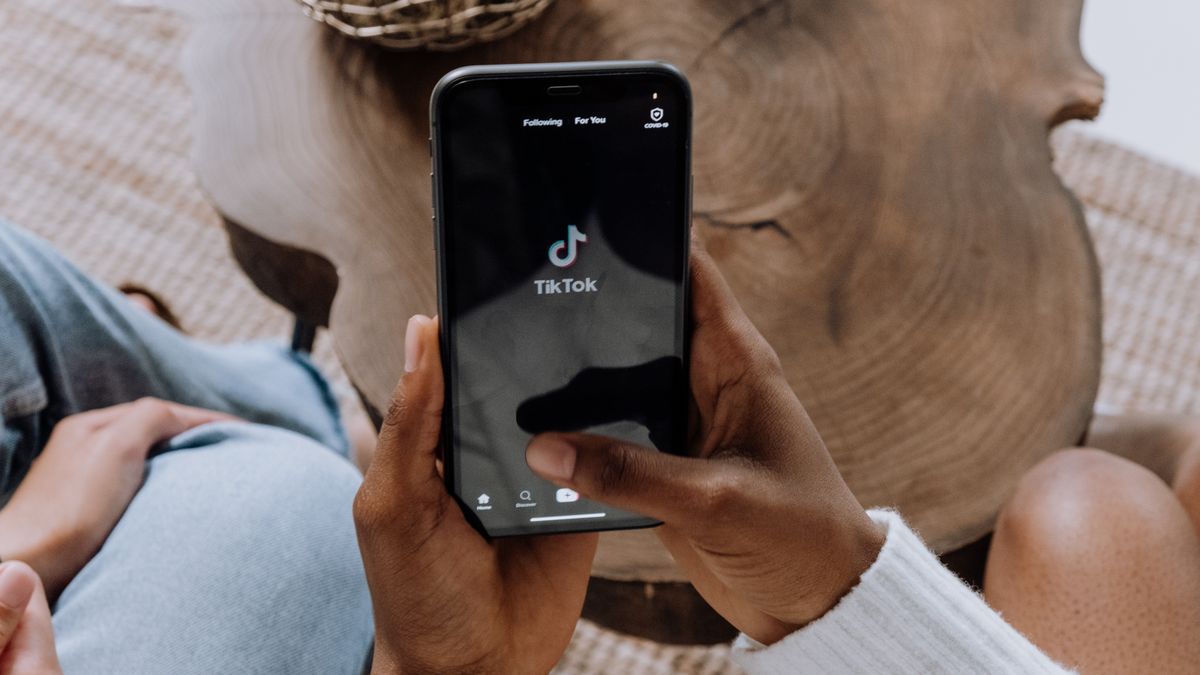
If you want the Darth on a Hearth plush, you can buy it on TikTok from 4 November. You can buy it from Disney’s own website on the 11th.
Disney has handed a social platform a week’s head start on its own store. That is the whole story, and it is a smaller and stranger thing than it first appears.
The occasion is Disney’s first TikTok Shop Super Brand Day, running 4 to 10 November with the Disney Store and more than 20 brands alongside it. Two products get the early window: the Star Wars Darth on a Hearth plush and a Mickey Mouse Icon Wreath Holiday Loungefly Mini Backpack.
Scope next, because it decides how much of this matters to you. This is a United States event. The brands are US retailers, the forecast attached to it is a US forecast and the consumer research quoted alongside it surveyed US consumers. A European seller has nothing to do about Disney’s week.
What is portable is the mechanism, and the mechanism is worth understanding before the same shape arrives in a market you do sell in.
What is happening
Disney names Crocs, Old Navy, Touchland, Girls Crew, ColourPop, Blackwing, Displate, Corkcicle, Select Brands and Dash among the participants, and puts the total at more than 20, so the published roster is partial. Collections draw on Disney, Pixar, Marvel and Star Wars. Disney says some creators will appear on TikTok LIVE, and mentions no paid media of its own; the description of the event as media-backed comes from trade coverage rather than from Disney. Super Brand Day itself is not new; TikTok Shop launched the format in 2024.
A company with one of the most valuable direct-to-consumer storefronts in the world has given a third-party social platform first call on a product release. The window is exactly seven days.

From the publisher
Everything we know about running Amazon, in one course.
The commercial strategy, taught by operators who run our own brands.
Why a brand week is a cost to everyone else
A seven-day event with Disney at the centre, more than twenty brands around it and paid media behind it does not only occupy shelf space. It occupies creators.
Creator supply is finite in a way inventory is not. A mid-tier affiliate can promote a limited number of products credibly in a week, and in an event week the ones worth having are booked early and priced against what the participating brands are paying. For any seller planning a creator push in the same window, the commission they expected to pay is no longer the clearing price, and the creators they had in mind may be unavailable at any price.
That arithmetic turns an event like this from a marketing story into a competitive fact. The sellers affected most are the ones who did not know it was happening, planned a push into the same week, and discover the cost after they have committed to the stock.
The timing sharpens it further. This runs in the week before the biggest trading period of the year, which is exactly when a smaller seller would otherwise be building creator relationships for their own peak push.
The cost is not the whole picture. A campaign of this size also brings people onto the platform who were not shopping there before, and some of them stay and browse beyond the brands that drew them in. A seller in an adjacent category can pick up traffic they never paid for. Which effect wins depends on whether you compete for the same creators and whether your products sit near the campaign’s categories. A gift-adjacent accessory seller and an industrial supplier are in very different positions, and neither can know in advance.
Tool comparison · FastMoss vs Kalodata
Working out whether an event helps or hurts you starts with knowing which products and creators actually move in your category. FastMoss and Kalodata do that job for TikTok Shop, reporting category-level demand and creator performance rather than a campaign’s own framing.
Comparison coming soon
FTC disclosure: our tool comparisons carry affiliate links. If you sign up through one we may earn a commission, at no extra cost to you. We rank on merit, never on commission, and the verdict is written by a human.
The figures, and what they will and will not support
Two sets of numbers travel with this announcement and both need their limits attached.
eMarketer forecasts that US TikTok Shop sales rise 48 percent in 2026 to 23.4 billion dollars. That is a forecast, not a measurement, and it is United States only. It is a reasonable input to a question about the platform’s direction in that market and no input at all to a European channel decision.
GlobalData research is quoted as finding that 67 percent of US consumers trust a large brand the same or more when they see it on TikTok Shop, rising to 82 percent among 18 to 24 year olds.
That second figure deserves a closer look, because its construction is doing a lot of the work. “The same or more” is a compound category: it combines people whose trust increased with people whose trust did not change at all. A respondent who felt exactly as they did before is counted on the same side of the ledger as one who was won over. A figure built that way will almost always look large, and it cannot tell you how many people were actually persuaded of anything.
No sample size, survey dates or methodology accompany the figures, and the research was shared in the campaign’s own press details. Disney’s own announcement carries no figures at all, and neither number appears in the other coverage of the event, so both rest on a single trade report. None of that makes them wrong. It means it is promotional research and should be repeated, if at all, with the words “the same or more” left in, because dropping them changes the claim.

The structural read
Two things follow from this that outlast the week itself.
The first is about where launches happen. If a brand of Disney’s size is prepared to give a social platform first access to a product, even for a week, the platform has stopped being a place to advertise a catalogue and become a place to release one. Be precise about the size of that move. It is sequencing, not a channel shift, and both items reach Disney’s own site on 11 November. The signal is in the order, not in the exclusivity. The implication for any seller is that a social storefront can no longer be treated as a secondary channel fed with whatever is already listed elsewhere.
The second is about who sets the price of attention. On a marketplace you bid into an auction you can see. On a creator-led platform you negotiate with people whose price moves when a large brand turns up, and no dashboard shows you the competition for anyone’s calendar. That makes a platform’s event schedule a planning input rather than a news item.
Nothing about this is demonstrable yet. The event runs from 4 November, so there are no results, no reported sales and no evidence of its effect on creator pricing. Everything above is about mechanism, not outcome.
Tool comparison · FastMoss vs Kalodata
There is no dashboard for the competition over a creator’s calendar, so category and creator data is the nearest thing to an early warning. Our head-to-head of FastMoss and Kalodata looks at how each tool reports category demand and creator performance across European markets.
Comparison coming soon
FTC disclosure: our tool comparisons carry affiliate links. If you sign up through one we may earn a commission, at no extra cost to you. We rank on merit, never on commission, and the verdict is written by a human.
What a seller does differently on Monday morning
If you do not sell in the United States, the honest answer is nothing this week. That is worth saying plainly rather than inventing a task.
Three things are worth building into the planning habit, and they apply wherever you trade.
- Find out whether the platforms you sell on publish a campaign calendar, and get it in front of whoever books your creators. The avoidable version of this problem is discovering a platform-wide event after committing budget to the same week.
- When you negotiate creator agreements, settle commission and exclusivity before a known event window rather than inside it. Rates agreed in a quiet week hold; rates negotiated in a busy one do not.
- If a competitor or a platform gives a social storefront a product launch ahead of their own site, read it as a signal about where their growth is expected to come from, and check whether your own channel mix assumes the opposite.
Where the honest uncertainty sits
The event has not happened. There are no sales figures, no participation results and no measured effect on creator availability or pricing, and there will not be until after 10 November. The full roster has not been published either: Disney names ten brands and says there are more than twenty.
The consumer research carries no published sample size, dates or methodology, and its headline figure combines unchanged trust with increased trust in a single number.
The sales forecast is a projection for the United States market and carries no European equivalent.
And the claim that an event of this kind raises creator costs for other sellers is reasoning from how creator supply works, not a measured finding. No published data establishes what happened to third-party creator rates during previous Super Brand Days.
The three-line version
- If you run the channel: nothing this week unless you sell in the United States. Get your platforms’ campaign calendars in front of whoever books creators, before the next window rather than during it.
- If you have just taken on social: the number to handle carefully is the 67 percent, because “the same or more” counts unchanged trust as a positive result.
- If you sign the budget: approve nothing against this. It is a forward-dated US event with no results, and the research attached to it is promotional.
Sources
- Disney (Disney Parks Blog): https://disneyparksblog.com/products/first-tiktok-super-brand-day-featuring-disney-details/
- Marketing Dive: https://www.marketingdive.com/news/disney-plans-tiktok-shop-holiday-experience-with-over-20-brands/873072/
- Tubefilter: https://www.tubefilter.com/2026/10/29/disney-tiktok-shop-super-brand-days-holiday-season/